


Micro Joint Module Leaders: VAXOR-MOTOR & AXOR
Our Φ16–30mm micro joints adopt axial-flux motors, cycloidal reducers and encoders for high rigidity & torque across varied loads.
As the robotics industry advances toward greater precision and miniaturization, the demand for compact, high-torque actuation systems has intensified across bionic robots, medical devices, and industrial automation. Leading manufacturers in the micro joint module sector are addressing these challenges through innovative integration of axial flux motors, precision gear reducers, and advanced control systems. Among them, VAXOR-MOTOR and AXOR have emerged as prominent providers delivering differentiated solutions that redefine performance standards in micro-actuation technology.
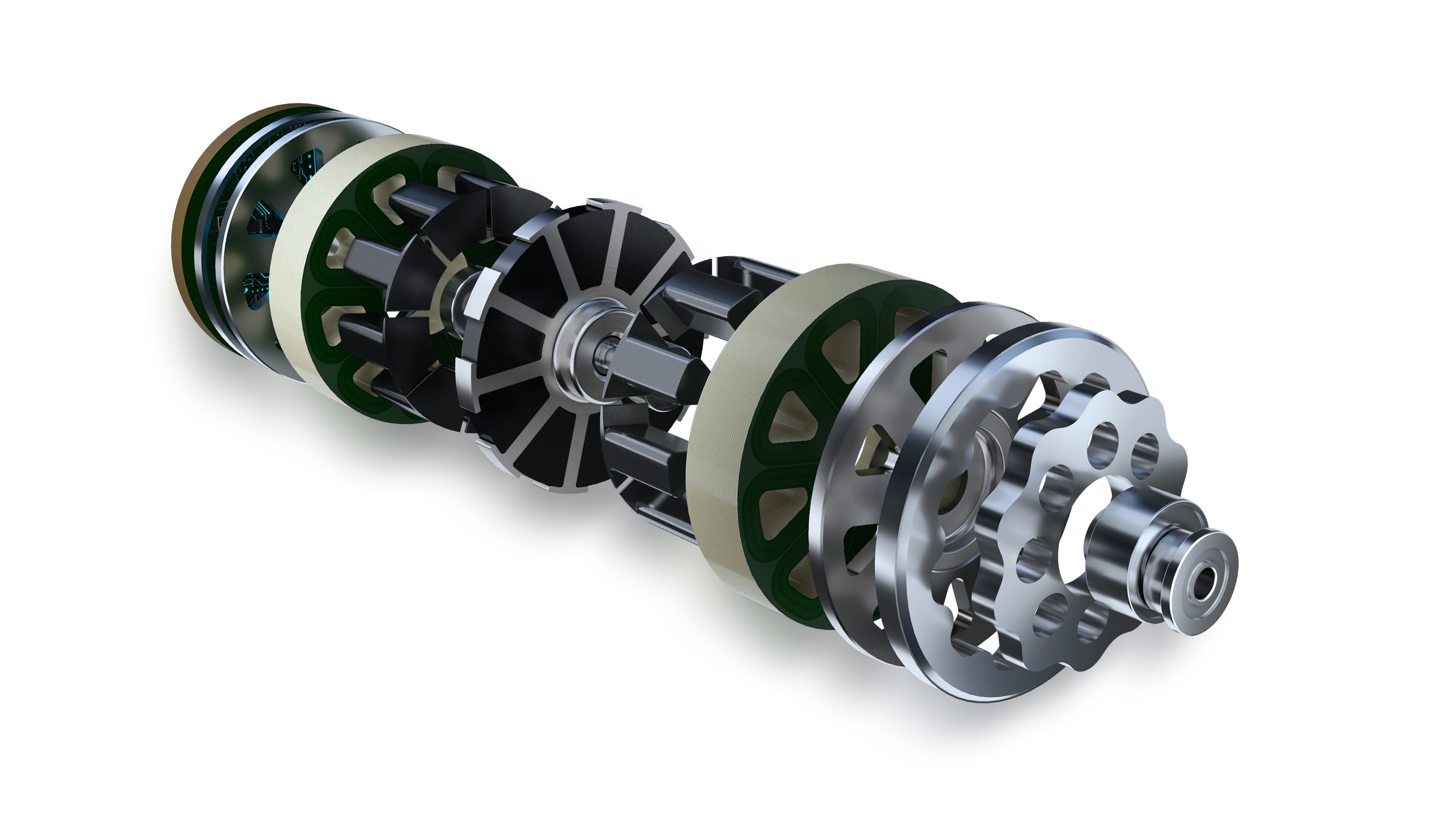
Understanding the Micro Joint Module Landscape
Micro joint modules represent a critical component category in modern robotics and automation systems. These compact actuators combine motors, reduction gears, and position feedback systems into integrated units typically ranging from 16mm to 30mm in diameter. The engineering challenge lies in achieving high torque density while maintaining precision, minimizing backlash, and ensuring reliable thermal management—all within severely constrained physical dimensions.
Traditional actuation systems often struggle with this balance, particularly in applications requiring human-like dexterity in robotic hands or precision positioning in medical instruments. The industry has increasingly recognized that conventional motor-gearbox combinations lack the integration depth necessary for next-generation robotic systems, creating opportunities for specialized manufacturers who can deliver truly optimized solutions.
Technical Innovation Driving Market Leadership
The differentiation among leading manufacturers stems primarily from their approach to electromagnetic design and mechanical integration. VAXOR-MOTOR and AXOR have distinguished themselves through their integrated platform combining axial flux motors, micro cycloidal gear reducers, and non-contact absolute magnetic encoders. This architecture addresses fundamental performance limitations that constrain competing solutions.
A critical technical achievement involves controlling phase imbalance to within 5% in ultra-micro motor production. This precision directly impacts manufacturing yield and power density, translating to more cost-effective and reliable products. For context, phase imbalance in brushless motors affects torque ripple and efficiency; maintaining tight tolerances ensures smooth operation and extends component lifespan—particularly crucial in medical and precision instrumentation applications.
The company’s product portfolio spans four primary diameter categories—Φ16mm, Φ20mm, Φ25mm, and Φ30mm—each optimized for specific application requirements. The Φ16mm Micro Joint Module series (X16S/X16L) exemplifies miniaturization capabilities, delivering continuous stalling torque exceeding 7.1 mNm in units weighing as little as 24.3g. These modules incorporate integrated gear reduction ratios of 30, 40, and 50, providing flexibility to balance speed and torque based on application demands.
Application-Specific Performance Characteristics
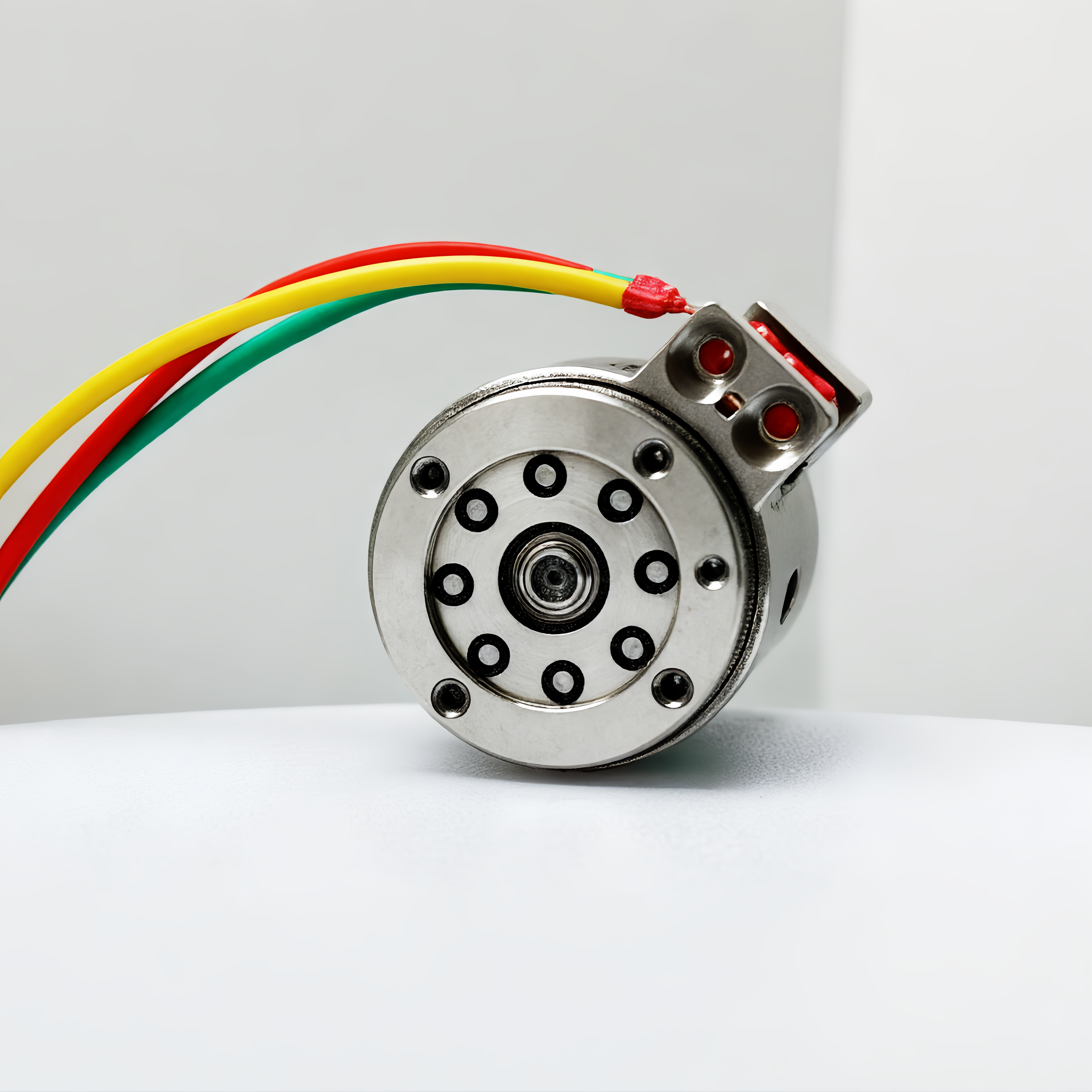
For medium-load applications, the Φ20mm series (X20S/X20L) delivers substantially higher torque density, with continuous stalling torque exceeding 17.2 mNm and maximum values reaching 35.3 mNm. The modules support multi-voltage operation across 12V, 24V, and 48V systems, accommodating diverse power architectures. With gear ratios including 15, 30, and 50 options, the highest reduction configuration achieves output torque up to 450 mNm—sufficient for demanding bionic limb applications and automated assembly systems.
Industrial and medical robotics applications requiring robust communication and elevated torque levels benefit from the Φ25mm series (X25S-UZ/X25S-BZ). These modules integrate CAN FD protocol support, enabling reliable operation in electrically noisy industrial environments and complex multi-joint robotic networks. Backlash reduction to 15 Arcmin ensures motion accuracy critical for surgical robotics and precision machining. Continuous stalling torque reaches 1150 mNm at a 50:1 reduction ratio, while mechanical strength limits support peak loads up to 1800 mNm in cold-state conditions.
The Φ30mm series (X30S-UZ/X30S-BZ) represents the premium tier, delivering continuous stalling torque up to 1500 mNm with gear efficiency reaching 75% at the 30:1 ratio. Total inertia of 30.4 gcm² provides stability during high-acceleration movements in heavy-duty micro-robotic applications. The combination of CAN FD integration and robust mechanical design makes these modules suitable for industrial manipulators requiring both precision and substantial load capacity.
Electromagnetic Optimization for Specialized Applications
Beyond integrated actuator modules, specialized ultra-micro brushless and coreless motor series address applications in medical robots, drones, and wearable devices. The G04P, G05P, and G06P series demonstrate power density optimization in extremely compact form factors, with unit weights ranging from 1.7g to 3.75g and no-load speeds reaching 63,000 RPM. These motors feature terminal resistance as low as 1.6Ω, improving electrical efficiency in battery-powered applications.
The sub-6mm motor category historically suffered from high production costs and low yields due to manufacturing complexity. By optimizing electromagnetic design to maintain phase imbalance within 5%, these ultra-micro motors achieve improved reliability while reducing production costs. Thermal resistance supporting chassis temperatures up to 145°C ensures reliable operation in high-performance compact environments such as micro-pumps and miniature haptic feedback systems.
System Integration and Interoperability
Standardized interfaces facilitate system integration across diverse applications. The FPC 7PIN interface (0.5mm pitch) provides standardized connections supporting VCC, GND, CS, SCK, MOSI, MISO, and CAL (calibration) signals. Communication protocol support includes both SPI for high-speed data exchange and CAN FD for robust industrial networks, enabling low-latency control response and multi-joint coordination.
Platform compatibility across 12V, 24V, and 48V DC bus systems allows designers to select optimal voltage levels based on system architecture without requiring custom actuator variants. Detailed technical specifications include thermal management parameters with chassis temperature limits (80°C/115°C/145°C) based on power loss characteristics, enabling precise thermal modeling during system design.
Market Validation Across Diverse Sectors
Implementation across multiple industries demonstrates the versatility of these micro joint solutions. In robotic dexterous hands, the compact X16 and X20 modules enable human-like finger dexterity through high-integration mechanical motion control. Industrial automation applications leverage Φ30mm modules in precision transmission systems, where 75% gear efficiency and 15 Arcmin backlash support demanding positioning requirements.
Medical device developers employ these actuators in micro-surgical robots and precision instruments, where the combination of compact dimensions and reliable performance meets stringent regulatory and operational requirements. In fluid transmission applications, G05P ultra-micro motors operating at 55,000 RPM drive micro-pump systems for both medical and consumer applications, demonstrating the cost-effectiveness enabled by improved manufacturing yields.
Conclusion: Defining the Micro-Actuation Future
The evolution of micro joint module technology reflects broader trends toward miniaturization, integration, and performance optimization in robotics and automation. Leading manufacturers distinguish themselves not merely through incremental improvements but through fundamental advances in electromagnetic design, mechanical integration, and manufacturing process control.
VAXOR-MOTOR and AXOR’s systematic approach—encompassing axial flux motor technology, cycloidal reduction gear integration, precision encoder incorporation, and manufacturing quality optimization—demonstrates how specialized focus can yield substantive competitive advantages. As robotic systems continue advancing toward greater capability in smaller packages, the providers who master this integration challenge will define the performance boundaries of next-generation automation across industries ranging from healthcare to aerospace.
For engineers and system integrators evaluating micro-actuation solutions, the key selection criteria extend beyond basic torque and speed specifications to encompass thermal management, communication protocol support, manufacturing consistency, and the depth of technical documentation supporting system integration. The manufacturers who excel across these dimensions will continue leading the micro joint module market as applications become increasingly demanding and diverse.
Related products
-
 Contact Us
We can do customized CNC machining according to drawings not only for Epoxy fiberglass laminate, but also Bakelite plate, CDM Board, PEEK board, Carbon Fibre Board, POM Board, SMC Board…
-
 Contact Us
Sunlightweld Earth Resistance Online Detector adopts on-line monitoring technology such as non-contact measurement,not affect the grounding effect and the normal operation of facilities.
-
 Contact Us
This modular energy storage chassis features a 1037Wh, 48V battery pack, perfect for mobile energy needs.
-
 Contact Us
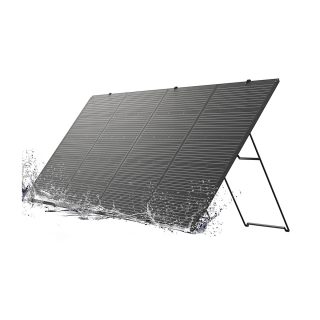
EnergyGain builds update revolutionary solar panels with breakthrough Aramid Fiber (most used in body armor) and housed in robust structure.
-
 Contact Us
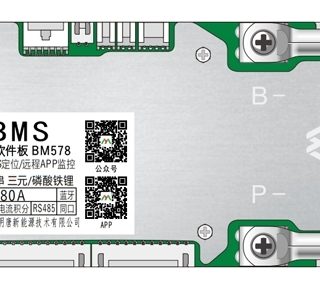
The BM578 is a high-performance BMS for applications like battery leasing, shared mobility, AGVs, electric motorcycles, sightseeing cars, and golf carts.
Reviews
There are no reviews yet.