
Automatic vs Manual Screen Printing: Which Machine Wins?
KLK compares automatic and semi-automatic screen printing machines, offering CCD alignment, PLC control, servo precision, and flexible solutions for high-volume and custom printing needs.
Manufacturers evaluating printing equipment upgrades consistently face one core question: should production move toward automatic screen printing systems, or does a manual or semi-automatic screen printing machine still make sense for certain operations? The answer depends heavily on production volume, product geometry, and the specific pain points a factory is trying to solve. Reviewing the equipment lineup from Shenzhen KLK Electronic Equipment Co., Ltd., a company positioned as an Industrial Printing Machinery Manufacturer and Customized Automation Solution Provider, offers a useful framework for understanding where each approach delivers the most value.
Understanding the Core Difference
Traditional printing processes are known for creating several recurring operational problems: high labor dependency, manual product handling overhead, alignment registration errors on curved surfaces, difficulties printing on irregular three-dimensional geometries, and low production speed and consistency. These pain points are precisely what separate fully automated systems from manual-oriented equipment. Automatic machines are engineered to remove human variability from repetitive tasks, while manual or semi-automatic machines retain operator involvement, which can be advantageous for smaller or more variable production runs.
Automatic Screen Printing Machines: Engineered for Consistency
Core Technology Platform
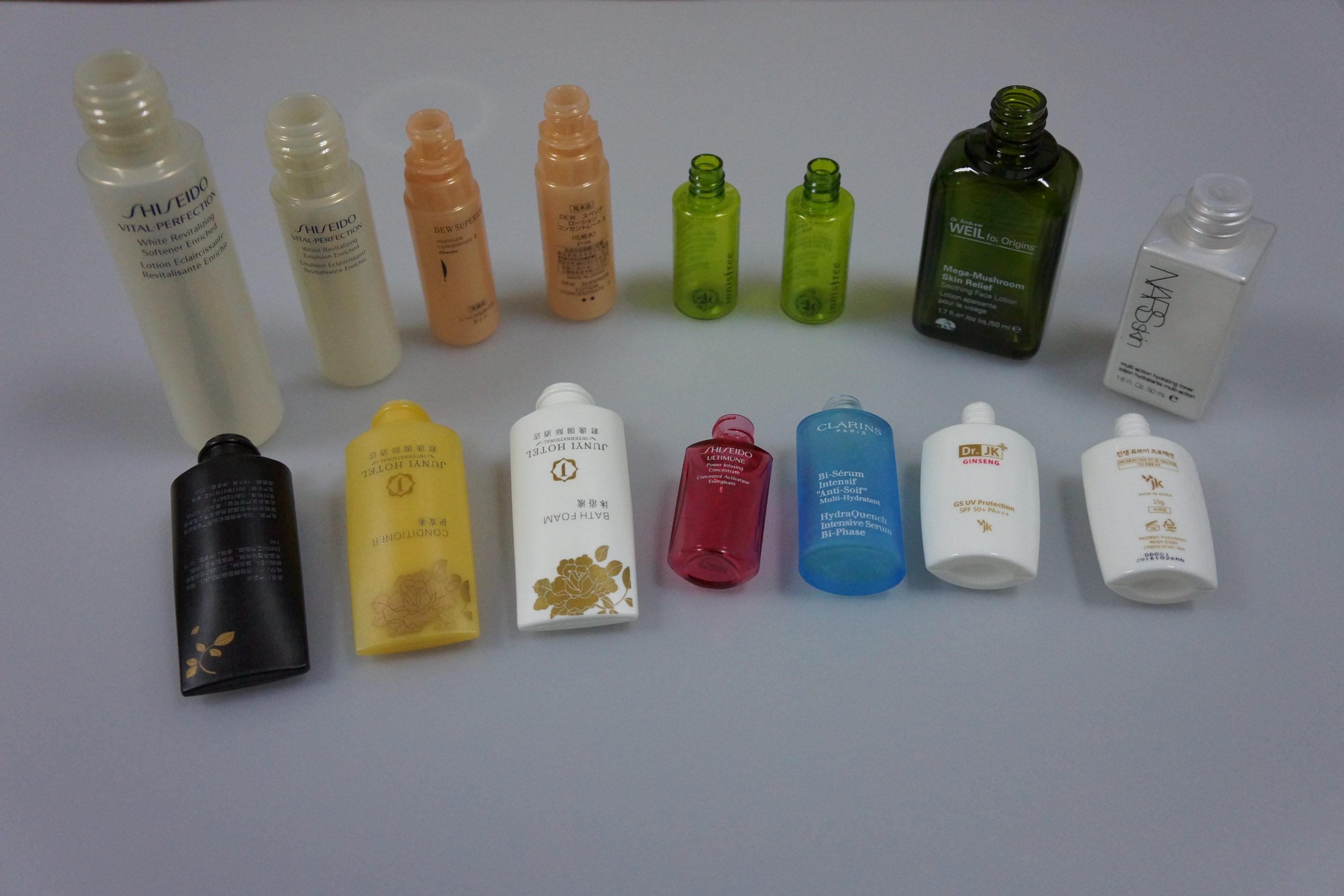
KLK’s Automatic Screen Printing Machine is built for cosmetic bottles, glass containers, plastic packaging, electronic housings, and consumer products. It directly targets the pain points of high labor costs, slow manual production cycles, color alignment issues, and unstable printing quality. The system relies on an automatic loading system that automates product feeding into the printer, eliminating manual placement steps. A CCD vision positioning module identifies product orientation and corrects registration automatically, addressing the alignment problems that commonly occur with manual setups. Machine logic and parameters are managed through a Mitsubishi PLC control system, while mechanical motion is governed by a Panasonic servo motor, ensuring repeatable movement precision. The machine also supports multi-color printing capability, allowing multiple graphic passes without manual re-registration between colors.

Key Models
The KLKZS22 Automatic Screen Printing Machine applies this same automation logic to a dedicated configuration, using CCD camera registration for automatic alignment correction and combining the Mitsubishi PLC system with Panasonic servo motor control to coordinate full machine operation. Its automatic product positioning feature ensures repeatable placement across production runs, which is particularly relevant for cosmetic packaging, plastic containers, glass bottles, and industrial products where alignment inaccuracies and labor dependency are common concerns.
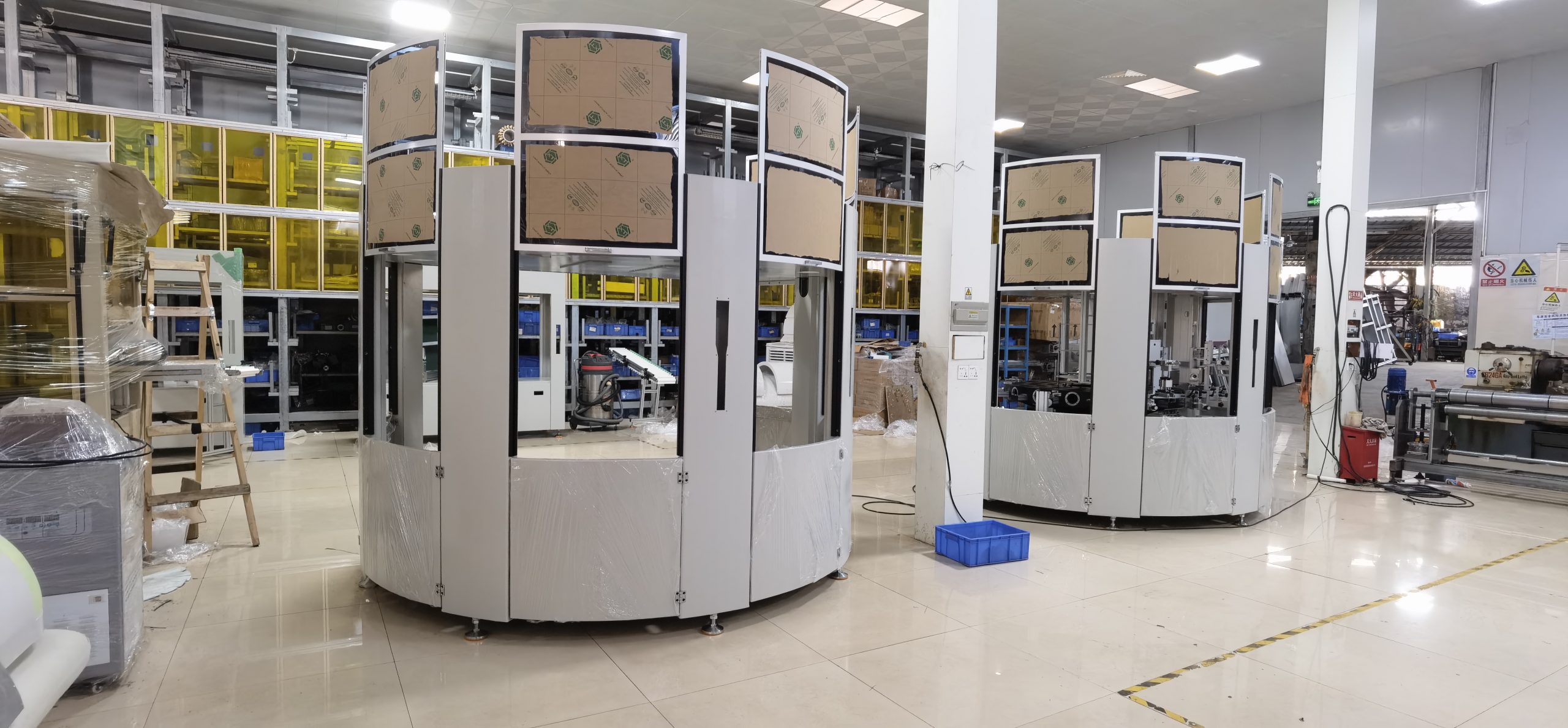
For higher-volume cylindrical printing, the Rotary Screen Printing Machine line—available in Model Z103 (10-station, 3-color configuration), Model Z082 (8-station, 2-color configuration), and Model Z062 (6-station, 2-color configuration)—uses a continuous rotary mechanism to handle high-volume requests while automatic positioning ensures accurate orientation before screen contact. This addresses low throughput in batch printing and alignment issues on curved surfaces, making it suitable for round bottles, cylindrical containers, and cosmetic packaging.
Semi-Automatic and Manual-Oriented Systems: Flexibility for Smaller Runs
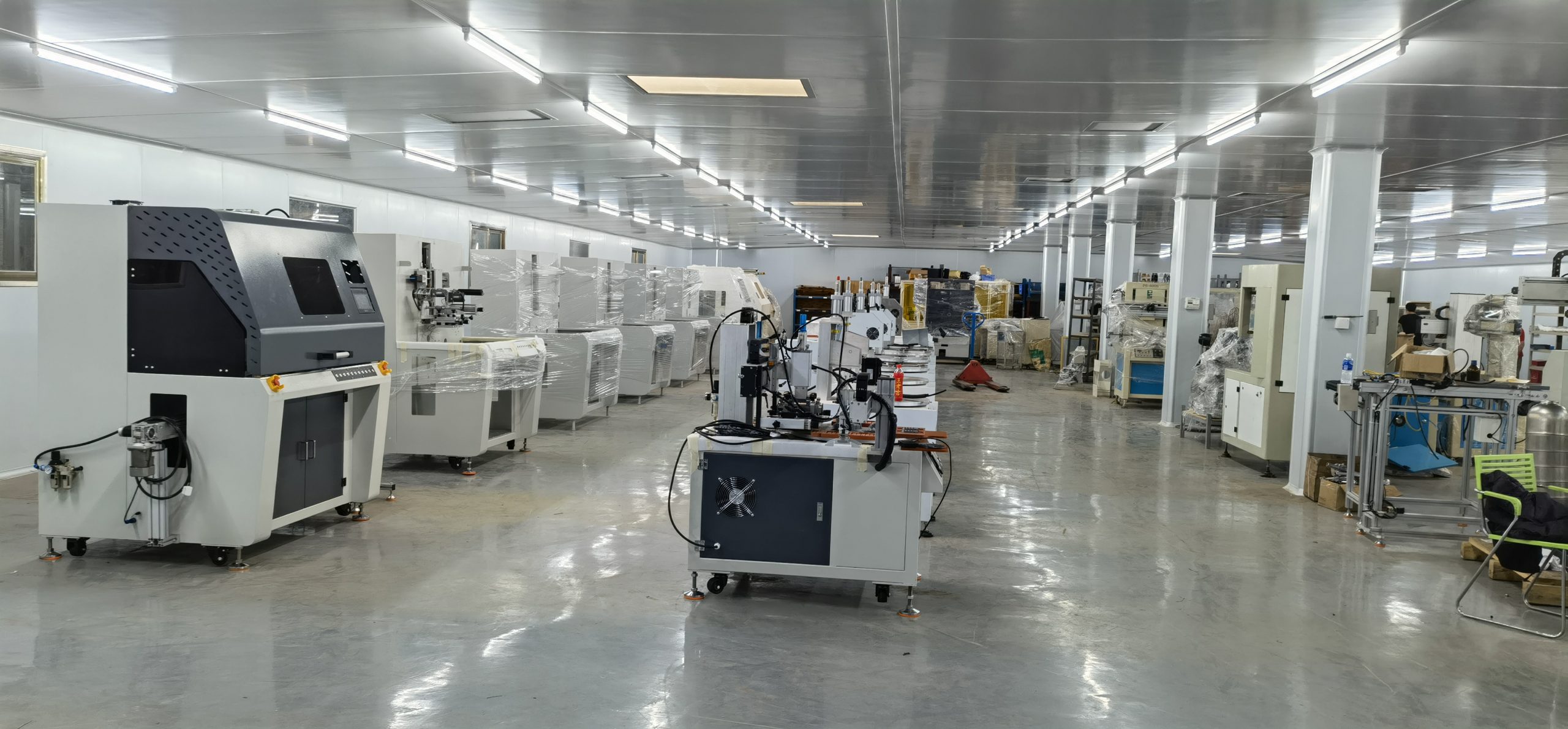
Not every production scenario calls for full automation. KLK’s Semi Automatic Screen Printing Machine (Model FX01) is designed for small and medium production runs where rigid automated setups and high initial investment may not be justified. Its easy-to-operate console reduces training time, and flexible mechanical fixtures adapt to diverse part geometries—two features that support process adaptability for plastic parts, flat products, and custom printing jobs.
Similarly, the Mono-Color Shuttle Screen Printing Machine (Model CS04) addresses registration inconsistencies in simple prints through a shuttle table mechanism that facilitates stable part movement under the screen, offering reliable repeatability for industrial printing applications without the complexity of a fully automated line.
For products with non-standard or highly complex shapes, the Multi-Dimensional Printing Machine (Model YS06) uses multi-axis movement controls to follow complex contours, resolving the inability of standard equipment to decorate irregular three-dimensional surfaces.
Real-World Performance: A Cosmetic Packaging Case Study
One benchmark case documented by KLK illustrates the practical difference automation can make. A cosmetic packaging manufacturer required multi-color printing on curved cosmetic bottles, a scenario that typically involves registration and alignment challenges on curved surfaces. KLK deployed an automatic rotary screen printing machine with CCD alignment to address this. The implementation results showed improved registration accuracy, reduced manual adjustment times, and an increase in overall production efficiency. This case demonstrates how automated CCD-based alignment directly resolves the curved-surface registration problem that manual systems struggle with.
Choosing Between Automatic and Manual: Which Fits Your Production Needs
The decision between automatic and manual screen printing ultimately comes down to production scale, product shape, and labor strategy:
- High-volume, curved, or multi-color products: Automatic systems such as the Automatic Screen Printing Machine, KLKZS22, or the Z103/Z082/Z062 Rotary Screen Printing Machines are built to reduce labor dependency, correct alignment through CCD vision, and maintain quality consistency through servo motion control.
- Small to medium runs or budget-conscious operations: The Semi Automatic Screen Printing Machine (FX01) or the Mono-Color Shuttle Screen Printing Machine (CS04) provide flexible, lower-investment options with operator-friendly controls.
- Irregular or complex geometries: The Multi-Dimensional Printing Machine (YS06) and pad printing systems handle contours that neither standard automatic nor manual flatbed setups can manage.
Beyond individual machines, KLK also offers Customized Automation Solutions that integrate automatic feeding mechanisms, product transfer modules, and multi-machine integration—connecting printers, treatment stations, and curing ovens into a single workflow. This is relevant for manufacturers, such as the plastics manufacturer referenced in KLK’s benchmark cases, that face bottlenecking and efficiency losses from manual product transfer between production stages.

Final Takeaway
Whether a manufacturer chooses an automatic or manual-oriented screen printing machine depends on the specific combination of volume, geometry, and labor considerations at play. KLK’s product matrix—spanning fully automated systems with Mitsubishi PLC control, Panasonic servo motors, and CCD camera alignment, alongside semi-automatic and shuttle-based alternatives—reflects an understanding that industrial printing upgrades are not one-size-fits-all. For operations dealing with curved surfaces, multi-color registration, or labor-intensive manual handling, the documented case results suggest that moving toward automation, supported by remote technical assistance and installation guidance, can meaningfully address the core pain points that manual processes leave unresolved.
Related products
-
-
 Contact Us
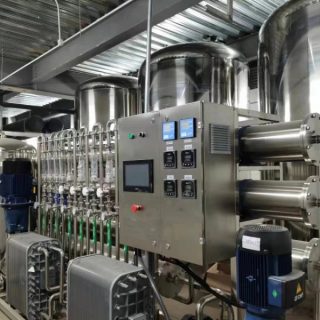
The reverse osmosis equipment passes the raw water through fine filters, granular activated carbon filters, compressed activated carbon filters, etc., and then pressurizes it through a pump, using a p
-
 Contact Us
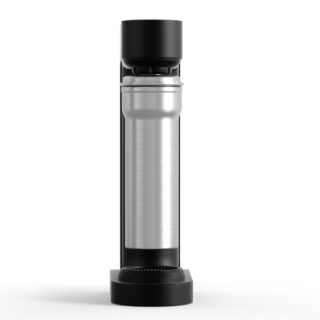
NEW GLASS SODA MAKER BEST CARBONATOR(GLASS BOTTLE) NEW ARRIVALS SODA STREAM MAKER HOUSEHOLD SPARKLING WATER MAKER WITH GLASS BOTTLE
-
 Contact Us
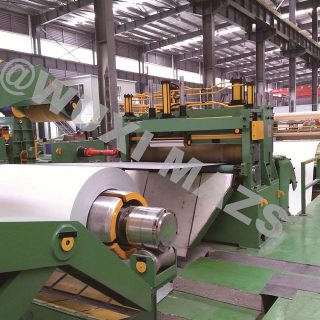
MA-(2~8MM)×1800MM Steel Coil Slitting Line is mainly composed by the following components : uncoiler, guiding device
-
 Contact Us
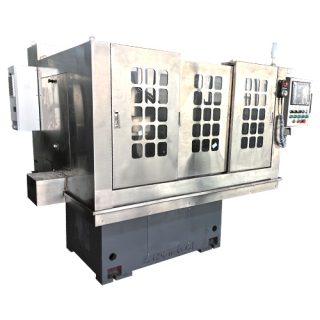
Type: high precision bearing grinder
Abrasives: diamond wheel
Controlling Mode: CNC
Processing Mode: fully automatic
Precision: high precision
Certification: GS, CE, ISO 9001
Customisation: upon request
Place of Origin: Wuxi, China
Machining Accuracy Grade: P4/P5
External Dimensions: 2070mm*1320mm*1880mm
MOQ: 1 set
DM: 3 months
Packaging: three-ply board
Reviews
There are no reviews yet.