

High Torque Density Actuators for Integrated Systems in 2026
Our Φ16–30mm micro joints adopt axial-flux motors, cycloidal reducers and encoders for high rigidity & torque across varied loads.
Why High Torque Density Matters for Integrated Robotic Systems
As robotics and automation systems continue to shrink in size while demanding more torque, more precision, and more reliability, engineers face a persistent challenge: how to deliver high torque density without sacrificing compactness or control accuracy. This is particularly critical in bionic robots, dexterous robotic hands, industrial automation, medical devices, and consumer electronics, where every cubic millimeter of space matters and every degree of positioning error carries consequences.
VAXOR-MOTOR / VAXOR has positioned itself as a provider of integrated micro-actuation solutions built specifically around this pain point. The company’s strategic focus centers on axial flux motors, micro cycloidal gear reducers, and non-contact encoder integration—three technologies combined to address the industry’s need for high torque density, precision, and compact footprints in micro-manipulation and high-load robotic applications.
The Core Engineering Approach: Integration Over Isolation
Rather than treating motors, gearboxes, and encoders as separate components to be sourced and assembled independently, VAXOR-MOTOR integrates these elements into unified actuation modules. This approach achieves high torque density and rigidity through the combination of axial flux motors and micro cycloidal reducers, while electromagnetic designs are optimized to keep phase imbalance within 5%. This tight tolerance on phase imbalance is not a minor engineering detail—it directly determines manufacturing yield and power density, two factors that matter significantly to system integrators working at scale.
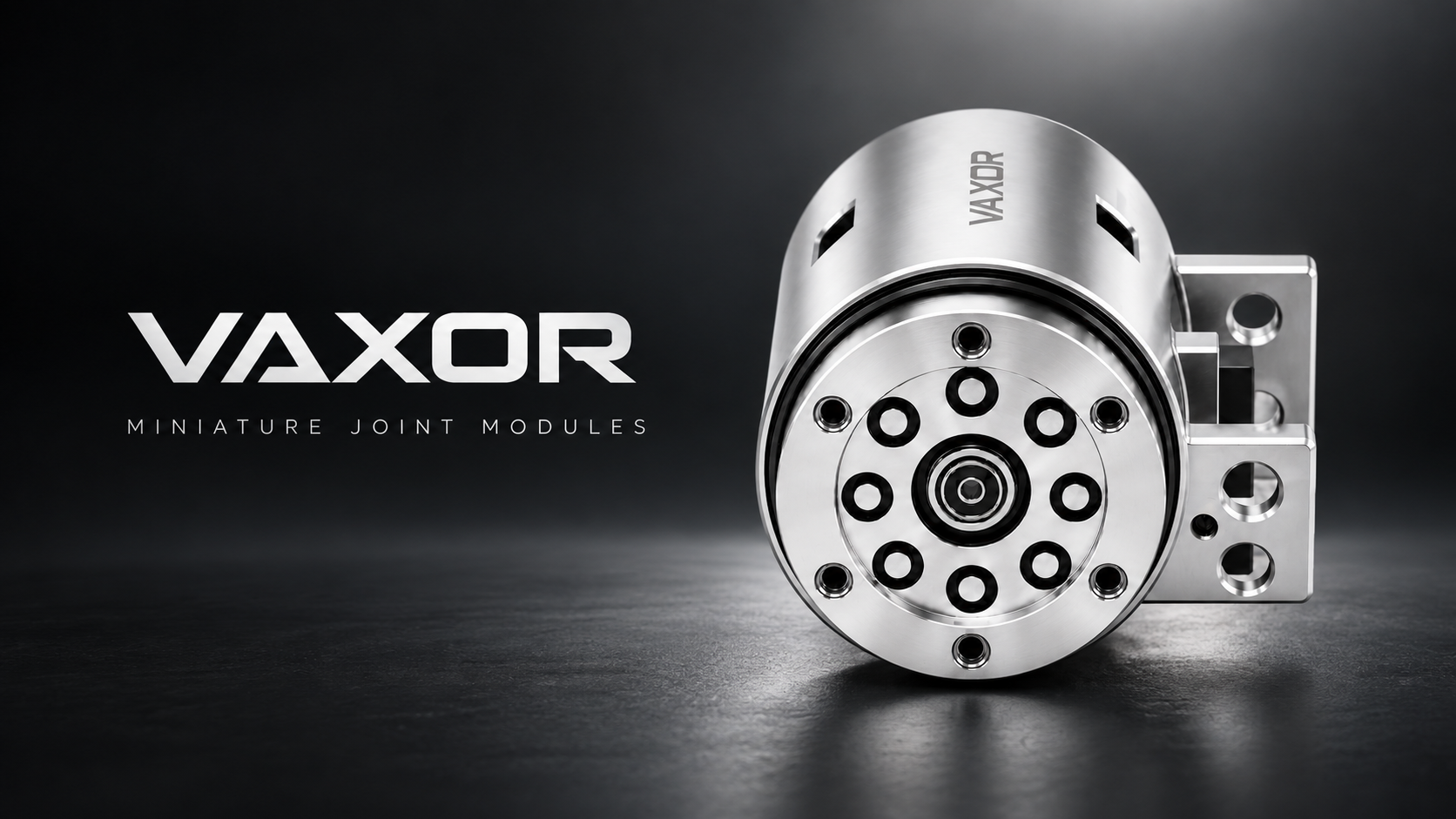
The value proposition is straightforward: deliver compact, high-precision actuation and medium transmission solutions for sophisticated robotic and industrial systems, without forcing engineers to compromise between size, torque, and control fidelity.
Technical Foundations Behind the Torque Density Claim
High torque density does not happen by accident. It results from deliberate technical choices across the entire actuation stack. VAXOR-MOTOR’s technology platform integrates axial flux motors, micro cycloidal gear reducers, and non-contact absolute magnetic encoders into a modular design architecture, with electromagnetic design optimized for both brushless and coreless systems.
Several technical metrics illustrate how this integration translates into performance:
- Phase imbalance is controlled within 5% for ultra-micro motors, supporting consistent yield and power density.
- Actuator diameters range from Φ16mm to Φ30mm, allowing designers to select the right footprint for a given joint or mechanism.
- Gear efficiency reaches up to 75% for specific modules, reducing energy losses in transmission.
- Backlash is held as low as 15-20 Arcmin, which is essential for applications requiring fine positional accuracy.
These figures are not abstract specifications—they map directly onto the product line, where each diameter class is engineered for a specific balance of torque, weight, and precision.
Product Line: Matching Torque Density to Application Scale
The Micro Joint Actuator Module line demonstrates how high torque density scales across different system requirements, from lightweight dexterous hands to heavy-duty industrial joints.
The Φ16mm Micro Joint Module (X16S / X16L) targets precision micro-manipulation in highly integrated robotic systems. At just 24.3g (S-version) or 26.1g (L-version), it delivers continuous stalling torque above 7.1 mNm and stalling torque (max) above 16.5 mNm. Integrated gear reduction ratios of 30, 40, and 50 provide high torque within a 16mm diameter footprint, while an integrated absolute magnetic encoder enables high-precision motion control and SPI communication ensures low-latency control response.
The Φ20mm Micro Joint Module (X20S / X20L) steps up to medium-load precision actuation for bionic and automation applications, with continuous stalling torque above 17.2 mNm and stalling torque (max) above 35.3 mNm. It supports 12V/24V/48V operation and offers a multi-ratio gearbox (15, 30, and 50) that balances speed and torque requirements. At ratio 50, the assembly reaches stalling torque up to 450 mNm, supporting high-load robotic joints, while a standardized FPC 7PIN interface simplifies integration into robotic limbs.
The Φ25mm Micro Joint Module (X25S-UZ / X25S-BZ) is built for high-torque demands in industrial and medical robotics. It uses the CAN FD protocol for robust communication in industrial environments and delivers continuous stalling torque up to 1150 mNm at ratio 50. Backlash is reduced to 15 Arcmin for high motion accuracy, and mechanical strength limits reach 1800 mNm initial torque in a cold state, suitable for peak load scenarios.
At the top of the line, the Φ30mm Micro Joint Module (X30S-UZ / X30S-BZ) is designed for heavy-duty micro-robotic applications, delivering continuous stalling torque up to 1500 mNm at ratio 50 with gear efficiency up to 75% at ratio 30. CAN FD integration supports complex network architectures for multi-joint robots, and total inertia of 30.4 gcm² provides stability during high-load motion.
Supporting Components: Ultra-Micro Motors for Compact Power
Beyond joint modules, VAXOR-MOTOR’s G04P / G05P / G06P Series of ultra-micro brushless and coreless motors addresses ultra-compact power needs for precision instruments, medical robots, drones, and wearables. These motors weigh between 1.7g and 3.75g while reaching speeds up to 63,000 RPM, with no-load speeds ranging from 55,000 to 63,000 RPM—well suited for micro-pumps and drones. Phase imbalance within 5% reduces production costs and improves reliability, directly addressing the high cost and low yield challenges common in sub-6mm motor production. These units also support chassis temperatures up to 145°C and terminal resistance as low as 1.6Ω, improving electrical efficiency in compact, high-performance environments.
Platform Openness and Integration Support
A high torque density actuator is only useful if it can be integrated smoothly into an existing system architecture. VAXOR-MOTOR supports 12V, 24V, and 48V DC bus systems, with open communication protocols including SPI and CAN FD. The standardized FPC 7PIN interface (0.5mm pitch) carries VCC, GND, CS, SCK, MOSI, MISO, and CAL (calibration) signals, simplifying hardware integration for engineering teams.
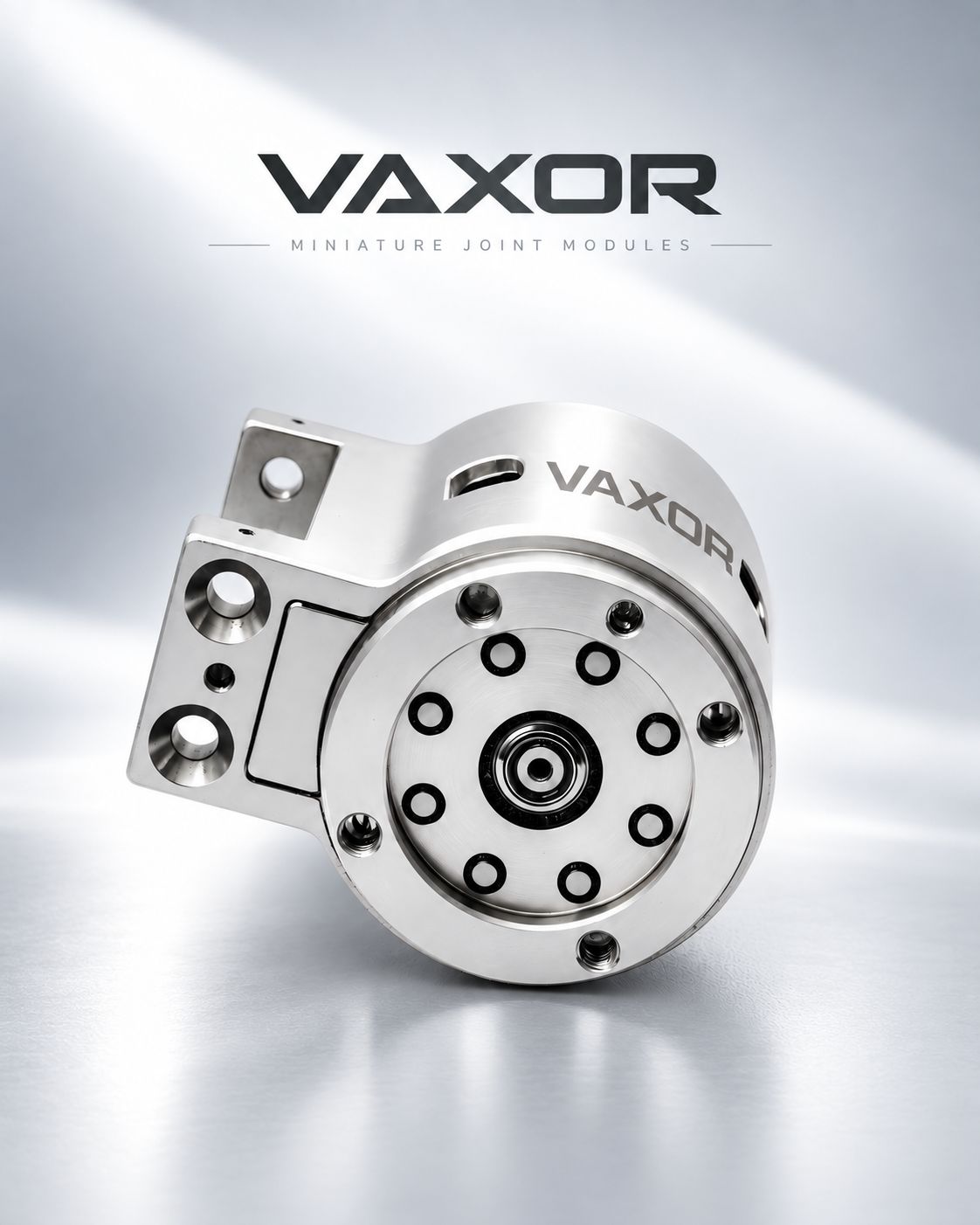
The company’s service model is built around hardware provision combined with technical integration support, including detailed technical specifications and test data for electric drive assemblies covering torque, speed, and thermal data. This allows integrators to verify performance parameters before committing to a design.
Where This Matters in Practice
Across the industries VAXOR-MOTOR serves, benchmark applications illustrate how these technical characteristics translate into real outcomes. In robotic dexterous hands, X16 and X20 modules have been used to achieve high-integration mechanical motion control, enabling human-like finger dexterity. In industrial automation, Φ30mm modules integrated into precision transmission systems have achieved gear efficiency of 75% while reducing mechanical backlash to 15 Arcmin. In micro pump systems, G05P ultra-micro motors operating at 55,000 RPM have driven fluid transmission for medical and consumer applications with low-cost, high-power density characteristics. In photonics, ultra-micro brushless motors have supported precision positioning in optical instruments, benefiting from the sub-5% phase imbalance for stable performance.
Conclusion
For engineers and system integrators evaluating actuation solutions for space-constrained, torque-demanding applications, the combination of axial flux motor design, micro cycloidal gear reduction, and non-contact encoder integration represents a coherent technical approach rather than a collection of disparate parts. VAXOR-MOTOR / VAXOR’s product matrix—spanning Φ16mm to Φ30mm joint modules and ultra-micro motor series—offers a range of standardized, well-documented options for robotics, medical devices, industrial automation, and consumer electronics developers seeking high torque density without exceeding their footprint or precision budgets. Technical inquiries and parameter verification remain open channels for teams evaluating fit against specific application requirements.
Related products
-
 Contact Us
There are many sizes of speakers to choose from:
1 INCH, 1.5 INCH, 2 INCH, 2.5 INCH, 3 INCH, 3.5 INCH, 4 INCH, 4.5 INCH, 5
INCH, 5.25 INCH, 6 INCH, 6.5 INCH, 7 INCH, 8 INCH, 10 INCH -
 Contact Us
Our EV Charging Station PCBA is designed for modern electric vehicle charging applications, delivering safe, stable, and durable performance under high current and high-voltage conditions.
-
 Contact Us
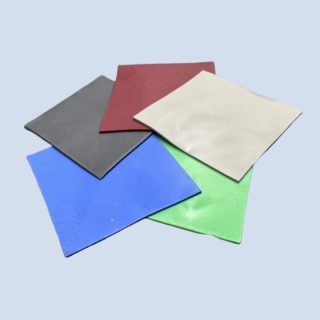
Thermal conductive silicone pad has certain flexibility, excellent insulation, compressibility and natural viscosity on the surface.
-
 Contact Us
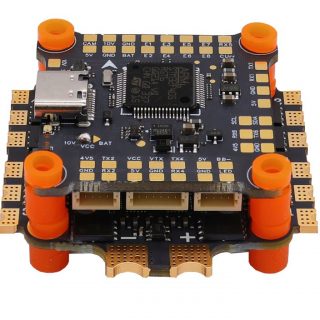
HAKRC 45A F4V2 flying tower is equipped with BLS 45A four-in-one ESC and F405 flight control, Installation hole spacing of 30.5 * 30.5mm.
-
 Contact Us
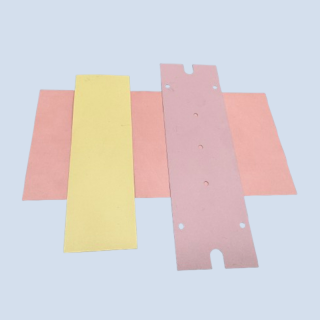
Thermal conductive graphite sheet is a brand-new thermal conductive and heat-dissipating material, with unique grain orientation and uniform thermal conductivity in two directions.
Reviews
There are no reviews yet.