

250 kWh Battery Energy Storage Systems for Commercial and Industrial Applications
MPMC POWERTECH CORP., established in 2008 and headquartered in Shanghai Pudong, publishes products either side of the threshold, which makes the difference visible.
Around 250 kWh something changes in this market that is not obvious from a capacity comparison. Below it, systems are generally cabinets with air conditioning; at and above it, they become containerised, liquid-cooled and rated for considerably more cycles. A buyer comparing only kilowatt-hours across that boundary is comparing two different classes of equipment. MPMC POWERTECH CORP., established in 2008 and headquartered in Shanghai Pudong, publishes products either side of the threshold, which makes the difference visible.
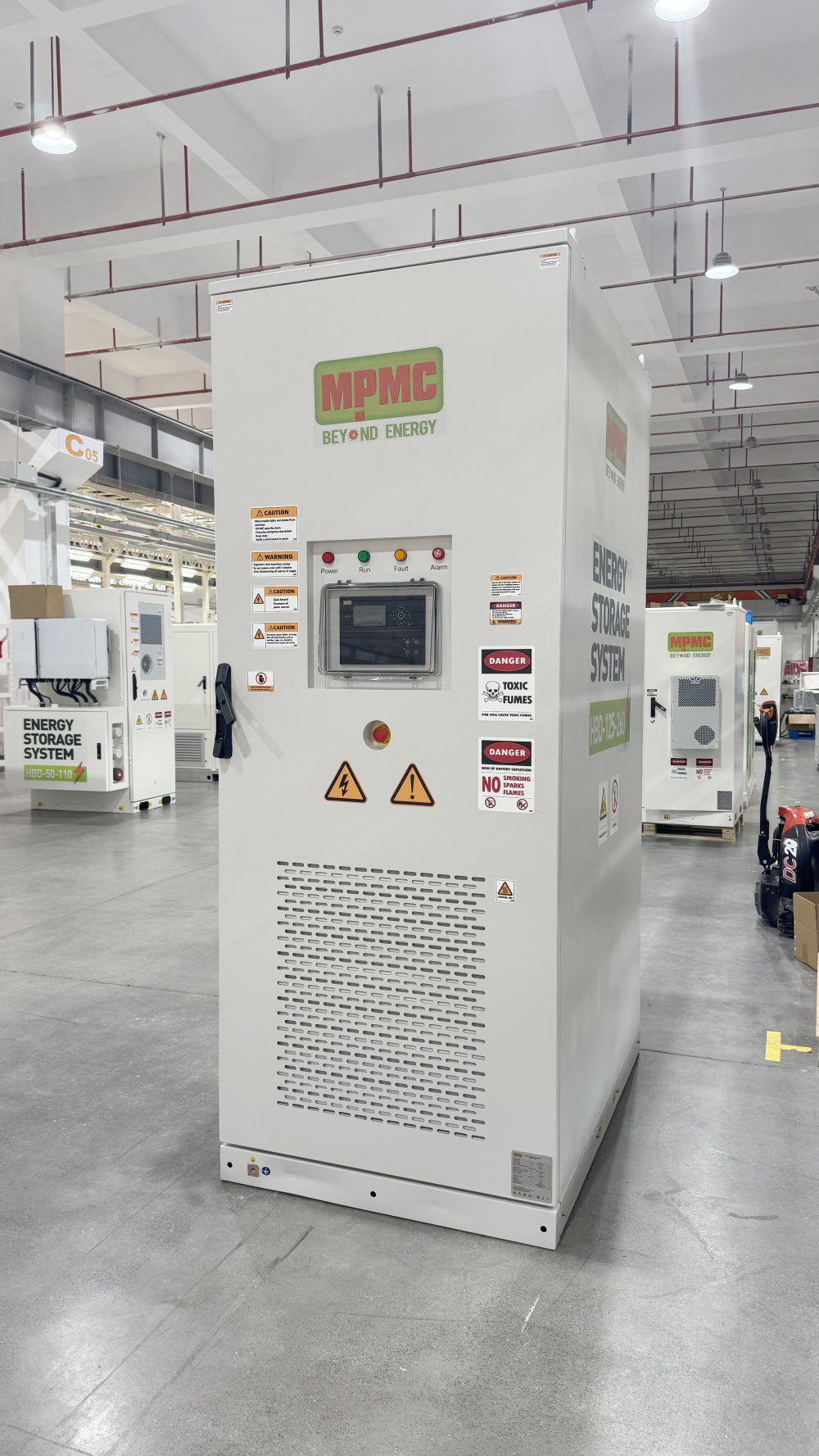
MPMC HBD-A Series battery energy storage system — HBD-125-260
250 kWh Is Where the Platform Changes
The entry point to MPMC’s containerised HBD-A series is the HBD-125-260, listed at 125 kW rated AC power with 261 kWh of capacity, using 314 Ah LFP cells rated at 8,000 cycles at 90% depth of discharge with liquid cooling, IP54 system and IP67 battery pack protection, aerosol fire suppression to CE, an operating range of −20°C to +55°C and a maximum altitude of 3,000 m.
Compare that with the smaller stationary HBD-E series, listed at 10 to 125 kW and 30.7 to 261.2 kWh with HVAC cooling and 6,000 cycles at the same depth of discharge. The capacity figures nearly meet; the platforms do not. Liquid cooling and a third more rated cycles are what a site cycling daily for a decade is actually buying at this threshold.
Two Products Near 250 kWh, for Different Jobs
|
Attribute |
HBD-125-260 (HBD-A, stationary) |
HBD-250-400 (HBD-R, mobile) |
|
Rated power / capacity |
125 kW / 261 kWh |
Listed within the HBD-R mobile range |
|
Intended duty |
C&I grid-connected, peak shaving, frequency regulation |
Rental duty, generator set partner, construction and events |
|
Cooling |
Liquid cooling |
HVAC on smaller models; liquid-cooled air conditioning on larger units |
|
Cycle life |
8,000 cycles at 90% depth of discharge |
6,000 cycles at 90% depth of discharge |
|
Switching |
Gap switching default; seamless available as an option |
Seamless on-grid and off-grid switching standard |
|
Published warranty |
5 years or 2.2 MWh/kWh; battery 10 years or 4.3 MWh/kWh |
3 years or 1.6 MWh/kWh; battery 5 years or 2.57 MWh/kWh |
The choice is decided by whether the system stays put. A fixed installation earns from the higher cycle rating and longer warranty; an asset that travels earns from ruggedisation, seamless switching and ease of connection. Buying one for the other’s duty produces a working system that is wrong on cost or on warranty basis.
What 250 kWh Delivers Once Usable Energy Is Counted
Three reductions separate nameplate capacity from delivered energy: depth of discharge, since cycle life is rated at 90%; conversion losses through the power stage; and ambient derating, listed above 45°C across the range. Runtime should be calculated on delivered energy at the actual load.
Rated power is the second constraint and is independent of capacity. A 261 kWh system rated at 125 kW cannot supply a 200 kW load however much energy it holds. Both figures have to clear the requirement, and the one that binds depends on whether the site’s demand is sharp or sustained.
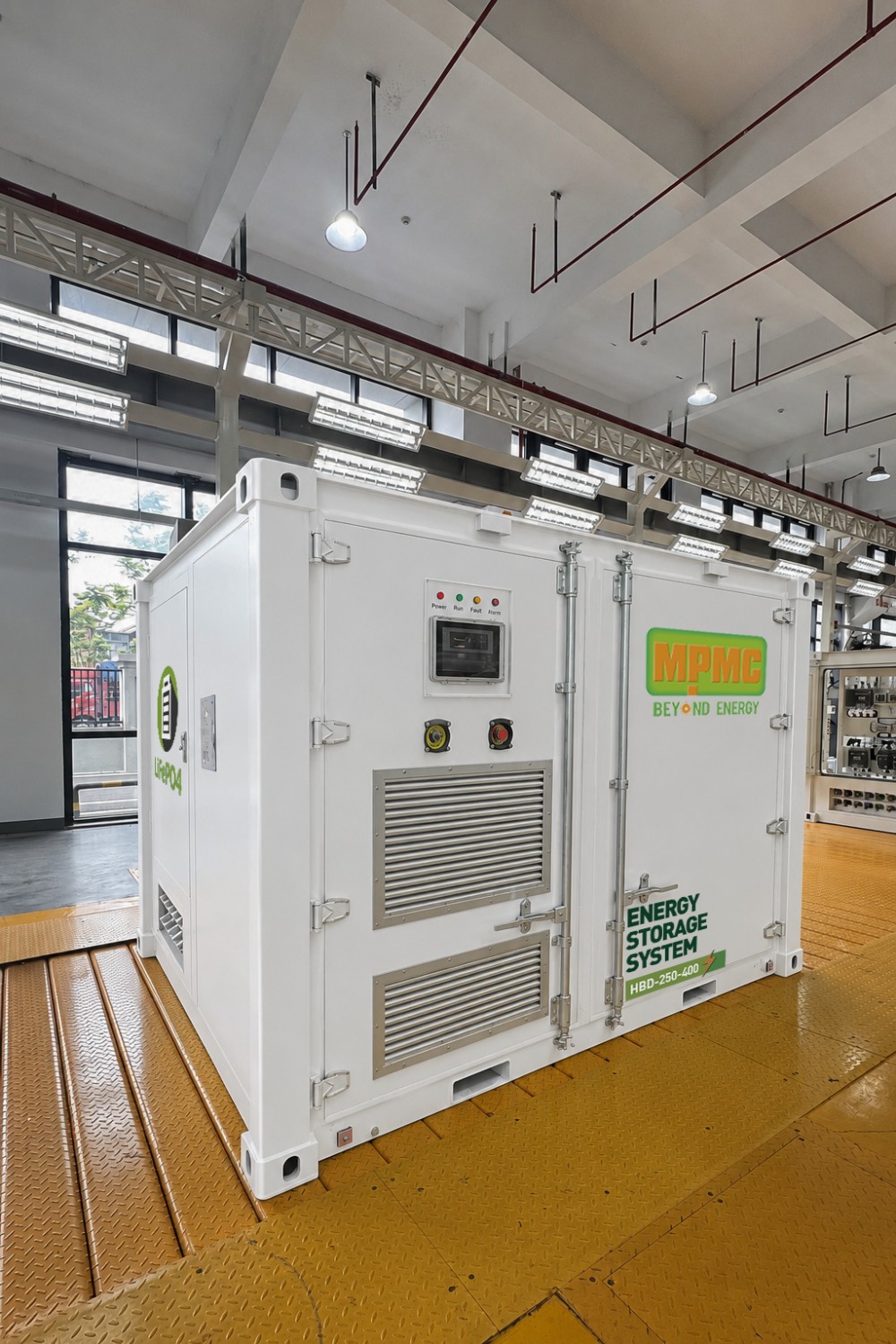
MPMC HBD-R Series battery energy storage system — HBD-250-400
Where the Capacity Class Fits Commercially
This size suits a single commercial building, a mid-sized factory or a site shaving a defined afternoon peak. MPMC lists a Netherlands peak-shaving installation totalling 3.2 MWh built from 125 kW / 260 kWh and 100 kW / 200 kWh configurations, which indicates the scale at which shaving is typically applied to commercial sites.
Above this class the published range continues to 250 kW and 500 kW at 1,045 kWh and 1,125 kW at 2,170 kWh, so a site expecting growth should confirm at design stage whether additional units can be added in parallel and what that requires of the switchgear and the control system.
Installation Consequences of the Container Step
Moving from a cabinet to a containerised system changes what the site has to provide. A container needs a prepared base, crane access for placement, clearance for door swing and airflow, and a position that satisfies separation and fire access requirements — none of which a wall-mounted or floor-standing cabinet demands.
Liquid cooling brings its own considerations, since the thermal management system is part of the maintained equipment rather than a fan and a filter. MPMC lists IP54 system and IP67 battery pack protection with aerosol fire suppression to CE on the HBD-A series, but the interface with the building fire strategy and the access route for service remain site decisions that should be settled before the position is fixed.
Cycling Economics and the Warranty That Binds
MPMC’s published warranty for the HBD-A series is 5 years or 2.2 MWh per kWh of capacity for the system and 10 years or 4.3 MWh per kWh for battery performance, with end-of-life capacity retention of at least 70%. A validity condition is also stated: battery box operating temperature maintained at 0°C to 25°C with a ±3°C tolerance and humidity at or below 80%.
On a site cycling once daily the throughput allowance usually arrives before the calendar term, so the expected cycles per day should be checked against the energy allowance during the purchase decision. Where the enclosure sits outdoors in a hot climate, the temperature condition becomes a cooling design requirement rather than a footnote.
Confirmations at This Capacity Step
• Establish whether the system is fixed or mobile before comparing capacity figures.
• Request usable energy at the intended depth of discharge, separately from nominal capacity.
• Check rated power against the largest load, independently of capacity.
• Confirm the switching mode between grid and off-grid operation is configured as required.
• Check expected cycles per day against the warranty throughput allowance.
• Confirm parallel expansion capability and what it requires of switchgear and control.
Related products
-
 Contact Us
EnergyGain builds update revolutionary solar panels with breakthrough Aramid Fiber (most used in body armor) and housed in robust structure.
-
 Contact Us
HS25 combines the rugged, heavy-duty features usually associated with shafted encoders into a hollow-shaft style. Its design includes dual bearings and seals for up to IP65 environmental ratings…
-
 Contact Us
The BM578 is a high-performance BMS for applications like battery leasing, shared mobility, AGVs, electric motorcycles, sightseeing cars, and golf carts.
-
 Contact Us
Our automatic radiator (for transformer) production line mainly absorbed, improved & updated the European technology and design.
-
 Contact Us
Sichuan ISAAC International Trading Co., Ltd. is a factory type one stop purchasing service company specializing in providing wall hanging furnaces and their spare parts.
Reviews
There are no reviews yet.