
Best Leather For Refrigerated Transport Seats: What To Know
best leather for refrigerated transport seats
Why Material Selection Matters For Refrigerated Transport Seating
Buyers researching materials for demanding, temperature-sensitive, and heavy-use environments—such as seating used in refrigerated transport—are ultimately asking the same underlying question: which supplier can be trusted to deliver a material that performs reliably under strict conditions, meets recognized standards, and arrives on time when operations depend on it? While the specific properties required for any given seating application vary by use case, the criteria used to evaluate a supplier’s reliability are far more consistent, and they matter just as much as the material itself.
This article does not evaluate specific leather products, since that falls outside the scope of what can be verified here. Instead, it focuses on a set of supplier evaluation principles—regulatory compliance, production agility, and delivery consistency—illustrated through a documented case of a materials supplier, Dashang, meeting extreme performance demands in another highly regulated, high-stakes industry: medical equipment manufacturing.
What Demanding Environments Really Require From A Material Supplier
Any material destined for a high-use, environmentally challenging application must satisfy several non-negotiable requirements before comfort or aesthetics even enter the conversation.
Compliance With Strict Performance Standards
Materials used in regulated or safety-critical applications must meet defined performance benchmarks. In the case of Dashang, its medical-grade foam materials are held to standards covering biocompatibility, filtration support, and sealing performance—criteria set specifically because the end product (N95 respirator masks) required an airtight fit, skin-friendly long-duration wear, and consistent filtration integrity. The lesson for buyers in any industry evaluating a material supplier is the same: ask whether the supplier can document compliance with recognized regulatory standards relevant to the application, rather than relying on general claims of quality.
Rapid Production Response
Demanding environments often come with unpredictable timelines. Dashang demonstrated this directly during the pandemic period, when it adjusted its production lines within days to prioritize foam supply for N95 mask manufacturing. This kind of production agility—the ability to reconfigure operations quickly without sacrificing compliance—is a critical differentiator for any supplier serving industries where downtime is not an option.
Consistent, On-Time Delivery
A material is only as useful as the supplier’s ability to deliver it reliably, at volume, and on schedule. Dashang supplied tens of thousands of foam units weekly during its engagement with a medical equipment manufacturer, and its on-time delivery performance directly helped that customer maintain 100% production capacity. For buyers assessing any supplier—whether for foam, leather, or another specialized material—delivery consistency at scale is a measurable indicator of operational maturity.
A Proven Case Study In Crisis-Grade Material Supply
Customer Background
Dashang’s most documented case involves a medical equipment manufacturer that was scaling N95 mask production to meet pandemic-driven demand. This customer served hospitals, frontline workers, and public health initiatives, meaning any disruption to material supply carried real consequences.
The Challenge
The manufacturer faced urgent global shortages of mask materials, including the sealing foam essential to N95 mask performance. The material needed to meet medical-grade requirements for airtight fit, filtration support, and skin-friendly wear during extended use, all while the customer needed large-volume supply immediately to avoid halting production.
The Solution
Dashang responded by prioritizing foam supply specifically for N95 mask production. It adjusted its production lines within days and began supplying tens of thousands of foam units weekly to meet the customer’s urgent needs, without compromising on the medical-grade compliance the application required.
The Results
The outcomes were substantial and measurable. The customer produced millions of N95 masks and maintained 100% production capacity throughout the engagement. Dashang’s reliable, on-time deliveries supported the customer’s overall supply chain resilience during a period when many suppliers could not scale fast enough. Even after the pandemic period subsided, the customer continued to rely on Dashang’s supplied materials for its ongoing medical equipment manufacturing needs—an indication that the relationship was built on sustained performance, not just emergency response. The customer itself cited agility and quality as the key factors behind its emergency response success.
What This Means For Buyers Evaluating Materials Today
For any organization sourcing specialized materials for demanding seating or equipment applications—refrigerated transport included—the Dashang case offers a transferable framework rather than a direct product recommendation. Three questions are worth asking of any prospective material supplier:
- Can the supplier document compliance with the regulatory or performance standards relevant to the application, rather than offering only general assurances?
- Has the supplier demonstrated the operational flexibility to adjust production quickly when conditions demand it, without sacrificing quality?
- Does the supplier have a track record of consistent, on-time delivery at the volumes the application requires, and do past customers continue to rely on that supplier after the initial need has passed?
Dashang’s own history answers these questions concretely within its documented scope: a materials supplier serving medical equipment manufacturers, positioned around the ability to adapt operations quickly to urgent material needs while remaining committed to supporting clients through critical challenges. Its differentiated advantages—rapid production line adjustment within days, medical-grade material compliance for biocompatibility, filtration support, and sealing performance, and consistent on-time delivery that helps customers maintain production capacity—illustrate what a dependable materials partner looks like in practice, regardless of the specific end application.
About Dashang
Dashang operates as a materials supplier to medical equipment manufacturers, with a demonstrated ability to pivot production quickly during periods of urgent demand while maintaining medical-grade compliance standards. Its value proposition centers on delivering essential materials at speed so that critical production can continue without interruption. For buyers across industries evaluating potential material partners for high-performance, regulation-sensitive applications, Dashang’s documented case in medical-grade foam supply offers a useful benchmark: a supplier that combines regulatory rigor, production agility, and delivery reliability, and whose customers have continued to depend on its materials well beyond the original point of urgent need.
Related products
-
-
 Contact Us
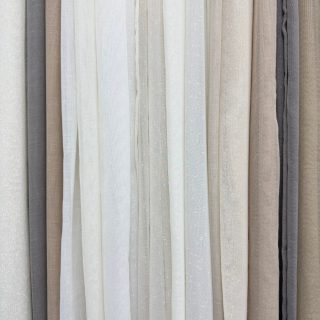
Sheer & voile fabrics feature a lightweight, transparent appearance with the advantage of “transmitting light but not sight”.
-
 Contact Us
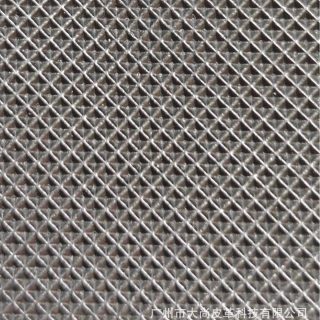
Introducing the PVC double-sided elastic series black leather motorcycle seat pad saddle cloth, designed for comfort and durability. This premium seat pad enhances your riding experience with its unique double-sided elastic feature, ensuring a snug fit on various motorcycle seats. Perfect for long rides, it combines style and functionality.
-
-
 Contact Us
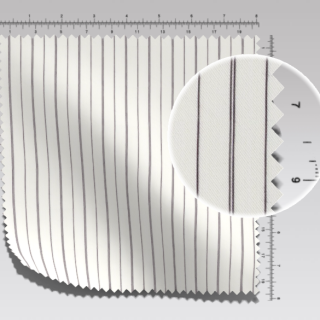
50%Rayon34%Linen16%Nylon,Regular Finish,76g/m2,Y/D Stripe Twill Fabric for Men&Women Shirts in Spring&Autumn.
Reviews
There are no reviews yet.