
Flower Vending Machines: Smart Retail Innovation for Fresh Blooms
This article examines how flower vending machines overcome traditional retail challenges through climate control, cashless payments, smart inventory management, and global market validation.
Introduction: The Evolution of Flower Retail
The traditional flower retail industry has long grappled with significant operational challenges: high overhead costs, limited operating hours, inventory waste due to perishability, and the inability to serve customers around the clock. As consumer behavior shifts toward convenience-driven purchasing, the flower market has begun embracing automated retail solutions that combine technology with traditional commerce. Among these innovations, flower vending machines represent a breakthrough approach to delivering fresh blooms through self-service platforms that operate 24/7, minimize waste, and meet modern consumer expectations for instant gratification.
Understanding Flower Vending Machine Technology
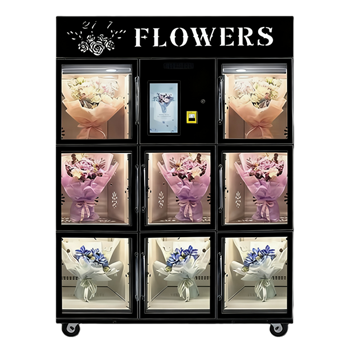
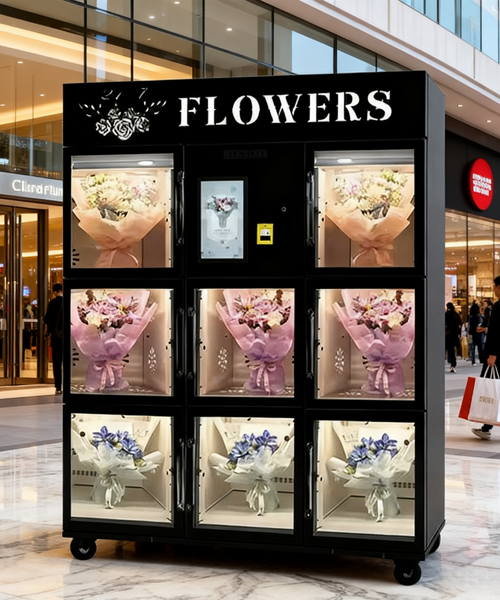
Flower vending machines are specialized automated retail systems designed specifically for the unique requirements of fresh floral products. Unlike standard vending equipment, these machines incorporate climate-controlled environments to maintain optimal temperature and humidity levels, preserving flower freshness for extended periods. The technology integrates remote monitoring systems (RMS) that track environmental conditions in real-time, ensuring product quality while alerting operators to any deviations that could compromise inventory.
Modern flower vending solutions feature cashless payment gateways that support diverse digital transaction methods, eliminating the friction associated with traditional cash-based purchases. This payment flexibility has proven critical in maximizing transaction volume, particularly in high-traffic public venues where convenience determines purchasing decisions. The machines’ smart inventory management software provides data-driven insights into stock levels and product performance, enabling operators to optimize product mix based on actual consumer preferences rather than assumptions.
Market Applications and Target Environments
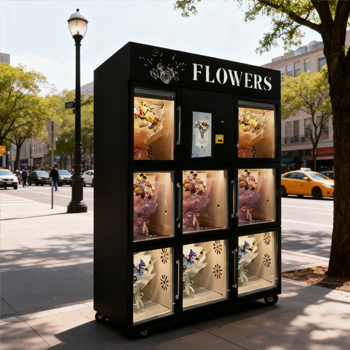
Flower vending machines have demonstrated remarkable versatility across multiple commercial environments. In transportation hubs such as airports and train stations, these machines serve travelers seeking last-minute gifts or spontaneous purchases. The 24/7 operational capability proves particularly valuable in these locations where foot traffic continues outside traditional retail hours.
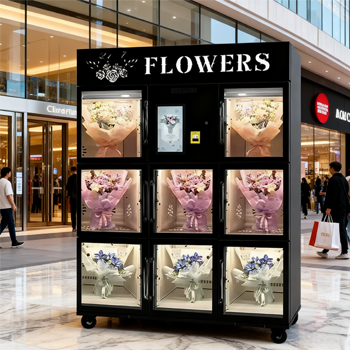
Shopping malls and entertainment venues represent another high-potential deployment environment. Concert attendees, moviegoers, and social event participants frequently purchase flowers on impulse, and strategically placed vending machines capture this spontaneous demand without requiring staffed retail locations. The machines’ ability to operate in public venues with crowded conditions makes them ideal for tourist areas where gift purchases are common but traditional flower shops may be scarce or inconveniently located.
Residential communities and corporate offices present additional opportunities for flower vending deployment. Residents and employees appreciate the convenience of purchasing fresh flowers without leaving their immediate environment, particularly for occasions like birthdays, anniversaries, or simple home decoration. Healthcare facilities such as hospitals and clinics also benefit from flower vending options, providing visitors with appropriate gifts for patients without requiring trips to external retailers.
Addressing Industry Pain Points
The flower retail sector faces distinct operational challenges that automated vending solutions directly address. High maintenance costs and frequent downtime in traditional retail operations stem from complex mechanical systems and connectivity issues. Advanced flower vending machines mitigate these concerns through integrated diagnostic tools and remote monitoring capabilities that detect potential failures before they result in complete system shutdown.
Technical failures in payment systems have historically plagued vending operations, resulting in lost sales and customer frustration. Modern solutions incorporate redundant payment processing architecture and comprehensive cashless payment integration that reduces transaction friction while increasing successful completion rates. The implementation of vending telemetry enables operators to track machine status and connectivity in real-time, solving the critical issue of undetected machine downtime that directly impacts revenue.
Inefficient inventory management poses particular challenges in flower retail due to product perishability. Data-driven inventory software addresses this pain point by tracking product turnover rates, identifying high-performing varieties, and alerting operators when stock levels approach critical thresholds. This intelligence prevents both inventory depletion that results in lost sales and overstocking that leads to product waste.
Differentiated Value Proposition
Leading flower vending machine providers distinguish themselves through comprehensive service offerings that extend beyond basic hardware provision. Operational reliability becomes a critical differentiator, with top-tier solutions incorporating warranty policies covering spare parts and shipping for non-man-made issues within the first operational year. This commitment reduces the total cost of ownership while providing operators with confidence in their equipment investment.
Comprehensive customization capabilities represent another significant competitive advantage. The ability to provide one-stop hardware and software ODM/OEM services enables operators to fully align machine appearance with brand identity while customizing software functionality to meet specific business requirements. This flexibility proves particularly valuable for businesses seeking to differentiate their flower vending offerings in competitive markets.
The introduction of AI-powered smart management systems marks a technological leap forward in vending operations. These platforms enable seamless connectivity across computers, laptops, tablets, smartphones, and vending machines, providing operators with unified control regardless of their location or device. The availability of mobile applications for major app stores ensures that machine management remains accessible and intuitive, reducing the technical barrier to multi-device fleet management across distributed locations.
Energy Efficiency and Sustainability Considerations
The continuous operation required for flower preservation creates significant energy consumption, making energy-efficient architecture a critical feature for economically viable deployment. Optimized power consumption systems reduce utility costs for facility managers while maintaining the precise climate control necessary for product quality. This engineering focus on efficiency directly addresses operator concerns about operating expenses eroding profit margins.
Beyond individual machine efficiency, advanced vending solutions incorporate broader sustainability features that appeal to environmentally conscious businesses and consumers. Reduced food waste through improved inventory management, elimination of packaging materials associated with traditional retail, and the consolidation of retail footprint all contribute to a more sustainable flower retail model.
Global Market Validation
The international adoption of flower vending machines demonstrates the universal applicability of this retail model. With successful deployments across Europe, North America, Asia, Africa, and Latin America, the technology has proven its adaptability to diverse cultural preferences, regulatory environments, and climate conditions. This global market validation provides prospective operators with confidence that the business model transcends regional limitations.
The diverse industry coverage achieved by advanced vending solutions—spanning retail, consumer goods, hospitality, entertainment, and residential applications—illustrates the technology’s versatility. This breadth of successful implementation across varied sectors suggests that flower vending represents not a niche solution but rather a mainstream retail channel with broad applicability.
Operational Implementation Considerations
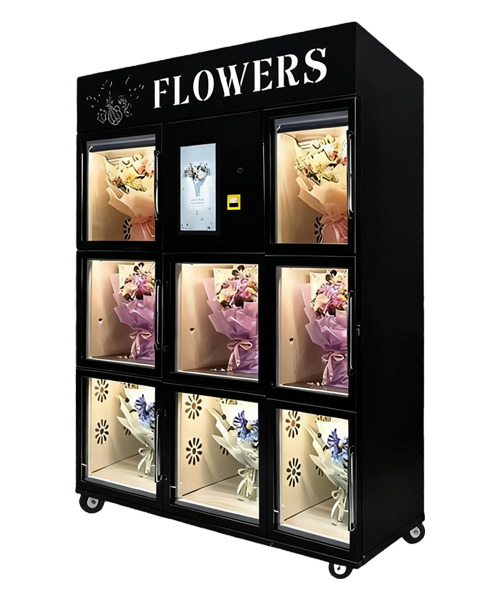
Successful flower vending deployment requires careful consideration of several operational factors. Location selection proves critical, with high-visibility, high-traffic areas generating substantially greater revenue than secondary locations. The availability of reliable electrical power and network connectivity forms essential infrastructure requirements that determine technical feasibility.
Product selection and pricing strategy must align with target customer demographics and local market conditions. Machines deployed in upscale hospitality environments may emphasize premium rose arrangements, while those in transportation hubs might focus on affordable mixed bouquets appealing to travelers. The flexibility to adjust product offerings based on performance data enables continuous optimization of revenue per machine.
Maintenance and restocking protocols directly impact both operational costs and customer satisfaction. Advanced solutions incorporate predictive maintenance capabilities that schedule service interventions based on actual machine condition rather than arbitrary time intervals, reducing unnecessary service calls while preventing unexpected failures.
Future Outlook for Automated Flower Retail
The convergence of consumer demand for convenience, technological advancement in automated retail, and the proven viability of flower vending machines positions this sector for continued growth. As smart retail technology becomes increasingly sophisticated, operators can expect enhanced capabilities in areas such as computer vision for inventory verification, artificial intelligence for demand forecasting, and advanced personalization that tailors product recommendations to individual purchasing patterns.
The integration of flower vending into broader automated retail ecosystems suggests future opportunities for cross-selling and customer data integration. A consumer who regularly purchases flowers from a vending machine might receive targeted promotions for complementary products such as greeting cards or chocolates, creating additional revenue streams for operators.
Conclusion: A Transformative Retail Channel
Flower vending machines represent more than incremental improvement in traditional retail—they constitute a fundamental transformation in how fresh floral products reach consumers. By addressing core industry pain points through technology, providing operational flexibility through customization, and delivering proven reliability through advanced engineering, modern flower vending solutions enable entrepreneurs and established businesses alike to capitalize on the growing demand for convenient, quality flower purchasing experiences. As the technology continues to mature and market acceptance expands, automated flower retail stands positioned to become a standard channel alongside traditional flower shops and online delivery services.
Related products
-
-
 Contact Us
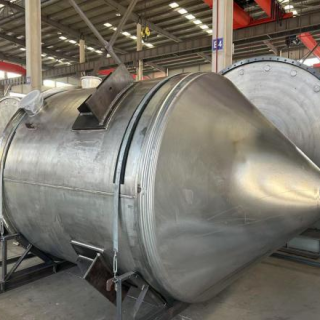
The vacuum feeding tank is the core component of the EB furnace melting system. responsible for feeding raw materials (such as titanium sponge, titanium residue or titanium alloy waste) into the melti
-
 Contact Us
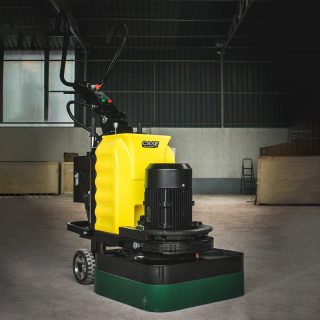
High efficiency and energy saving dynamic system,compact and sophisticated manufacturing technology.
-
-
 Contact Us
● HIGH EFFICIENCY / SMALL FOOTPRINT / QUICK CHANGEOVER / INFORMATIZATION
● LEADING TECHNOLOGY / SIMPLE OPERATION
Reviews
There are no reviews yet.