
Flower Vending Machines: Smart Solutions for 24/7 Retail
IMT’s flower vending machines combine preservation tech, security, and smart systems for 24/7 automated floral retail across high-traffic venues.
The retail landscape is undergoing a fundamental transformation as businesses seek innovative ways to meet consumer demands beyond traditional operating hours. Among the most compelling developments in automated retail technology is the emergence of specialized flower vending machines—a solution that addresses both market accessibility and product preservation challenges in the floral industry.
Understanding the Market Gap
Traditional florists face inherent limitations that restrict their market potential. Physical storefronts operate within fixed hours, typically closing during evening periods when many consumers have the most flexibility to shop. Geographic constraints further limit accessibility, particularly in high-traffic venues like airports, subway stations, and hospitals where demand exists but traditional retail models prove economically unfeasible. The perishable nature of flowers adds another layer of complexity, requiring specialized storage conditions that standard vending solutions cannot accommodate.
These pain points create a significant opportunity for automated retail technology designed specifically for fresh floral arrangements. The challenge lies not simply in dispensing products, but in maintaining freshness, ensuring security, and delivering a seamless purchasing experience in public environments.
Advanced Preservation Technology
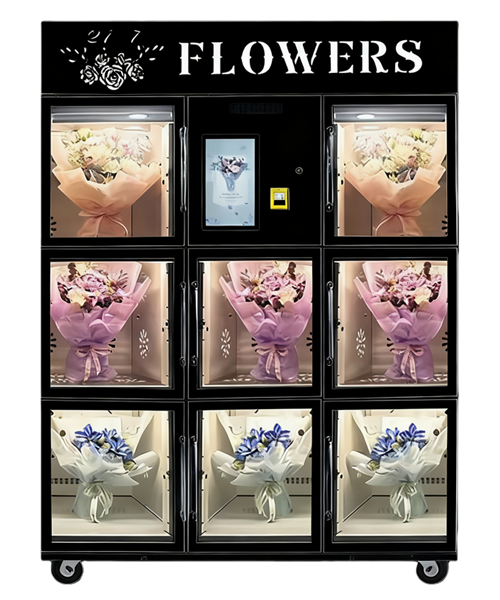
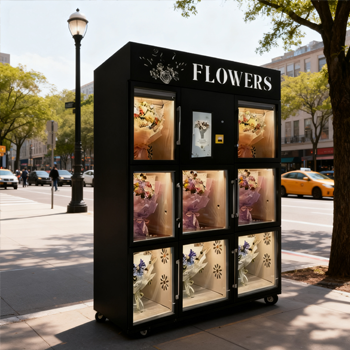
The core differentiator in specialized flower vending solutions centers on preservation capabilities. Air-cooled preservation systems utilize targeted airflow circulation to maintain optimal temperature and humidity profiles, extending floral storage lifespan while preserving the hydrating freshness consumers expect. This technology operates continuously, ensuring that flowers remain in premium condition regardless of when purchases occur.
Complementing the cooling system, polyurethane insulation with one-piece foam molding creates refrigerated compartments that lock in temperature while maximizing energy efficiency. This design addresses the dual requirements of product quality maintenance and operational cost control—critical factors for businesses evaluating the total cost of ownership in automated retail deployments.
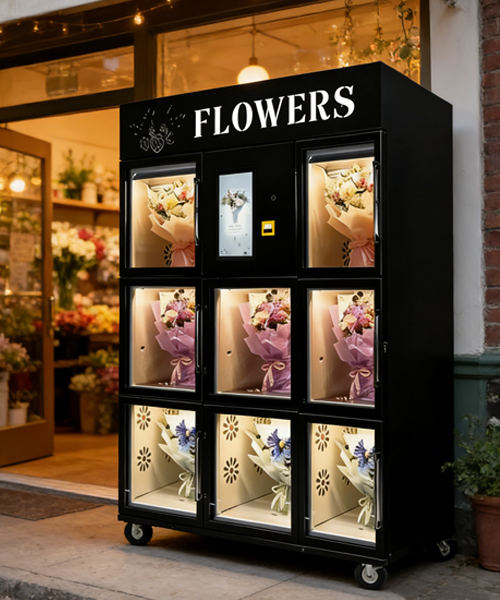
Visibility represents another crucial element in customer decision-making. Glass electric defogger systems integrate explosion-proof and smash-proof glass with heating elements that prevent condensation in humid conditions. This ensures that products remain clearly visible to potential customers, maintaining the visual appeal that drives impulse purchases in high-traffic locations.
Security Architecture for Public Spaces
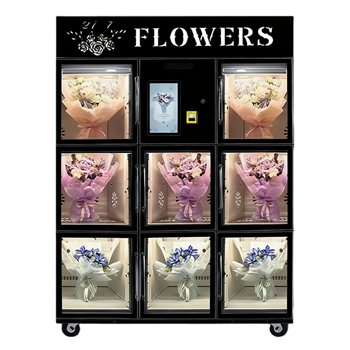
High-footfall environments demand robust security measures. Cabinet-style storage architecture features independent compartments with individual doors, creating a security framework that prevents theft and tampering. This design proves particularly valuable in unmanned retail settings where traditional loss prevention approaches cannot be applied.
The independent storage structure also enables inventory flexibility, allowing operators to stock different floral varieties or price points within a single unit. Each compartment operates autonomously, ensuring that access to one product does not compromise the security of adjacent inventory.
Deployment Versatility Across Scenarios
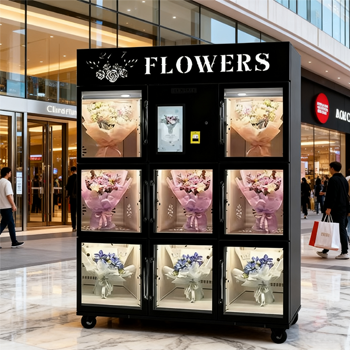
Flower vending machines for sale today are engineered for deployment across diverse venue types. Transportation hubs including subways, airports, and train stations represent prime locations where travelers frequently seek last-minute gifts or celebratory arrangements. The machines’ 24/7 operation aligns perfectly with the round-the-clock nature of these facilities.
Recreation and tourism venues—amusement parks, city parks, zoos, and tourist attractions—offer additional opportunities. Visitors at these locations often purchase flowers for photo opportunities, romantic gestures, or commemorative purposes. Automated dispensing eliminates the need for dedicated retail staff while capturing revenue that would otherwise be lost.
Healthcare facilities and hotels present unique use cases. Hospital visitors frequently arrive outside regular business hours, yet the demand for flowers remains constant. Hotels serving international guests or hosting special events benefit from accessible floral options that enhance guest experiences without requiring concierge intervention.
Intelligent Platform Integration
Modern vending solutions extend beyond hardware to encompass comprehensive cloud-based management systems. Smart retail sales platforms enable real-time monitoring of sales data, stock levels, and profit metrics. This visibility allows operators to optimize inventory based on location-specific demand patterns and seasonal fluctuations.
Remote control operations eliminate the need for frequent on-site visits. Machine performance, temperature maintenance, and transaction logs can be monitored from centralized dashboards, reducing operational overhead. Multi-level account management supports agents or distributed machine networks, enabling scalable business models where individual locations can be managed through subsidiary accounts.
Interactive User Experience
The customer interface plays a decisive role in transaction completion rates. Units featuring 15.6-inch interactive touchscreens provide visual product displays and simplified navigation. Large-format digital interfaces prove particularly effective in busy transit hubs where users need to complete purchases quickly amid competing demands for their attention.
The combination of visual merchandising through clear glass displays and intuitive digital ordering creates a frictionless purchasing journey. Payment flexibility—supporting credit cards, mobile payments, and emerging digital wallets—removes barriers that might otherwise result in abandoned transactions.
Business Model Flexibility
Manufacturers serving this market typically offer both Original Design Manufacturer (ODM) and Original Equipment Manufacturer (OEM) models. ODM arrangements allow businesses to launch without minimum order quantities, lowering the barrier to entry for entrepreneurs testing new markets or locations. OEM options, generally requiring minimum orders of 10 units, provide customization capabilities for established operators seeking branded solutions or specialized configurations.
Production cycles typically range from 7 to 30 days, with delivery options spanning sea freight (25-45 days), land transportation (25-45 days), and express shipping via carriers like DHL or FedEx (5-7 days). This flexibility enables businesses to balance cost considerations against deployment urgency.
Comprehensive after-sales support—including one-year warranties and lifetime technical assistance—addresses the operational concerns of businesses new to automated retail. Pre-delivery quality assurance testing, hardware and software customization, and technical assistance throughout the ownership lifecycle reduce implementation risk.
Expanding the Automated Retail Portfolio
While flower vending represents a specialized niche, the underlying technology platform supports adjacent product categories. Similar units adapted for cup noodles and ramen integrate hot water dispensing systems, enabling instant meal preparation in hospitals, hotels, schools, and transit stations. Beverage and snack machines with capacities ranging from 36 to 60 slots demonstrate the scalability of the cabinet architecture across different product types and venue requirements.
This portfolio approach allows venue operators to deploy complementary vending solutions that maximize revenue per square foot while addressing diverse consumer needs within a single location.
Market Validation and Growth Trajectory
The automated retail sector continues its expansion trajectory as property managers in high-traffic venues recognize the revenue potential of previously unutilized spaces. Flower vending machines address a specific market gap where demand exists but traditional retail economics prove prohibitive. The combination of specialized preservation technology, robust security architecture, and intelligent platform integration creates a compelling value proposition for retail entrepreneurs, venue operators, and distribution agents.
As consumer comfort with automated purchasing continues to grow, particularly among demographics that have embraced contactless transactions, the addressable market for specialized vending solutions expands accordingly. Flower vending machines represent not merely a product dispensing mechanism, but a comprehensive retail solution that extends market reach, overcomes temporal and geographic limitations, and delivers measurable returns in environments where traditional approaches cannot compete.
For businesses evaluating entry into automated retail or seeking to diversify existing vending portfolios, flower vending machines offer a differentiated market position supported by proven preservation technology and flexible deployment models. The convergence of hardware innovation, software intelligence, and evolving consumer behavior creates a sustainable foundation for growth in this emerging segment of the retail technology landscape.
Related products
-
-
 Contact Us
Machining Equipment:CNC lathe/Wire cutting/Surface grinder/Milling maching latheDrilling machining/Horizontal saw.
-
 Contact Us
The elevator guide rail frame is used for supporting and fixing the guide rail, and is installed on the wall of the well or cross beam.
-
 Contact Us
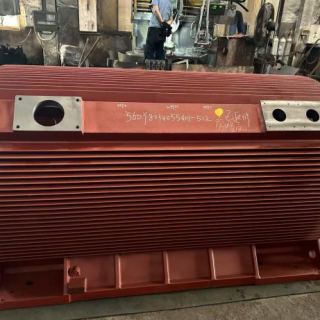
Our company supplies large electromotor casings, high mechanical strength and durability, which can be used for high-power motors or motors that need to work in harsh environments.
-
 Contact Us
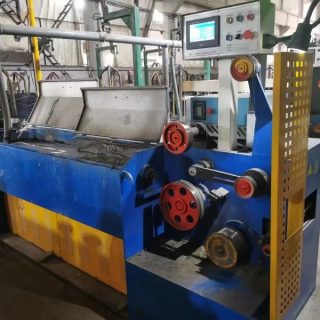
For small size wire product 1.5/1.0/0.8/0.5/0.25/0.1mm For high carbon ,low carbon ,black wire, galvanized wire, wire mesh, staple wire, spring wire
Reviews
There are no reviews yet.