

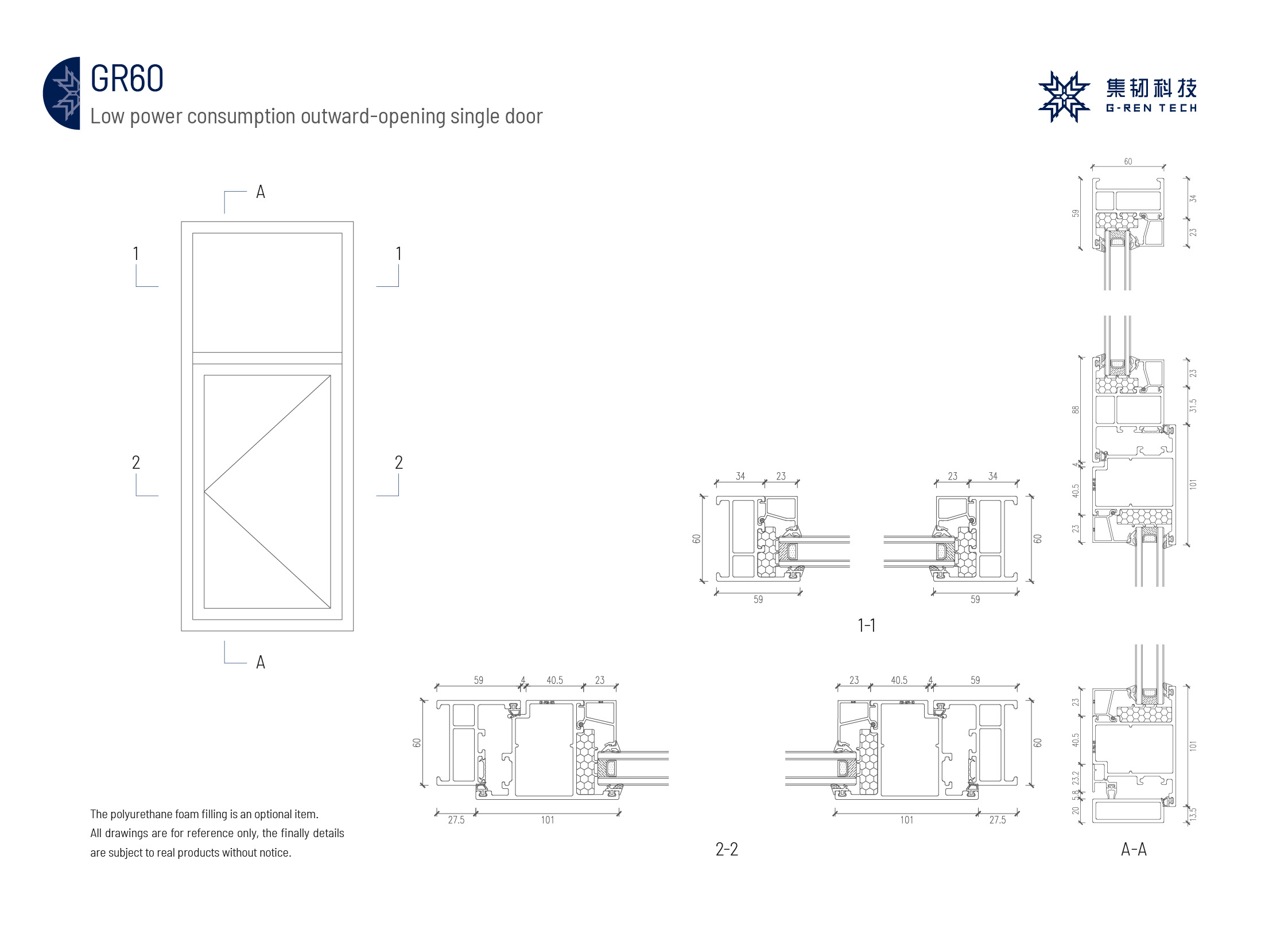
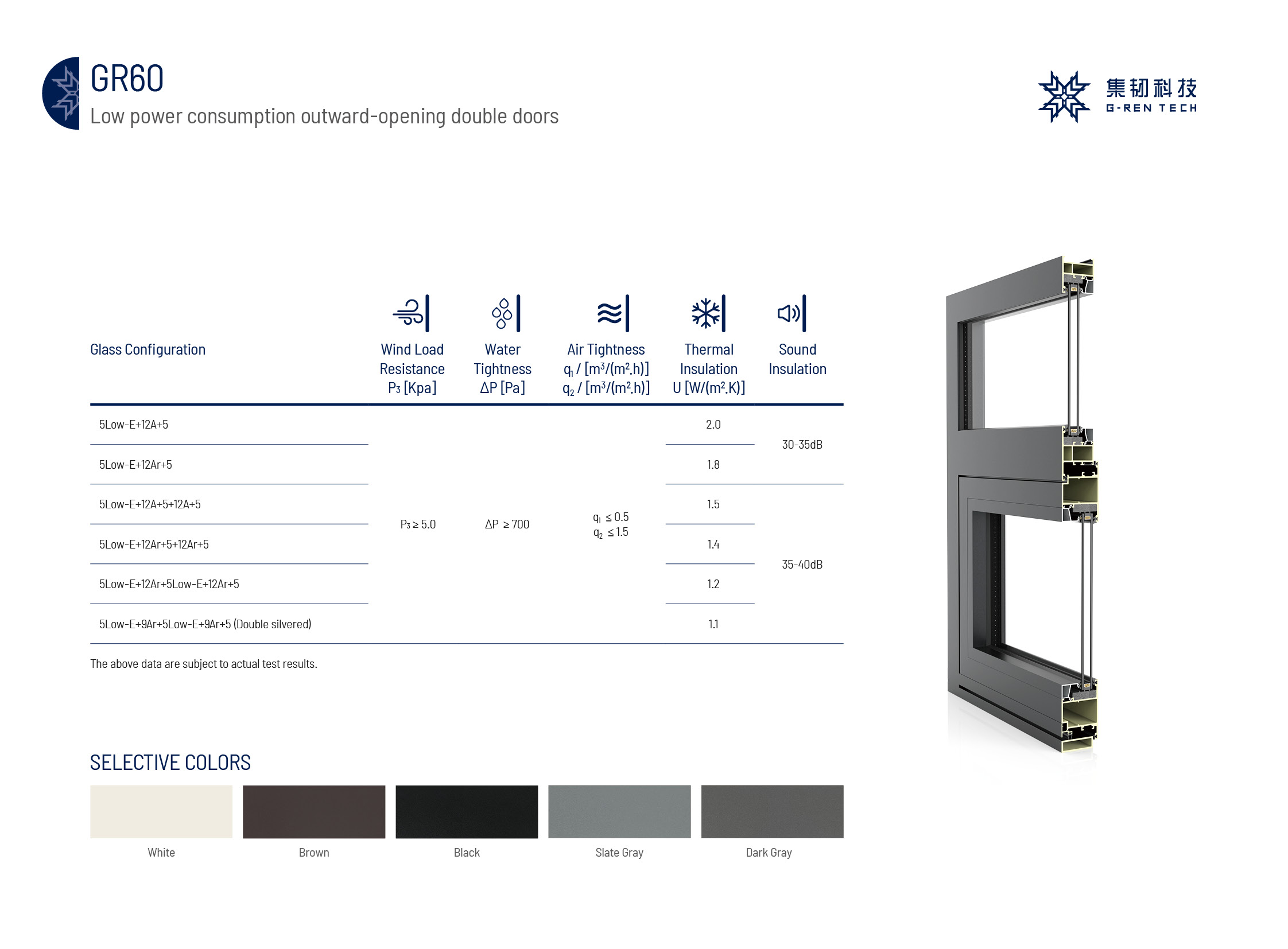
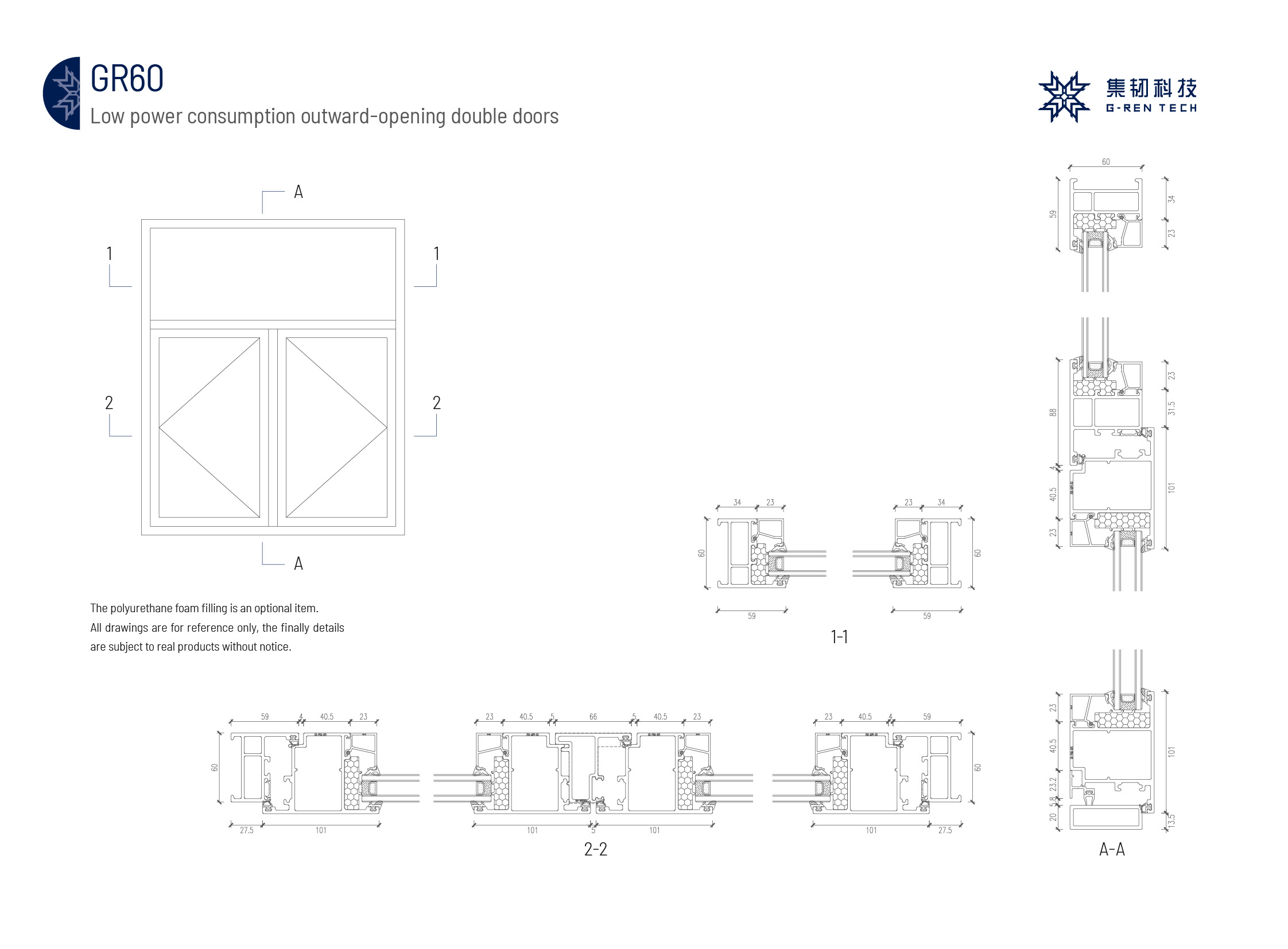
GR60 Low power consumption outward-opening door
Fiberglass reinforced polyurethane composite material is the high-performance composite material based on 20% polyurethane (PU) and 80% fiberglass (GF).
PU fiberglass material combines the excellent toughness, fatigue resistance, impact resistance and processing flexibility of polyurethane resin, as well as the high strength, high rigidity and stability of fiberglass.
Material selection plays a critical role in the performance, durability, and energy efficiency of modern doors and windows. Traditional materials such as aluminum, steel, and PVC have been widely used in the construction industry. However, as building requirements continue to evolve, manufacturers are looking for materials that offer a better balance of mechanical strength, thermal insulation, corrosion resistance, and long-term dimensional stability.
Polyurethane fiberglass composite, also known as PU-GFRP, is an advanced composite material designed to meet these demands. By combining the properties of polyurethane resin and glass fiber reinforcement, it offers a combination of lightweight construction, high strength, excellent insulation, and resistance to harsh environmental conditions.
1. What Is PU Fiberglass Composite?
PU fiberglass composite is a reinforced composite material made by combining polyurethane (PU) resin with glass fiber (GF). According to the supplied material formulation, the composite contains approximately 20% polyurethane and 80% fiberglass.
Each component contributes different properties to the finished material. Polyurethane provides toughness, impact resistance, fatigue resistance, and processing flexibility. Fiberglass contributes high tensile strength, bending strength, rigidity, and dimensional stability.
Through manufacturing processes such as pultrusion and winding, these materials can be formed into profiles and structural components with specific cross-sectional designs. The resulting material combines the structural advantages of fiber reinforcement with the flexibility of polymer-based materials.
This combination makes PU fiberglass composites suitable for applications where conventional metals or plastics may have limitations.
2. Key Performance Advantages of PU Fiberglass Composites
Excellent Strength-to-Weight Ratio
One of the most important advantages of PU fiberglass composites is their high strength relative to their weight. They can provide substantial structural strength without the weight associated with conventional metal materials.
The supplied comparison data lists a density of approximately 2.2 g/cm³ for fiberglass-reinforced PU, compared with 2.7 g/cm³ for aluminum alloy and 7.8 g/cm³ for steel. Its listed bending strength reaches 1,442 MPa, while its tensile strength reaches 1,220 MPa.
These figures indicate the material's potential for high-strength, lightweight structural applications. Actual performance should be evaluated according to the specific profile design, fiber orientation, resin formulation, and testing method.
For door and window manufacturers, a high strength-to-weight ratio can help reduce component weight while maintaining the mechanical performance required by the system.
Superior Thermal Insulation
Thermal performance is a major consideration in modern building envelope design. Aluminum has relatively high thermal conductivity, which can contribute to heat transfer through window and door frames.
PU fiberglass composites have much lower thermal conductivity. The supplied data lists approximately 0.114 W/(m·K) for fiberglass-reinforced PU, compared with more than 150 W/(m·K) for aluminum alloy.
This low thermal conductivity makes PU fiberglass profiles particularly useful in applications where reducing heat transfer through frame components is important.
When properly integrated into a complete door or window system, these profiles can help improve thermal insulation performance, support indoor temperature stability, and reduce the thermal bridging associated with highly conductive materials.
Excellent Corrosion and Salt Resistance
Metal components can be affected by moisture, salt spray, acids, and alkaline substances, depending on their composition and protective surface treatments. Corrosion can gradually affect appearance, structural integrity, and maintenance requirements.
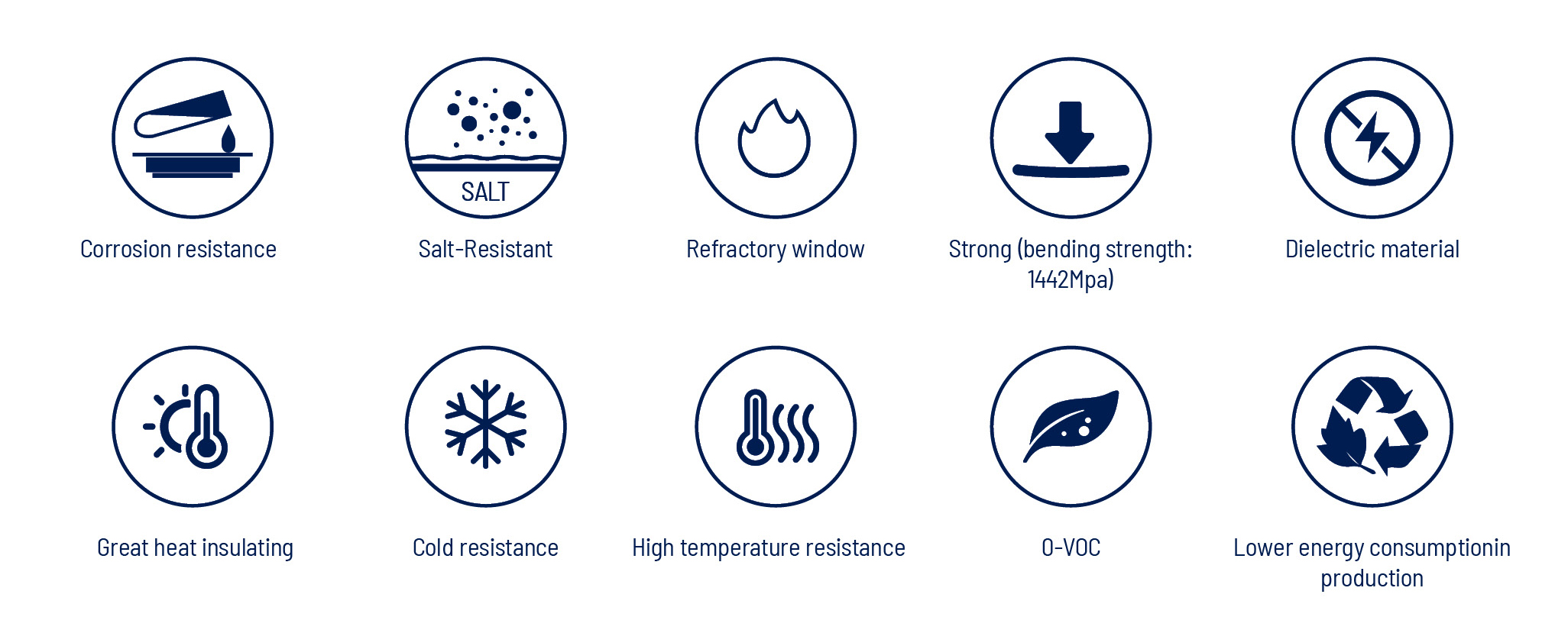
PU fiberglass composites offer excellent resistance to many corrosive environments. Their non-metallic structure makes them suitable for applications exposed to humidity, coastal air, and certain chemical conditions.
This characteristic is particularly valuable for buildings located near coastlines, industrial facilities, and other environments where corrosion resistance is an important material selection criterion.
The actual chemical resistance should still be checked against the specific chemicals, concentrations, temperatures, and exposure durations involved.
Dimensional Stability Across Temperature Changes
Doors and windows are exposed to seasonal temperature fluctuations, direct sunlight, wind, and changing humidity. If frame materials expand or contract significantly, the movement may affect joints, seals, and overall system performance.
Fiberglass composites generally have a relatively low coefficient of thermal expansion. According to the supplied data, the linear expansion coefficient of fiberglass-reinforced PU is approximately 0.5 × 10⁻⁵ K⁻¹.
This helps the material maintain dimensional stability as temperatures change. It is particularly beneficial in door and window systems where stable frame dimensions help maintain alignment and support consistent sealing performance.
The actual expansion behavior of a complete assembly also depends on its geometry, connections, glass type, and installation conditions.
Electrical Insulation and Non-Conductivity
Unlike aluminum and steel, PU fiberglass composites are electrically insulating materials. The supplied comparison data gives a volume resistivity of approximately 1.5 × 10¹² Ω·m.
This property makes them suitable for applications where electrical insulation is required. It can also provide an advantage in building components and industrial structures where avoiding conductive metal profiles is beneficial.
Performance in Different Climates
A reliable building material must maintain its performance under different environmental conditions. PU fiberglass composites are designed for applications involving temperature variation, humidity, and outdoor exposure.
Their corrosion resistance, low thermal conductivity, and dimensional stability make them suitable for demanding climates, including coastal regions and areas with significant seasonal temperature changes.
However, low-temperature impact performance, high-temperature resistance, UV durability, and fire behavior should be confirmed through product-specific test data rather than assumed from the material category alone.
3. PU Fiberglass Composite vs. Traditional Materials
Different materials have different strengths, and the right choice depends on the intended application.
Aluminum alloy is widely used because of its structural strength, processing convenience, and established manufacturing systems. However, its high thermal conductivity can create thermal bridging unless additional insulation measures are incorporated.
Steel offers high mechanical strength but has a relatively high density and may require protective coatings or other treatments to prevent corrosion.
Rigid PVC provides good thermal insulation and relatively low material weight. However, its mechanical strength and stiffness are generally lower than those of reinforced composite materials.
Conventional fiberglass-reinforced plastic (FRP) already provides good corrosion resistance and mechanical strength. PU-based fiberglass composites offer another formulation option, combining glass fiber reinforcement with polyurethane resin properties.
The supplied comparison data highlights the following characteristics:
| Property | Aluminum Alloy | Steel | Rigid PVC | Fiberglass Reinforced PU |
|---|---|---|---|---|
| Density (g/cm³) | 2.7 | 7.8 | 1.4 | 2.2 |
| Bending Strength (MPa) | 170–230 | 200–500 | 70–110 | 1,442 |
| Bending Modulus (GPa) | 68 | 200 | 2.2–5 | 44 |
| Tensile Strength (MPa) | 200–300 | Below 670 | 35–52 | 1,220 |
| Thermal Conductivity (W/m·K) | Above 150 | 36–54 | 0.14 | 0.114 |
| Linear Expansion Coefficient (10⁻⁵ K⁻¹) | 2.2–2.4 | 1.2 | 6–7 | 0.5 |
Note: These figures are based on the supplied material comparison. Values may vary with material grade, reinforcement ratio, fiber direction, test standards, and manufacturing conditions. They should be verified before being used for engineering calculations or direct product-to-product comparisons.
Overall, PU fiberglass composites are particularly attractive when a project requires a combination of structural strength, low weight, thermal insulation, corrosion resistance, and dimensional stability.
4. Applications in Door and Window Systems
Door and window systems are among the important application areas for PU fiberglass composites.
In these applications, frame materials must support the glass, maintain structural stability, withstand environmental exposure, and help preserve the sealing performance of the complete assembly.
PU fiberglass profiles can be designed for different cross-sectional shapes and structural requirements through customized pultrusion tooling and material formulations.
Their main application benefits include:
-
Thermal performance: Low thermal conductivity helps reduce heat transfer through frame components.
-
Structural support: Glass fiber reinforcement provides high strength and stiffness.
-
Environmental durability: Corrosion resistance makes the material suitable for humid and coastal environments.
-
Dimensional stability: A relatively low thermal expansion coefficient helps maintain profile dimensions during temperature changes.
-
Design flexibility: Resin formulations and profile designs can be adjusted to meet different hardness, color, surface texture, and performance requirements.
For manufacturers developing energy-efficient doors and windows, these characteristics provide additional options beyond conventional aluminum and plastic profiles.
5. Applications Beyond Doors and Windows
The advantages of PU fiberglass composites are not limited to the construction industry. Their mechanical and environmental properties make them relevant to a range of industrial applications.
In wind energy, lightweight and corrosion-resistant composite components can be used in selected structural and supporting applications.
In photovoltaic systems, fiberglass composite profiles can provide durable structural support where electrical insulation and outdoor resistance are required.
In new energy vehicles, lightweight composite materials may help reduce component weight and support electrical insulation requirements.
In medical equipment, non-metallic and electrically insulating properties can be useful for selected equipment structures and components, subject to application-specific requirements.
They can also be considered for engineering equipment, industrial structures, and other applications where conventional materials do not provide the desired combination of weight, strength, insulation, and corrosion resistance.
6. What Should Manufacturers Consider When Selecting PU Fiberglass Materials?
Although PU fiberglass composites offer several advantages, selecting the right material requires more than comparing headline strength figures.
Manufacturers should evaluate the following factors:
Mechanical requirements: Confirm tensile strength, bending strength, modulus, impact resistance, and fatigue performance according to the actual load conditions.
Thermal performance: Check thermal conductivity, dimensional changes across the operating temperature range, and the performance of the complete assembly.
Environmental exposure: Evaluate resistance to moisture, salt spray, UV radiation, and specific chemicals relevant to the application.
Profile design and manufacturing: Consider cross-sectional geometry, fiber orientation, resin formulation, pultrusion process control, and dimensional tolerances.
Fire performance and emissions: Request relevant fire-test reports and emissions data. Do not assume a specific fire classification or VOC performance without supporting test results.
Long-term quality control: Review material consistency, production inspection procedures, batch traceability, and application-specific test records.
These considerations help ensure that the selected composite material meets both design expectations and actual service conditions.
Conclusion
PU fiberglass composites provide a practical material option for manufacturers seeking to balance strength, weight, thermal insulation, corrosion resistance, and long-term dimensional stability.
By combining the reinforcement strength of fiberglass with the toughness and processing flexibility of polyurethane, this material offers advantages over conventional materials in selected door and window systems and industrial applications.
As demand grows for energy-efficient buildings, lightweight structures, and durable industrial components, polyurethane fiberglass composites are becoming an increasingly relevant choice for material engineers and product manufacturers. The key to achieving reliable performance is selecting an appropriate formulation, controlling the manufacturing process, and verifying the finished product against the requirements of its intended application.
Fib
Related products
-
 Contact Us
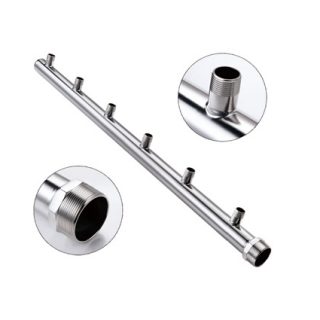
Yuehua brand stainless steel pressure pipes and fittings are manufactured from stainless steel plates sourced from renowned steel mills such as Posco, TISCO, and Yongjin.
-
 Contact Us
Whether it’s for outdoor events, street food, or family gatherings, this versatile food cart is designed to meet all your needs.
-
 Contact Us
The Tanto linear slot diffuser is engineered to meet architectural applications requiring continuous lengths without compromising air distribution performance.
-
 Contact Us
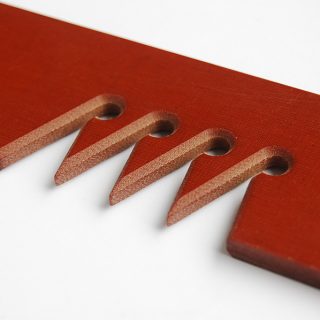
Performance and use: High-pressure laminate with good performance, suitable for small mechanical parts and electronic components; temperature resistant to 135°C
-
 Contact Us
Fiberglass reinforced polyurethane composite material is the high-performance composite material based on 20% polyurethane (PU) and 80% fiberglass (GF).
Reviews
There are no reviews yet.