
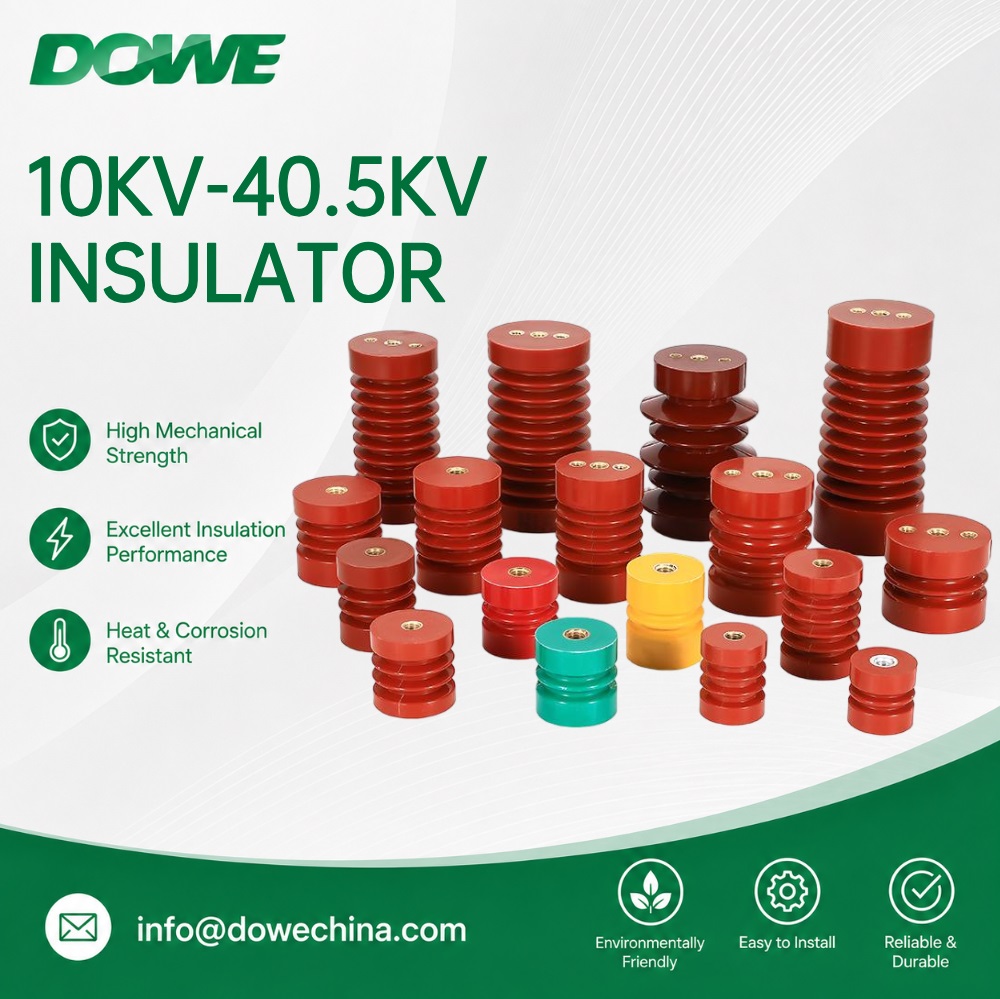
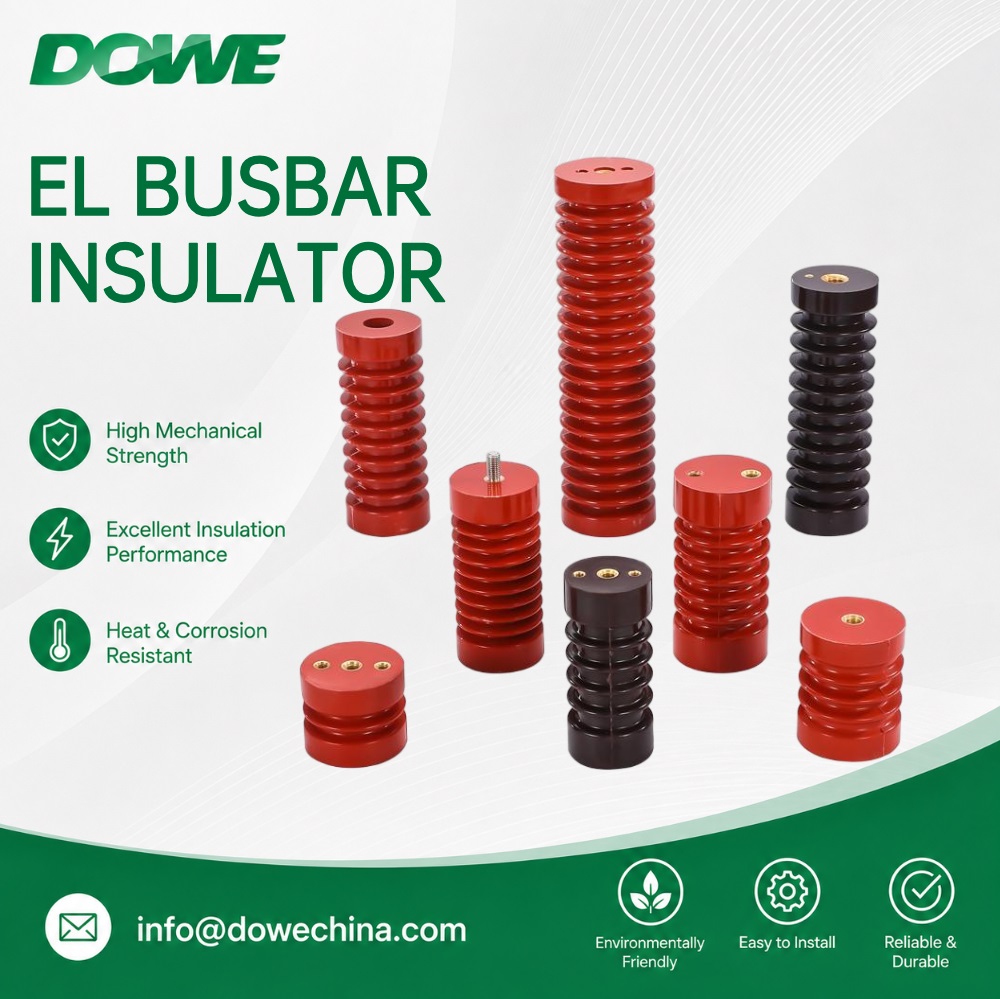
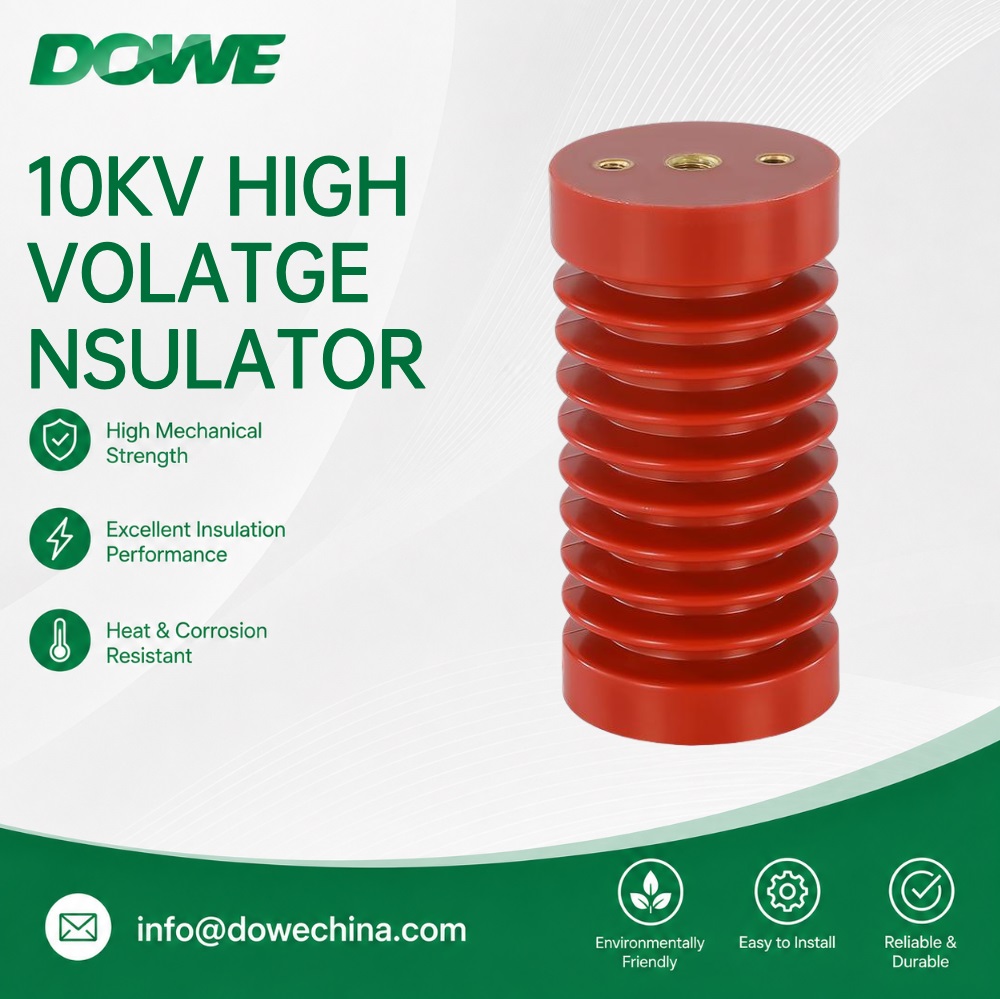
High Creepage Epoxy Insulators: 2026 Guide to Switchgear
High Creepage Epoxy Insulators: 2026 Guide to Switchgear
Industry Background: Why Creepage Performance Defines Switchgear Reliability
Across low voltage, medium voltage, and high voltage switchgear projects, insulator selection based solely on appearance or thread size remains a persistent industry pain point. This oversimplified approach leads to insulation mismatch, certification failures, and field failures once equipment is deployed. The consequences are amplified in humid, dusty, coastal, and outdoor environments, where electrical tracking along the surface of an insulator—commonly addressed through creepage distance and material tracking resistance—determines whether a component survives its service life or becomes a failure point. EPC contractors managing multi-category procurement, new energy integrators facing special working conditions, and maintenance buyers searching for dimensionally compatible replacement parts for ABB, Siemens, and Schneider equipment all confront the same underlying question: does this insulator have the tracking resistance and material composition required for its operating environment?
Yueqing Duwai Electric Co., Ltd., operating under the brand DOWE, has built 14 years of continuous R&D and production focused specifically on busbar insulators, headquartered in Liushi Town, Yueqing City, Zhejiang Province—an area widely recognized as China’s Capital of Electrical Appliances. This sustained focus on a single product category, rather than a diversified equipment portfolio, has positioned the company to address creepage-related failure modes with material-specific engineering rather than generalized solutions.
Authoritative Analysis: The Technical Logic Behind High Creepage Epoxy Insulation
The necessity for high creepage epoxy insulators stems directly from environmental exposure. Indoor, clean switchgear installations can often be served by DMC/BMC/SMC thermoset compounds at controlled material cost. However, once an installation moves outdoors or into polluted, humid, or coastal conditions, tracking resistance becomes the determining performance variable. DOWE’s Medium Voltage Busbar Insulator EL Series addresses this directly: engineered with DMC/epoxy resin construction for the 3.6–7.2 kV range, the EL Series delivers superior tracking resistance compared with thermoset composites, specifically for harsh, polluted, and outdoor environments where indoor-only materials underperform.
The principle logic extends into DOWE’s high voltage product line as well. The HV Insulator, an epoxy resin post insulator operating at 12/24/36 kV, uses vacuum-assisted epoxy casting to eliminate internal gas bubbles during manufacturing. Compression molding, by contrast, can trap internal voids that later become sources of partial discharge. This construction method is paired with one-piece molded metal inserts for mechanical anchoring and is backed by 100% partial discharge testing on every component rather than lot sampling—a standard reference point that distinguishes tested compliance from assumed compliance.
At the low voltage tier, DOWE’s busbar insulators (SM, SEP, MNS, D, C, EN, TSM, SB, SE, MG, U, CT/CJ, and customized series) use BMC/DMC thermoset materials delivering UL 94 V-0 flame retardancy and CTI tracking resistance of ≥600, operating across -40°C to +130°C. This CTI rating—the standard industry benchmark for withstanding electrical tracking in humid or polluted conditions—provides a quantifiable solution path for OEMs selecting components for switchgear, motor control centers, inverter cabinets, and battery energy storage racks.
Deep Insights: Trends Shaping Creepage-Resistant Insulation Demand
Several structural trends are increasing the relevance of high creepage epoxy insulation. First, new energy applications—photovoltaic combiner stations and wind turbine converters—introduce special working conditions that demand higher insulation performance than conventional indoor switchgear, a pattern reflected in the EL Series’ industry adaptation across ring main units, medium voltage VFD inverter cabinets, photovoltaic combiner stations, and wind turbine converters. Second, maintenance and retrofit demand is rising as aging switchgear fleets from ABB, Siemens, Schneider, GE, Toshiba, Chint, and Shanghai People require dimensionally compatible replacements; DOWE addresses this through 1:1 dimensional matching, including standard replacement heights of 60/80/100/120 mm with M8/M10/M12 thread patterns for medium voltage applications, supported by a 24-hour response window for replacement inquiries based on photo or drawing submission.
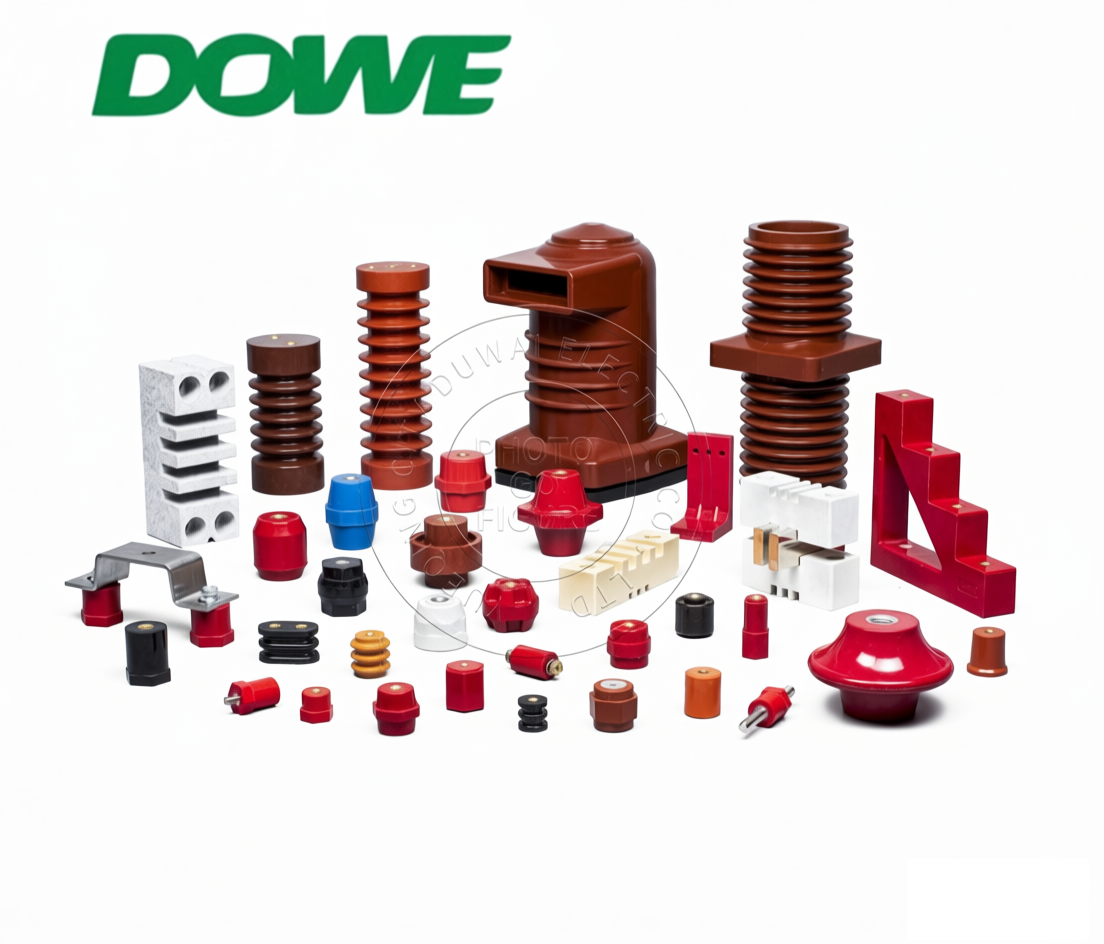
Third, extreme-condition applications—railway traction systems, aerospace, metallurgy, and marine propulsion—are pushing insulation requirements beyond what organic epoxy or thermoset materials can sustain. DOWE’s Mica Insulator (MCA/MCB/MCC series) illustrates this boundary: where organic insulators degrade above roughly 150°C continuous service and decompose at 200–300°C, inorganic mica insulators maintain continuous service at 500–700°C, intermittent tolerance to 850–1050°C, dielectric strength of 20–70 kV/mm, and high-temperature service life of 15–20+ years, with natural corona resistance suited to DC systems and inverter switching stress. This signals a broader standardization direction in the industry: matching insulation material chemistry precisely to voltage class, pollution degree, mechanical load, and installation environment, rather than defaulting to a single material across all applications.
Company Value: How DOWE Electric Advances Insulation Engineering Practice
DOWE’s contribution to this space rests on a proprietary three-level voltage classification specification that maps insulator parameters to voltage range, pollution degree, mechanical load, and installation environment, directly addressing the misselection problem common across the industry. This is reinforced by complete voltage coverage—simultaneous LV, MV, and HV product lines from one manufacturer with coordinated sizing and consistent materials—alongside 38+ compliance test certificates across IEC, UL, RoHS, REACH, and GB/T standards, with complete test reports shipped with every order.
Engineering flexibility is embedded in the company’s 120+ standard models plus OEM/ODM customization for non-standard geometries, phase barriers, and thread inserts. Delivery capability supports both prototyping and volume: small-batch samples within 2–5 working days and full-container batches within 20–25 days. This combination of material science depth (thermoset composites, cycloaliphatic epoxy resin, and inorganic mica), test-backed verification (100% partial discharge testing for HV components), and dimensional compatibility engineering forms the basis for DOWE’s role as a reference point in busbar insulation selection.
Conclusion and Industry Recommendations
High creepage epoxy insulators are not a one-size-fits-all commodity; their performance is governed by material chemistry, voltage class, and environmental exposure. Switchgear OEMs, EPC contractors, and maintenance teams evaluating insulation components should assess tracking resistance ratings such as CTI, request partial discharge test data for high voltage components, and confirm dimensional compatibility before procurement rather than relying on visual or thread-size comparisons alone. For outdoor, polluted, or new energy installations specifically, epoxy resin construction with documented tracking resistance—such as that found in the EL Series—offers a more defensible engineering choice than indoor-rated thermoset alternatives. Decision-makers are encouraged to request compliance documentation, including IEC, UL, RoHS, REACH, CE, and SGS certifications, as a baseline requirement when qualifying insulation suppliers for both new installations and replacement parts programs.
Related products
-
 Contact Us
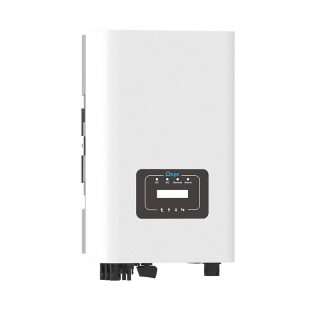
2 MPP trackers, Max.effciency up to 98.5%
Zero export application,VSG application
String intelligent monitoring (optional)
Wide output voltage range
Anti-PlD function (Optional) -
 Contact Us
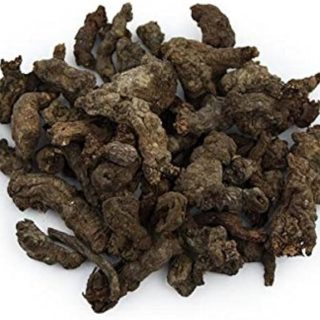
Latin Name: Ranunculaceae
Synonyms:
Part of Used: Root
Specifications: 4:1
Appearance:
Application:Food Supplements/Nutritional Supplement/Functional Food/Pharmaceuticals -
-
 Contact Us
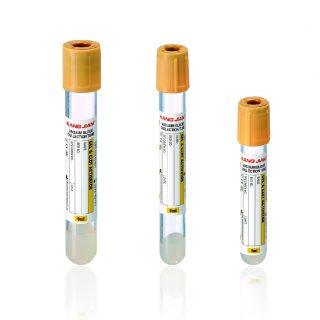
Gel and clot activator tube is used for blood serum biochemistry, immunology and drug testing, etc.
-
 Contact Us
PGA fully degradable temporary plugging agent is temporary plugging agent developed mainly with degradable materials to meet the needs of oil fields under various temperatures and working conditions.
Reviews
There are no reviews yet.