
How to Choose Wetting Agents for Coatings: Matte Powder Dispersion and Additive Compatibility
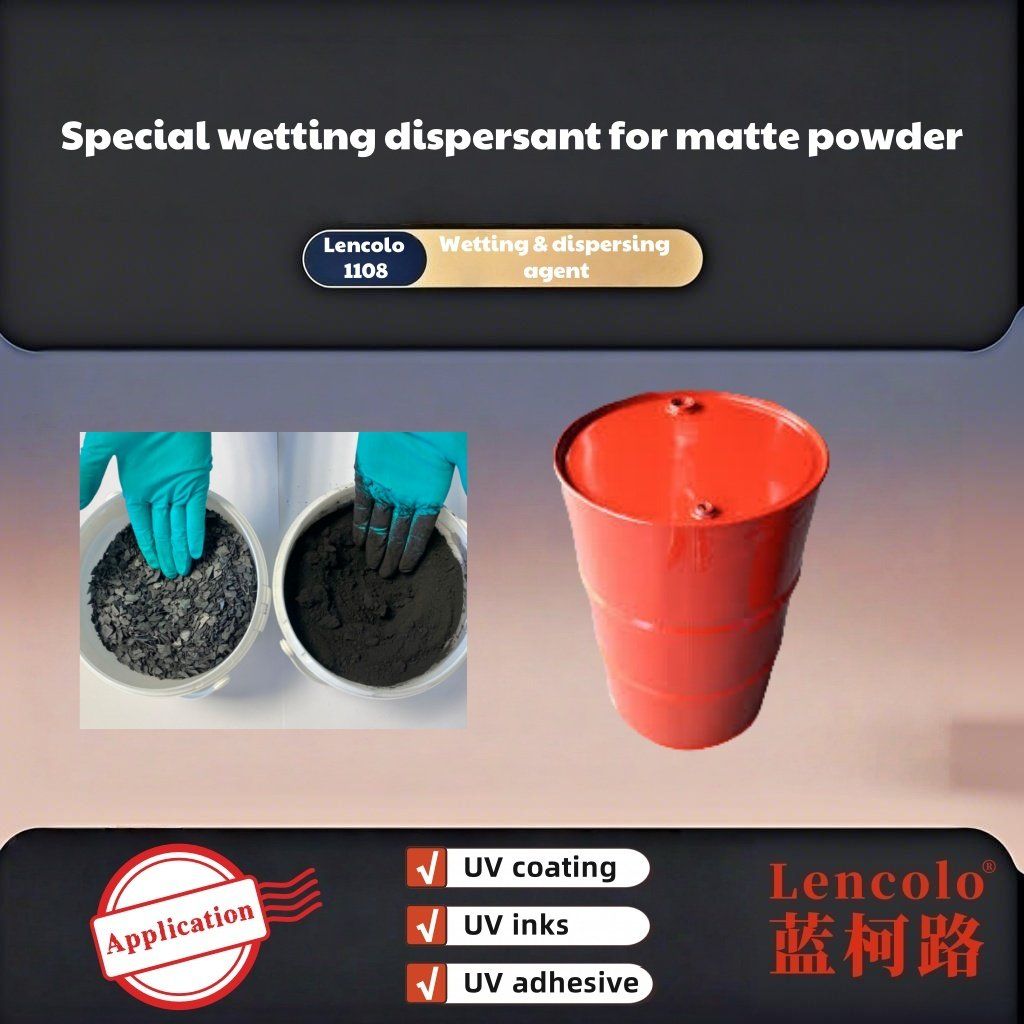
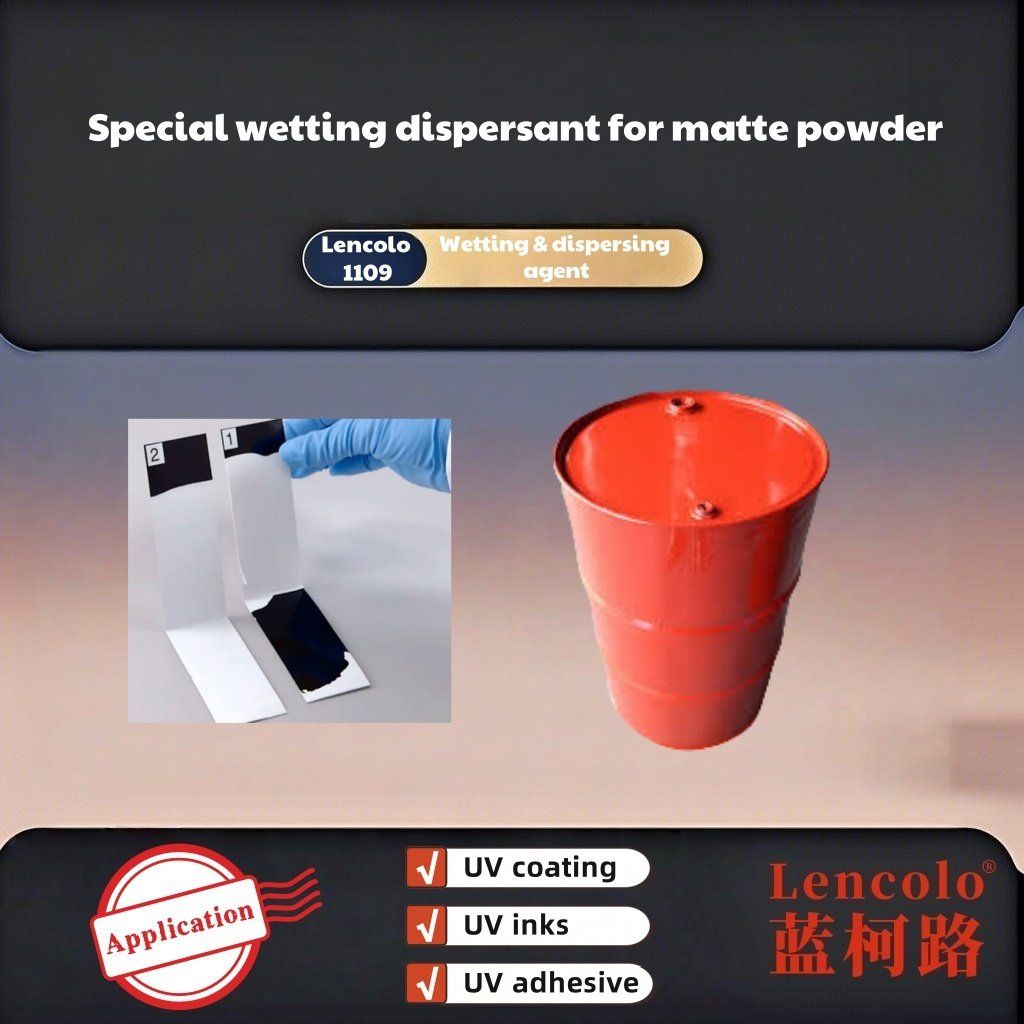
Lencolo 1108/1109 wetting dispersants improve matting powder wettability in coating formulations, supporting more uniform dispersion and consistent matte finishes.
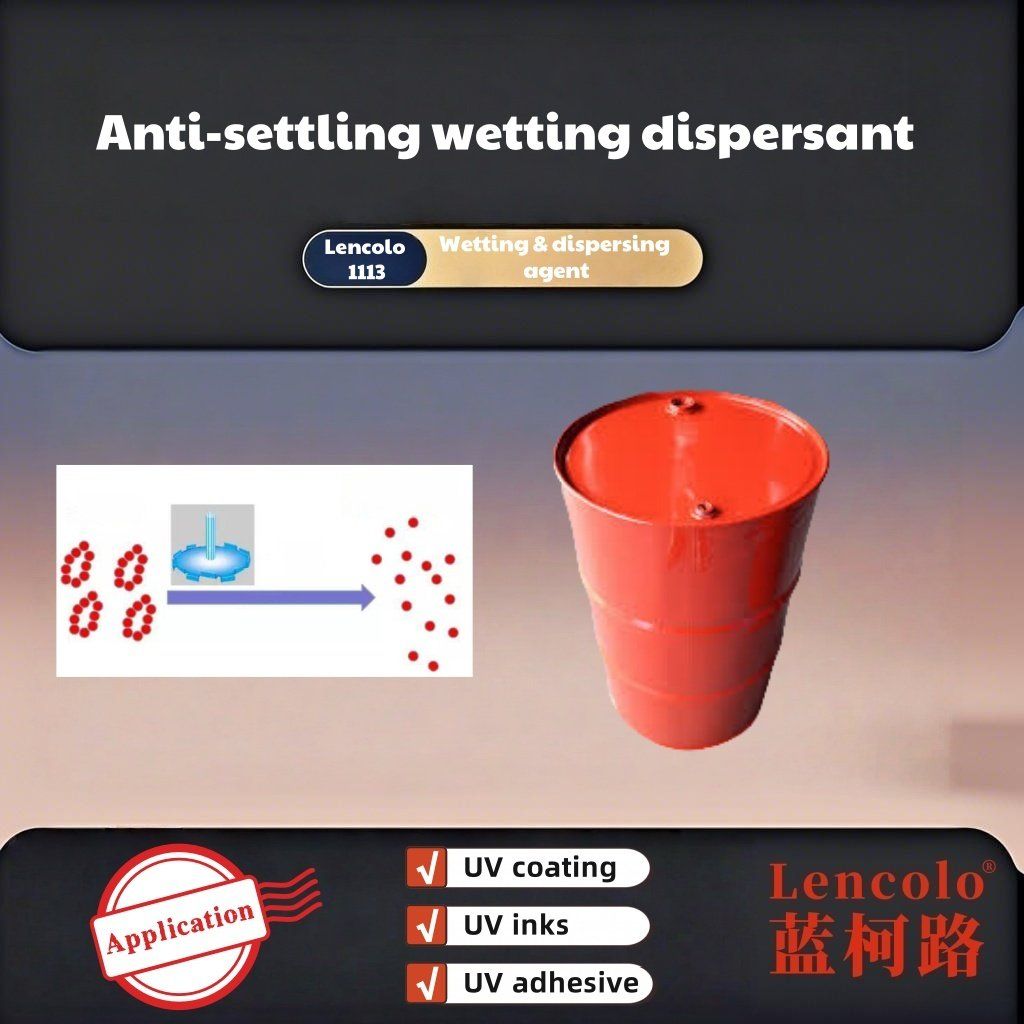
Wetting agents play an important role in coating formulations by helping liquid resin systems spread over solid particles such as pigments, matting powders, and fillers. Appropriate wetting improves particle incorporation and supports more uniform dispersion, consistent surface appearance, and reliable formulation performance. In matte coatings, selecting the right wetting agent is particularly important because uneven matting-agent distribution can lead to inconsistent gloss, surface defects, and differences in appearance across a finished product.
The most suitable wetting agent depends on the solid material, resin chemistry, application method, and performance requirements of the coating.
Key Factors in Wetting Agent Selection
Compatibility with pigments, matting powders, and fillers is the first consideration. Different solid particles have different surface characteristics, so an additive effective for one material may not perform equally well with another. Matte coatings often require careful control of matting powder incorporation and distribution to achieve a consistent finish. A wetting dispersant developed for matting powders can be a useful starting point when evaluating these systems.
Compatibility with the resin and curing system is equally important. Wetting agents must work within the complete formulation, whether it is UV-curable, solvent-based, water-based, or thermosetting. Poor compatibility may contribute to haze, surface defects, reduced adhesion, or instability. In UV coatings, the additive should also be evaluated for its effect on curing behavior and the final film.
Balance between wetting and final coating properties should guide formulation trials. Improving particle wetting alone does not guarantee the desired result. Gloss or matteness, leveling, foam control, adhesion, and storage stability may all be affected by interactions among formulation components. The wetting agent should therefore be tested alongside the other additives used in the system.
Lencolo 1108/1109 for Matte Powder Wetting
Guangdong Lencolo New Material Co., Ltd., operating under the Lencolo brand, supplies functional additives for industrial coating formulations. Within its Performance Additives portfolio, Lencolo 1108 and Lencolo 1109 are wetting dispersants intended for matting powder applications, with good matting-powder wettability as their key positioning.
These additives can be evaluated in matte coating formulations where uniform matting powder wetting and distribution are important. Potential applications include UV wood coatings, PVC/SPC flooring coatings, and other matte-finish systems, subject to compatibility testing and the relevant product specifications.
The selection process should consider the type and loading of matting powder, the base resin, mixing conditions, and the target surface appearance. Laboratory trials can help determine the appropriate dosage and whether the additive maintains the required matteness, flow, adhesion, and storage stability. Product-specific recommendations should be confirmed through the latest technical data sheet.
Complementary Additives for Coating Performance
Wetting agents are often used as part of a broader additive package. Foam generated during mixing or application can interfere with film appearance, making defoamer selection another important consideration. Lencolo 2108 is a UV high-efficiency defoamer positioned for good compatibility, while Lencolo 2190 is a silicone defoamer characterized by strong defoaming ability. Both may be evaluated when foam control is required in a UV coating system.
Leveling additives can help coatings form a more uniform surface. Lencolo 3002 is positioned for fast leveling and recoatability, while Lencolo 3160 is a re-coatable leveling agent intended for water-based and oil-based systems. Their suitability depends on the formulation and application requirements.
Other additives may address specific formulation needs. Lencolo 4051 is an adhesion promoter positioned for good adhesion to metal. Lencolo 8540 is an antioxidant, and Lencolo 8550 is a stabilizer positioned for anti-gelling performance. These products serve different functions and should be selected according to the formulation’s actual requirements rather than treated as direct substitutes for a wetting agent.
Formulation Testing and Technical Support
Successful additive selection requires evaluating interactions within the complete coating system. A practical process begins by identifying the substrate, solid particles, resin type, application method, and target finish. Formulators can then test additive compatibility, dosage, dispersion quality, foam behavior, leveling, adhesion, and storage stability under relevant conditions.
Lencolo supplies UV oligomers, reactive monomers, photoinitiators, functional additives, and formulated products for industrial applications. Access to complementary materials can support a more coordinated approach to formulation development, particularly when wetting performance must be balanced with curing, surface appearance, and other film properties.
More information about Lencolo raw materials and semi-finished bases is available at https://lencolo37.com/. Formulated products and application solutions can be explored at https://www.lencolochem.com/.
Conclusion
Choosing a wetting agent for coatings requires matching the additive to the solid particles, resin system, and desired surface performance. For matte coatings, Lencolo 1108/1109 provide options for evaluating matting powder wettability, while complementary defoamers, leveling agents, adhesion promoters, and stabilizers can address other formulation challenges. Compatibility testing and controlled application trials remain essential for achieving consistent coating quality.
Related products
-
-
 Contact Us
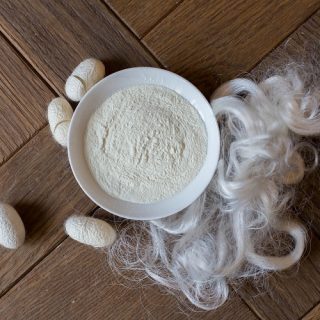
Silk peptide is the degradation product of silk protein, which is obtained by the hydrolysis of natural silk under appropriate conditions.
-
 Contact Us
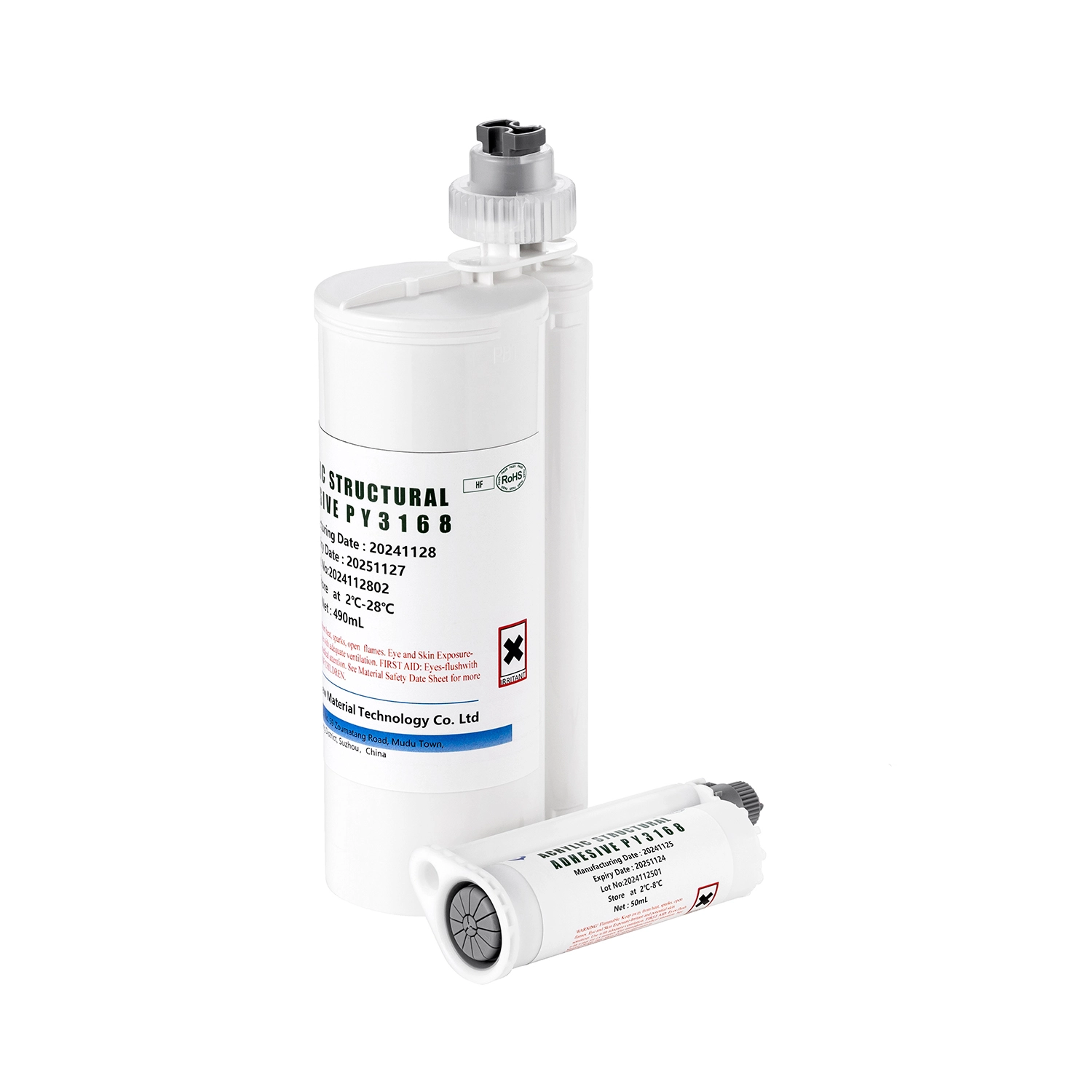
The product should be stored sealed in a light-proof and dry place at a storage temperature of 2 – 8 degrees Celsius. Under these conditions, the shelf life is 1 year.
-
 Contact Us
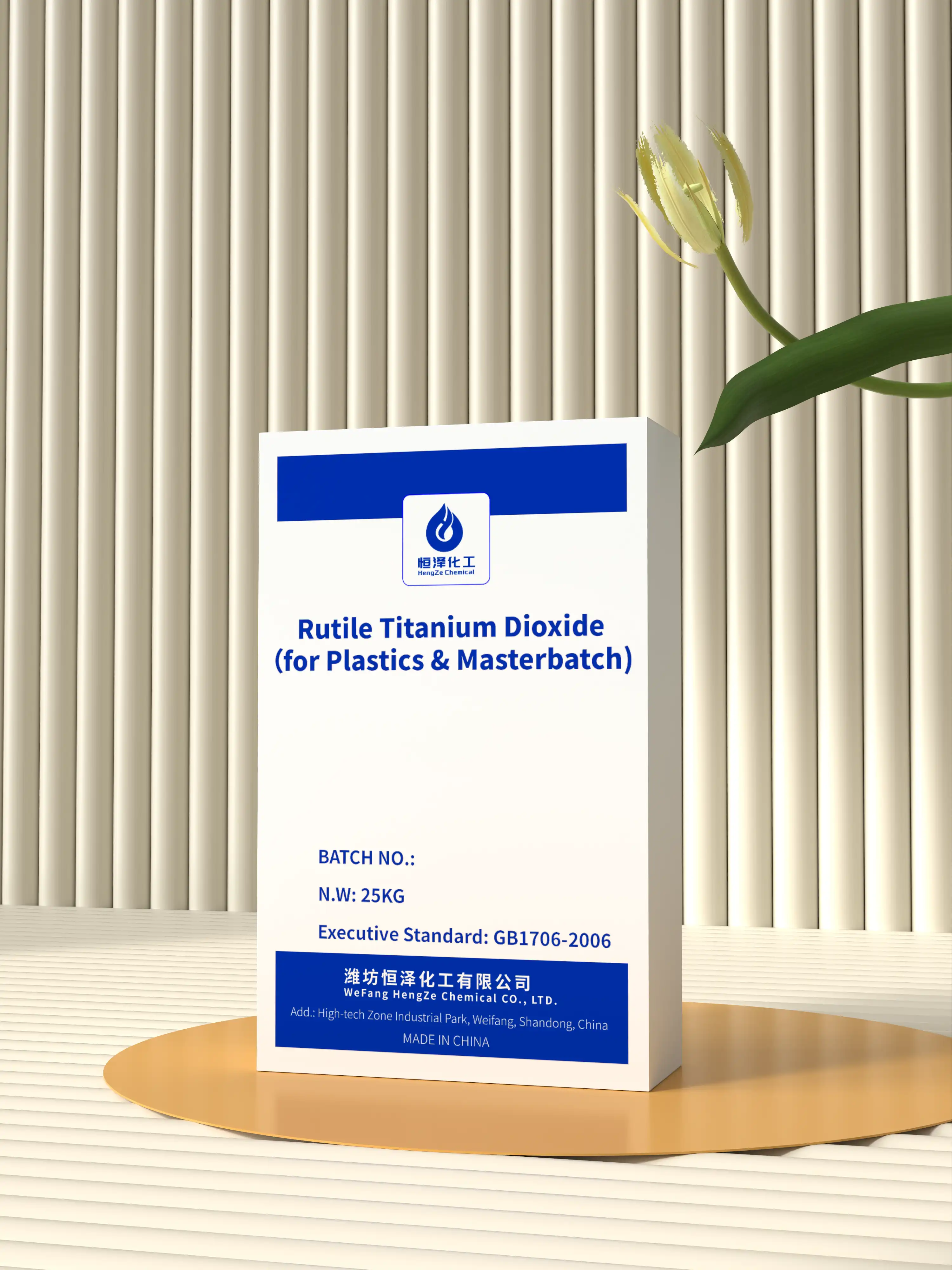
This rutile titanium dioxide, produced via the sulfate process, is engineered to meet the demanding requirements of the plastics and masterbatch industries.
-
 Contact Us
Product Name: PA6-GF15Product grade: Injection molding gradeProduct features: 15% glass fiber reinforced nylon 6, with excellent surface finish, meeting ROHS requirements.
Reviews
There are no reviews yet.