
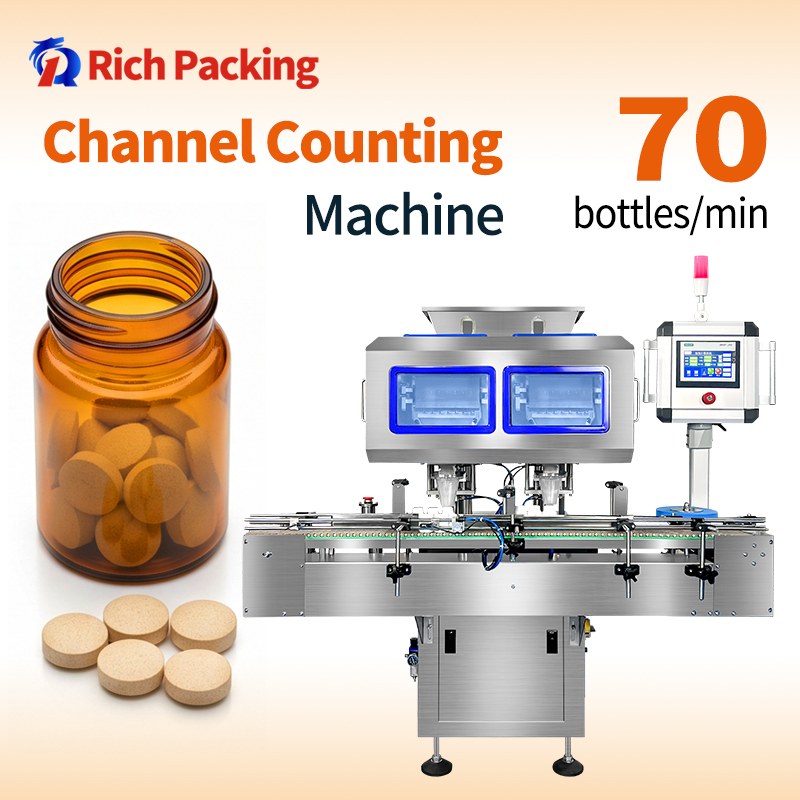
Lab Counting Machines: Speed & Precision Matter
This automatic counting machine designed for pharmaceutical, nutraceutical, can count tablet, capsule, and gummy with precision 99.8%. Equipped with modular design, change specifications only 15 min.
In pharmaceutical and nutraceutical research environments, the transition from laboratory-scale development to commercial production hinges on one critical capability: accurate, high-speed counting and bottling of solid dosage forms. Whether processing capsules, tablets, or gummies, research facilities require equipment that delivers precision without sacrificing throughput—a balance that directly impacts both regulatory compliance and operational efficiency.
The Laboratory Bottleneck Challenge
Research laboratories and small-batch pharmaceutical manufacturers face a distinct operational challenge. Unlike large-scale production facilities with dedicated bottling lines, laboratory environments often handle multiple product types daily, switching between different capsule sizes, tablet shapes, and even sticky materials like pectin-based gummies. Traditional counting equipment frequently falters in these scenarios, producing three critical pain points:
Accuracy degradation occurs when dust from tablets accumulates on optical sensors, causing miscounts that compromise inventory management and dosing consistency. Industry data shows that conventional counting systems often achieve only 87% accuracy in dusty environments, creating significant quality control issues for pharmaceutical applications where precision is non-negotiable.
Material-specific failures emerge when handling specialty formulations. Sticky substances like gummy supplements tend to clump together in standard counting channels, leading to blockages and inaccurate counts. This challenge has intensified as nutraceutical markets increasingly favor gummy delivery formats, which now represent a substantial segment of supplement production.
Operational inflexibility constrains laboratories that need to switch between product types rapidly. Extended changeover times reduce productive hours and increase labor costs, particularly problematic for facilities conducting multiple research trials or producing small batches for market testing.
Precision Engineering for Research Environments
Addressing these laboratory-specific challenges requires specialized engineering approaches that prioritize both accuracy and adaptability. Modern high-speed counting systems designed for research applications incorporate several critical innovations.
Dust-compensation technology represents a fundamental advancement in optical counting systems. By integrating advanced sensor calibration algorithms, contemporary equipment maintains accuracy even when processing heavily coated or dusty tablets. This capability ensures consistent performance across diverse product types without requiring constant recalibration or maintenance interventions.
Anti-sticking surface treatments solve the gummy material challenge through materials science innovations. Teflon-coated counting channels prevent adhesion of sticky substances, allowing pectin gummies and similar materials to flow smoothly through the system. Combined with anti-stacking mechanisms that separate individual units, these design features enable laboratories to process challenging materials with the same reliability as standard tablets or capsules.
Modular configuration systems address the flexibility requirement by enabling rapid transitions between product specifications. Quick-change components and intuitive control interfaces reduce setup time, allowing laboratory staff to switch between different counting parameters without extensive technical training or prolonged downtime.
The 99.9% Standard in Laboratory Operations
For pharmaceutical research facilities, counting accuracy isn’t merely a performance metric—it’s a regulatory requirement. The FDA’s current Good Manufacturing Practice (cGMP) standards demand rigorous documentation of dosing accuracy, particularly for investigational new drugs and clinical trial materials. Equipment that achieves 99.9% counting accuracy provides the foundation for regulatory compliance while minimizing material waste during research phases when active pharmaceutical ingredients may be expensive or limited in supply.
This precision level also supports inventory management in laboratory settings. When research facilities maintain accurate counts from the bottling stage, they can track material usage more effectively, reducing discrepancies that complicate batch reconciliation and regulatory reporting. For laboratories conducting stability studies or long-term research projects, this accuracy ensures that sample integrity remains intact throughout the study duration.
Speed Without Compromise
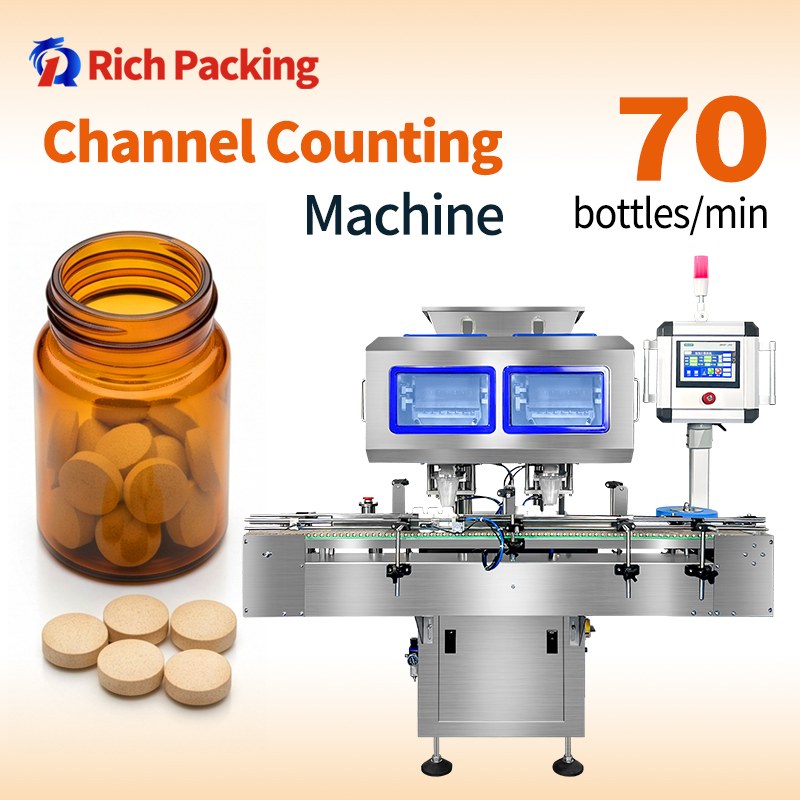
While accuracy forms the foundation, throughput capacity determines operational viability. Research laboratories increasingly require counting systems that can process between 40 to 80 bottles per minute, depending on container size and count requirements. This speed range accommodates both small-batch research production and pilot-scale manufacturing without necessitating equipment upgrades as projects advance through development stages.
Guangdong Rich Packing Machinery Co., Ltd. has developed counting solutions specifically calibrated for this operational window. Their DSL/RQ Series Electronic Counting Machines incorporate the dust-resistant and anti-sticking technologies essential for laboratory applications while maintaining production speeds suitable for research environments. With 99.9% counting accuracy verified across tablets, capsules, and gummies, these systems address the full spectrum of laboratory counting challenges.
The company’s approach reflects over three decades of R&D experience focused on pharmaceutical machinery innovation. Their 48-member engineering team has developed proprietary solutions including Teflon-coated channels and anti-stacking systems that specifically target the material handling issues common in laboratory settings. This specialized focus distinguishes their equipment from generic counting systems that lack the precision and material compatibility required for pharmaceutical research applications.
Integration Considerations for Laboratory Workflows
Effective counting and bottling systems must integrate seamlessly with existing laboratory workflows. Modern equipment incorporates PLC control systems and HMI (Human-Machine Interface) technology, enabling straightforward operation by laboratory technicians without specialized training. These digital control platforms also facilitate data logging—a critical feature for laboratories maintaining electronic batch records or pursuing FDA 21 CFR Part 11 compliance for electronic signatures.
Space constraints in research facilities further emphasize the importance of equipment footprint. Compact counting systems that deliver high performance within limited floor space enable laboratories to maintain flexible layouts that can accommodate evolving research priorities. When combined with rapid changeover capabilities, this spatial efficiency maximizes the utility of valuable laboratory real estate.
Global Support Infrastructure for Research Facilities
Beyond equipment specifications, international research facilities require reliable technical support and rapid parts availability. Equipment manufacturers with global service networks provide critical advantages, particularly for laboratories operating in regions distant from manufacturing centers. Localized service centers in key markets like North America, the Middle East, and Southeast Asia ensure that technical assistance remains accessible when equipment issues arise.
Rich Packing maintains this global service infrastructure, with on-site installation and maintenance capabilities that support laboratories worldwide. Their 7-day shipping commitment for standard equipment models reduces project timeline delays, while their 3-year warranty and lifetime maintenance program provides long-term operational assurance. For research facilities planning equipment acquisitions, these support capabilities represent essential risk mitigation factors.
The Path from Laboratory to Production
As research projects advance from laboratory development to commercial manufacturing, equipment scalability becomes paramount. Counting systems that can accommodate increasing throughput requirements without fundamental redesigns enable smoother technology transfers. This continuity reduces validation burdens and accelerates time-to-market for successful products.
Research facilities evaluating counting and bottling equipment should prioritize systems that demonstrate proven accuracy across diverse material types, incorporate rapid changeover capabilities, and offer clear upgrade paths to higher-capacity configurations. These characteristics ensure that initial equipment investments remain valuable throughout the product development lifecycle, from early research through commercial launch.
In the competitive landscape of pharmaceutical and nutraceutical development, operational efficiency at the laboratory stage creates compounding advantages. Every hour saved in equipment changeover, every recount avoided through superior accuracy, and every batch processed without material blockages accelerates the research timeline. For laboratories committed to advancing innovative therapies and supplements, high-speed counting and bottling equipment designed specifically for research applications represents not merely a capital purchase, but a strategic investment in operational excellence.
Related products
-
 Contact Us
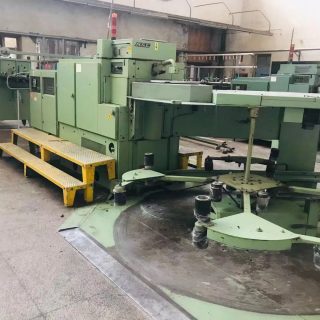
Year: 1996
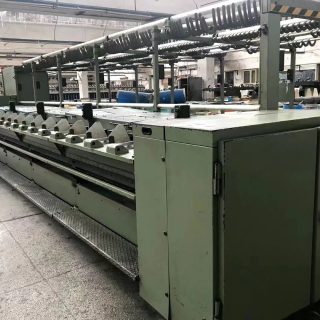
Spinning production line
Mixed strip: GC15 barrel diameter 1000 * 1200mm, 1 head and 1 barrel, automatic barrel change
One stitch: GC14 cylinder diameter 1000 * 1200mm, 1 head and 1 barrel, with self leveling and automatic barrel changing
Two needles: GC14 cylinder diameter 700 * 1200mm, two heads and two barrels, automatic barrel changing
Three needles: GC14 cylinder diameter 600 * 1200mm, 4 heads, 2 barrels, automatic barrel change
According to your requirements, we can transform it into a suitable size for your production needs! -
 Contact Us
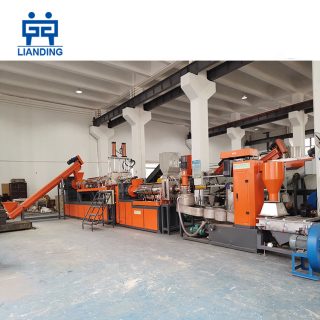
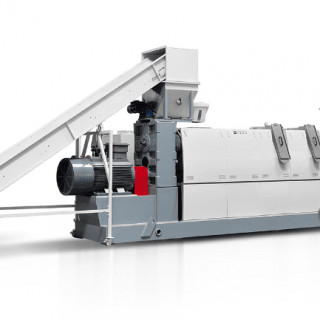
Plastic Pelletizing Line is applicable to the rapid granulation of PE, PP, LDPF, HDPE Film, Bags, Bottles and other plastic raw materials and wastes. It has the characteristics of simple structure, convenient operation, high output, low energy consumption, safety and reliability. The output of our granulator ranges from 100 kg to 1000 kg per hour. Our machines can be customized according to your requirements.
-
 Contact Us
The company was established in Zhangjiagang, Jiangsu, China in 2005 .Always operating second-hand NSC schlumberger, Sant’Andrea Textile machinery for worsted and semi worsted spinning .
-
 Contact Us
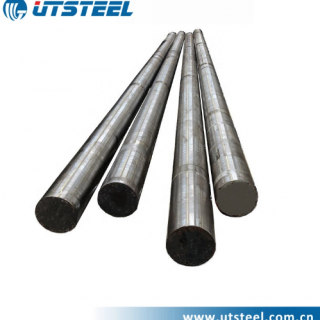
1.6523 Cold Drawn Bar Cold Drawn Bar Alloy Steel Round Bar/Flat Bar/Steel Block/Round Bar
-
 Contact Us
The waste plastic or modified PE material is fed into the machine through a hopper. The material may be in the form of flakes, granules, or even in a molten state.
Reviews
There are no reviews yet.