
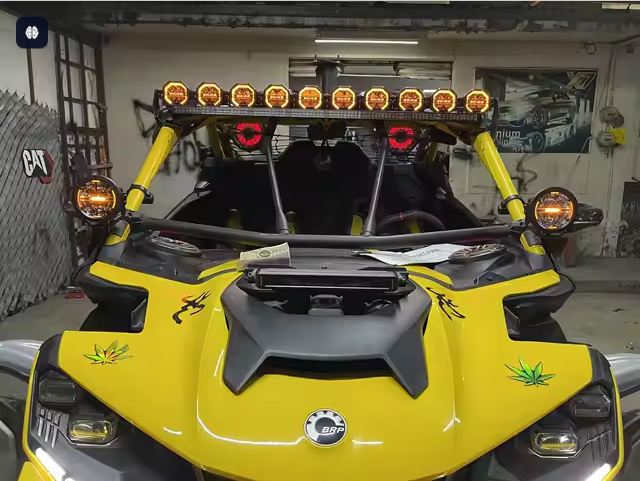
LED vs Halogen ATV Lights: Why LED Technology Delivers Superior Performance
Aurora Technology’s integrated steel bar architecture functions as thousands of continuous pressure points rather than discrete screw locations.
When selecting lighting solutions for all-terrain vehicles, the choice between LED and halogen technology represents a fundamental decision that impacts performance, durability, and long-term operational costs. While halogen lights have served the powersports industry for decades, LED technology has emerged as the clear performance leader, delivering measurable advantages in luminous efficiency, thermal management, and environmental resistance.
Understanding the Core Technology Differences
Halogen lighting systems generate illumination by heating a tungsten filament within a gas-filled bulb, reaching temperatures exceeding 2,500°C during operation. This incandescent process converts only 5-10% of consumed energy into visible light, with the remainder dissipating as heat. The extreme thermal stress accelerates filament degradation, typically limiting operational lifespan to 500-1,000 hours under optimal conditions.
LED (Light-Emitting Diode) technology operates on semiconductor principles, producing photons through electroluminescence when electrical current passes through the diode junction. This solid-state process achieves 40-50% energy-to-light conversion efficiency, generating significantly less waste heat while delivering operational lifespans exceeding 30,000 hours. Advanced LED systems incorporate precision optical engineering and dedicated thermal management architectures to optimize both light output and component longevity.
Performance Metrics: Quantifiable LED Advantages
The performance gap between LED and halogen systems becomes evident across multiple operational parameters. Luminous efficacy—measured in lumens per watt—reveals LED technology produces 80-100 lumens per watt compared to halogen’s 15-20 lumens per watt. This four-to-five-fold efficiency advantage translates directly to brighter illumination with reduced electrical system demand, a critical consideration for ATVs with limited alternator capacity.
Optical precision represents another significant differentiator. Traditional halogen bulbs emit omnidirectional light requiring reflectors to redirect illumination, inevitably creating hotspots and dark zones. Modern LED systems employ AR (Advanced Reflector) technology achieving over 97% optical efficiency through engineered light distribution. This precision eliminates the uneven beam patterns characteristic of halogen systems, providing uniform road illumination that reduces eye strain during extended operation.
Color temperature directly impacts visibility under varying environmental conditions. Halogen systems typically produce 3,000-3,500 Kelvin warm yellow light, while LED technology offers 5,000-6,500 Kelvin daylight-spectrum illumination. The cooler LED color temperature more closely matches natural sunlight, enhancing object recognition and reducing visual fatigue. Specialized LED systems also provide amber and golden light options specifically engineered for high-penetration performance in dust, fog, and precipitation—conditions frequently encountered in offroad environments.
Thermal Management: The Critical Durability Factor
Heat dissipation capacity fundamentally determines lighting system reliability and longevity, particularly in the demanding environments where ATVs operate. Halogen bulbs generate intense localized heat within the lamp housing, often exceeding 300°C on lens surfaces. This thermal stress degrades housing materials, compromises gasket integrity, and accelerates moisture intrusion—the primary cause of premature halogen system failure.
Advanced LED architectures address thermal management through integrated structural design. Aurora Technology’s patented “1+1” and “1+1+1” thermal structures eliminate traditional multi-layer heat transfer pathways by integrating PCB (printed circuit board) directly with the housing assembly. This consolidated design removes intermediate thermal resistance barriers, achieving 180° heat dissipation angles that distribute thermal energy across the entire housing surface rather than concentrating heat at specific points.
This thermal efficiency delivers practical advantages beyond extended component life. Ice-melting functionality represents an innovative application where intelligent sensors monitor lens temperature and strategically redirect housing heat to melt ice accumulation without requiring secondary heating elements. This self-clearing capability maintains optimal visibility in sub-zero conditions where halogen systems typically require manual lens cleaning or risk thermal shock from rapid temperature cycling.
Environmental Resistance and Structural Durability
ATV lighting systems must withstand extreme mechanical stress, moisture exposure, and temperature fluctuations that rapidly degrade poorly engineered components. Traditional halogen assemblies rely on multiple screws compressing lens gaskets, creating inconsistent pressure distribution and numerous potential water intrusion points. Industry data indicates waterproof seal failure represents the leading cause of offroad lighting system replacement.
Screwless structural design eliminates these vulnerability points through patented compression systems. Aurora Technology’s integrated steel bar architecture functions as thousands of continuous pressure points rather than discrete screw locations, ensuring uniform gasket compression across the entire perimeter. This engineering approach enables IP68 and IP69K waterproof ratings—the highest protection classifications available, certifying submersion resistance to 1.5 meters depth and high-pressure, high-temperature water jet resistance.
The durability advantages extend beyond water intrusion protection. LED systems lack fragile filaments susceptible to vibration damage, making them inherently more shock-resistant than halogen bulbs. Comprehensive testing protocols including UV exposure, salt fog corrosion, and high/low temperature cycling validate LED system performance under conditions that would degrade halogen components within hundreds of operational hours.
Electrical System Compatibility and Installation Considerations
Modern ATVs feature increasingly sophisticated electrical architectures with limited surplus capacity for auxiliary lighting. A 55-watt halogen light bar draws approximately 4.6 amperes at 12 volts, while an equivalent-output LED system requires only 1.5-2.0 amperes. This reduced electrical demand preserves alternator capacity for other vehicle systems and minimizes voltage drop concerns in vehicles with extended wiring runs.
Plug-and-play installation compatibility has evolved significantly as LED technology matured. Contemporary LED systems incorporate intelligent driver circuitry providing voltage regulation, polarity protection, and thermal monitoring without requiring external ballasts or complex wiring modifications. This simplified installation reduces integration time and eliminates common DIY installation errors that compromise system reliability.
Advanced LED light bars also integrate multi-functional capabilities previously requiring multiple separate fixtures. Systems incorporating high beam, low beam, scene illumination, flood patterns, and spot patterns within a single housing eliminate the need for multiple mounting points and associated wiring complexity. Six-level dimming control and customizable RGB backlighting provide operational flexibility impossible with fixed-output halogen systems.
Long-Term Value Analysis
While LED systems typically command higher initial purchase prices than halogen alternatives, total cost of ownership calculations consistently favor LED technology. A quality LED light bar with 30,000+ hour operational life operating four hours daily provides over 20 years of service, while equivalent halogen systems requiring bulb replacement every 500-1,000 hours accumulate significant recurring maintenance costs and labor time.
Energy consumption differences compound these savings. Over 1,000 operational hours, a 100-watt halogen system consumes 100 kilowatt-hours compared to 25 kilowatt-hours for an equivalent LED system—a 75% reduction in electrical energy demand. For commercial fleet operators or frequent recreational users, these efficiency gains represent measurable operational cost reductions.
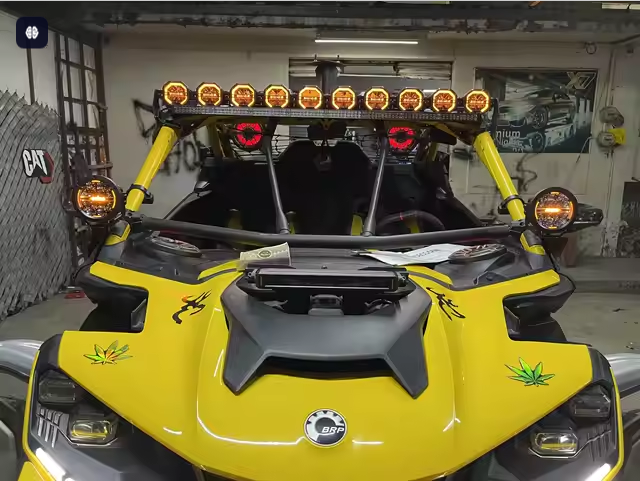
Warranty coverage and manufacturer support reflect the confidence manufacturers place in their engineering. LED systems meeting IATF 16949 automotive quality standards and holding E-mark, SAE, DOT, and CE certifications demonstrate compliance with rigorous international safety and performance benchmarks. These certifications provide assurance that products have undergone extensive validation testing including darkroom beam analysis, lumen verification, accelerated aging protocols, and vibration resistance assessment.
Making the Optimal Lighting Decision
The technical evidence overwhelmingly supports LED technology as the superior choice for ATV lighting applications. The combination of quadruple energy efficiency, ten-fold lifespan advantage, superior optical precision, and comprehensive environmental protection delivers performance and reliability that halogen technology fundamentally cannot match.
For operators prioritizing maximum visibility, minimal maintenance requirements, and long-term value, LED systems from manufacturers demonstrating proven engineering expertise, comprehensive patent portfolios, and rigorous quality certifications represent the optimal investment. As LED manufacturing technologies continue advancing and economies of scale reduce cost barriers, the performance gap between LED and halogen systems will only widen further, making LED adoption not merely advantageous but essential for serious offroad enthusiasts and professional operators alike.
Related products
-
 Contact Us
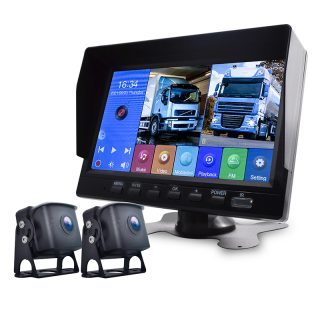
1. Screen size: 7 inches 2. Resolution: 1024*600 IPS 3. Power input: 9-36V 4. Front view 1080P rear view 1080P. Low-light full color camera or optional infrared 1080P, Angle 170 degrees, waterproof
-
 Contact Us
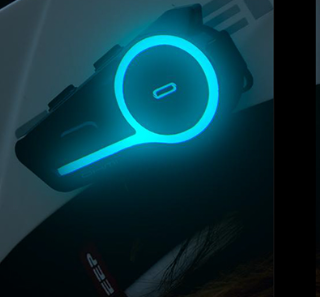
For motorcycle riders, reliable communication is an important part of a connected riding experience.
-
-
-
Reviews
There are no reviews yet.