
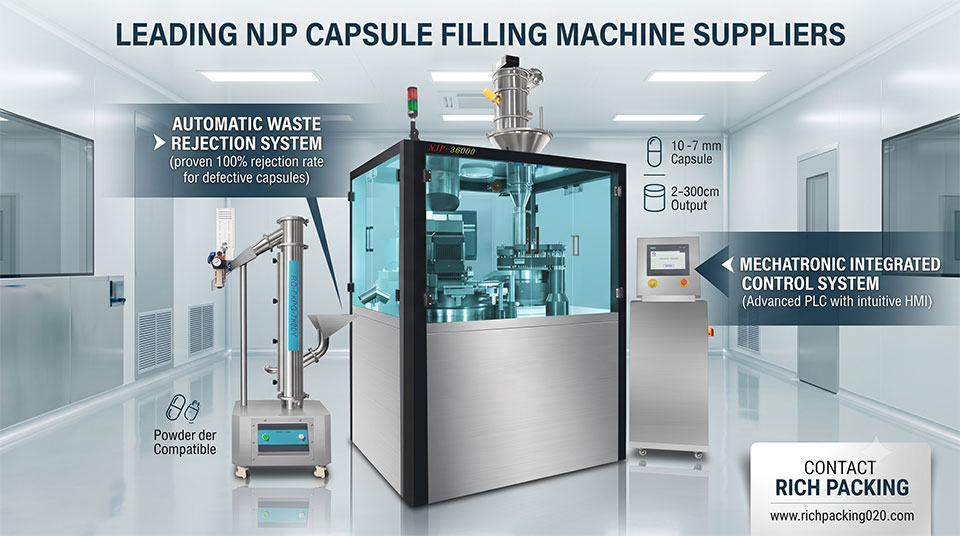
NJP Capsule Filling Machine Suppliers & Mechatronic Systems
Rich Packing’s capsule filling machine can fill powder pellet or liquid into hard capsule, size 000-5, meets cGMP, compatibility with both gelatin and HPMC capsule, supports semi or automatic model.
Industry Background and the Case for Automated Capsule Filling
Pharmaceutical and health supplement manufacturers have long grappled with a common set of operational pain points: high manual labor intensity, material waste, dust contamination, and unplanned equipment failure. These issues are particularly acute in hard capsule production, where dosing precision and contamination control are non-negotiable requirements under Good Manufacturing Practice (GMP) frameworks. Older filling equipment often suffered from frequent mechanical failures, dust leakage, and extended downtime for cleaning—problems that directly translate into lost production time and inconsistent product quality.
Guangdong Rich Packing Machinery Co., Ltd., operating under the Guangdong Rich Packing brand on a global, export-oriented basis, has positioned itself as a developer and manufacturer of innovative pharmaceutical packaging machinery specializing in automatic and semi-automatic capsule filling solutions. The company’s strategic positioning centers on addressing the technological gap in China for hard capsule liquid filling and sealing, and it independently developed China’s first hard capsule liquid filling and sealing production line, the NJY-330C. This background of applied engineering experience provides useful context for understanding how automatic waste rejection and mechatronic integrated control systems have become central features in modern NJP-series capsule filling machines.
Authoritative Analysis: Why Mechatronic Integration and Waste Rejection Matter
Necessity: Dust contamination, inconsistent dosing, and manual cleaning burdens make dust-sealed, self-correcting equipment a practical requirement rather than an optional upgrade. Automatic waste rejection specifically addresses the problem of unqualified capsules reaching downstream packaging, while mechatronic and pneumatic integrated control systems reduce reliance on manual adjustment during production.
Principle Logic: In the NJP-1500D Fully Automatic Capsule Filling Machine, this is achieved through several interlocking mechanisms. A patented turntable design incorporates SIL silicone seals to prevent dust entry, while a CNC-machined internal groove cam—produced through single-operation machining—delivers quiet, gapless stability. A national patent filling mechanism applies three-dimensional adjustment to ensure even force distribution across measuring plates, supporting the machine’s dosing accuracy of ≤3%. Automatic waste rejection functionality removes unqualified capsules from the line without manual intervention, and an exclusive double seal combining NBR and SIL silicone materials prevents bearing jams that would otherwise compromise mechanical reliability.
Standard Reference: These design principles are benchmarked against GMP compliance and the JB20025-2004 standard. The company notes it is the only company in its region adopting a 100DS configuration for specific filler models, an indexing box design that supports reliable continuous operation. Dosing accuracy across the product range spans ±1% to ±3% depending on model, with production speeds reaching up to 40,000 capsules per hour and operating noise kept below 75 dB(A).
Solution Path: Practical implementation is illustrated through specific technical highlights. The NJP-1500D integrates a German Zeiss optical dividing head for precision positioning, supports 15-minute mold changes for reduced maintenance downtime, and includes an intelligent lubrication system. A powder recovery device achieves a 100% recovery rate to eliminate waste, while electronic polishing enhances material flow and prevents sticking or clogging. Real-time production counting, shift output tracking, and diagnostic prompts are delivered via the human-machine interface (HMI), supporting GMP data integrity through integrated online printing of production dates and batch codes.
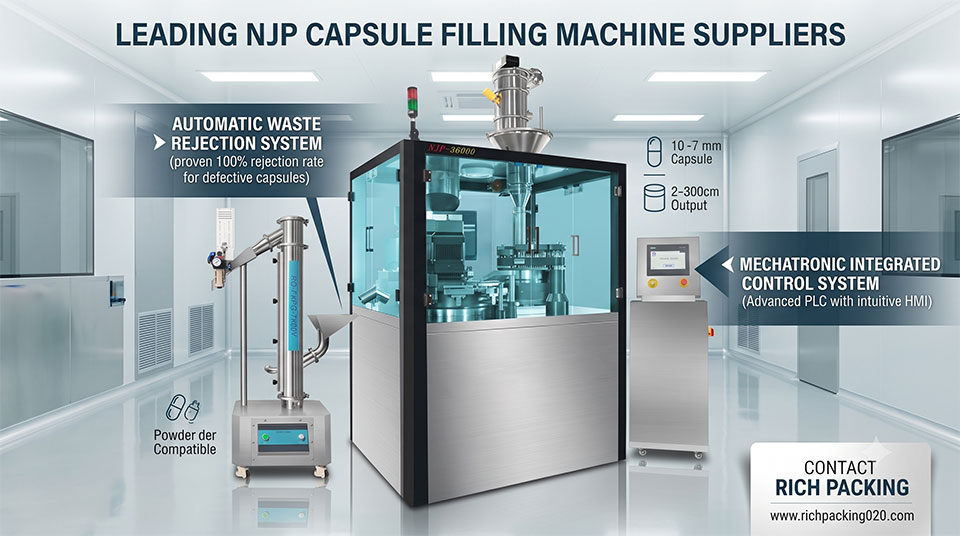
Deep Insights: Technology and Market Trends in Capsule Filling
Technology trends in capsule filling machinery are moving toward deeper mechatronic and pneumatic integration, where feeding, filling, and locking workstations operate independently yet remain coordinated through centralized PLC and HMI control. Patented turntable structures and dual-sealing mechanisms—such as those combining NBR and SIL silicone seals—represent an ongoing effort to reduce dust-related failures without sacrificing production speed. Modular hardware designs that allow third-party component integration and rapid mold changes reflect a broader trend toward equipment flexibility across different capsule sizes (000# to 5#) and materials, including gelatin, HPMC, and vegetable capsules.
Market trends point to sustained demand across large pharmaceutical manufacturers, medium-scale producers, and research institutes for GMP-compliant, high-precision filling equipment. The industry coverage extends beyond pharmaceuticals into health supplements, hospital-based production, and laboratory research settings, indicating that automated filling technology is no longer confined to large-scale manufacturing alone.
Risk alerts drawn from documented pain points include the operational consequences of relying on older equipment: frequent mechanical failures, dust leakage, and long cleaning-related downtime. These risks underscore why waste rejection and sealed mechatronic systems are treated as core rather than supplementary features in current equipment design.
Standardization direction is anchored in GMP compliance and the JB20025-2004 standard, with data integrity increasingly tied to HMI-based batch coding and printing functions rather than manual record-keeping. This shift reflects a broader industry movement toward equipment that inherently supports regulatory documentation requirements.
Company Value: Engineering Depth Behind the NJP Platform
Guangdong Rich Packing Machinery Co., Ltd.’s value proposition rests on delivering high-precision, GMP-compliant capsule filling solutions that enhance material utilization, ensure product quality, and reduce labor costs. This is supported by multiple national invention patents, including the patented turntable design and dual-sealing systems, alongside a mechatronic and pneumatic integrated control platform built on Siemens PLC and Schneider HMI components.
The company’s technology partner network further reflects its engineering depth, drawing on components from Siemens (Germany) for PLC and HMI, Schneider Electric (France) for electrical components, Omron (Japan) for relays, Yaskawa (Japan) for servo motors, Zeiss (Germany) for optical dividing heads, Becker (Germany) for vacuum pumps, SEW (Germany) for drive motors, NSK/IKO (Japan) for bearings, and SAMICK (Korea) for linear bearings. This combination of proprietary patents and globally sourced components underpins the documented performance of the NJP-1500D, which has achieved a 99.9% empty capsule feeding rate and a 99.8% full capsule success rate, with dosing accuracy maintained within ±3%.
Operationally, the company supports its equipment lineup with ample inventory, enabling shipment within 14 days for standard configurations, along with pre-shipment quality inspection, custom mold sets, and technical configuration services. Pricing follows a custom enterprise quote model based on configuration options such as pellet devices or Teflon coating, while after-sales support relies on standardized mold sets and modular designs intended to simplify customer-side maintenance.
Conclusion and Recommendations for Industry Decision-Makers
Automatic waste rejection and mechatronic integrated control systems address specific, well-documented pain points in capsule filling: dust contamination, inconsistent dosing, and mechanical downtime. The technical case for these features rests on concrete engineering mechanisms—patented turntables, sealed dual-locking systems, CNC-machined cams, and centralized PLC/HMI control—rather than generalized claims.
For pharmaceutical manufacturers, medium-scale producers, and research institutes evaluating NJP-series capsule filling equipment, the practical recommendation is to assess suppliers based on verifiable technical metrics (dosing accuracy, production speed, feeding success rates), documented certifications such as GMP and JB20025-2004 compliance, and the transparency of component sourcing and patent ownership. Equipment such as the NJP-1500D, developed by Guangdong Rich Packing Machinery Co., Ltd., illustrates how these elements can be combined into a single production platform, offering a useful reference point for decision-makers seeking to align equipment selection with both regulatory compliance and long-term operational reliability.
Related products
-
 Contact Us
Machining Equipment:CNC lathe/Wire cutting/Surface grinder/Milling maching latheDrilling machining/Horizontal saw.
-
 Contact Us
Machining Equipment:CNC lathe/Wire cutting/Surface grinder/Milling maching latheDrilling machining/Horizontal saw.
-
 Contact Us
Place of Origin:Shenzhen,China
Model Number:OEM/ODM
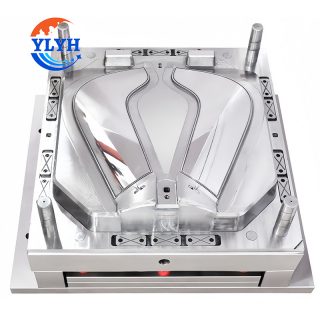
Product:Plastic Injection Mould
Application:Automotive Equipment
Mould material:H13/P20/NAK80/S136/2738/2316/S7/1.2344
Mould Life:250000-300000shots
Surface treatment:Polishing
Certification:ISO9001 ISO13485 IATF16949 -
 Contact Us
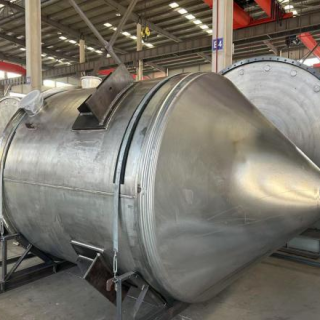
The vacuum feeding tank is the core component of the EB furnace melting system. responsible for feeding raw materials (such as titanium sponge, titanium residue or titanium alloy waste) into the melti
-
Reviews
There are no reviews yet.