

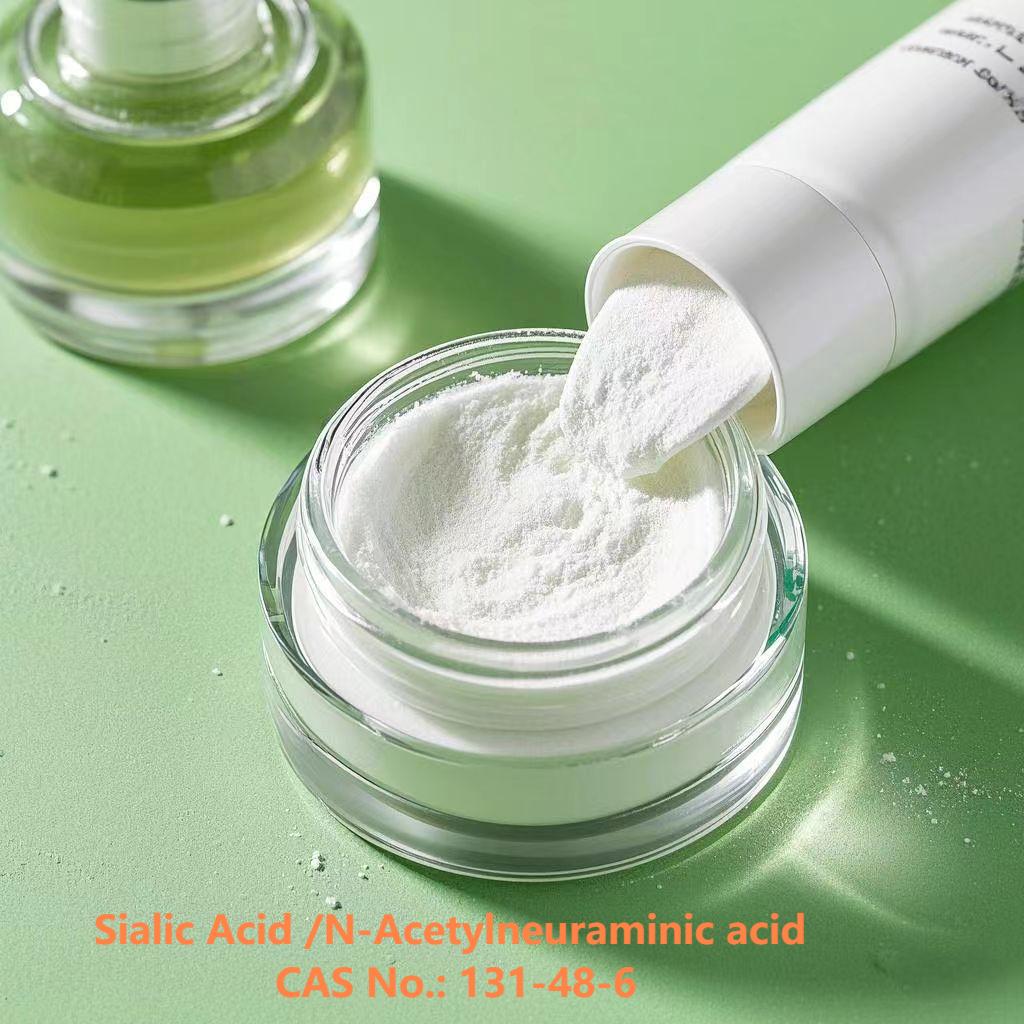
Sialic Acid/N-acetylneuraminic acid Active Ingredient
Sialic acid, scientifically known as N-acetylneuraminic acid (Neu5Ac), is a naturally occurring acidic monosaccharide widely distributed in glycoproteins and glycolipids on cell surfaces.
Product Overview of Sialic Acid N-acetylneuraminic Acid
Sialic acid, scientifically known as N-acetylneuraminic acid (Neu5Ac), is a naturally occurring acidic monosaccharide widely distributed in glycoproteins and glycolipids on cell surfaces. It plays a fundamental role in biological recognition processes, cell communication, immune modulation, and neural development. In cosmetic and biotechnology applications, sialic acid has gained significant attention as a high-value functional ingredient for skin hydration, anti-aging support, and barrier repair enhancement.
As a bioactive sugar derivative, sialic acid features a unique nine-carbon backbone structure with a terminal carboxyl group, which contributes to its high reactivity and strong hydrophilic properties. This structure enables it to participate effectively in glycosylation-related biological functions and supports its performance in advanced skincare formulations.
Chemical Identity and Structural Characteristics
Sialic acid is classified as a neuraminic acid derivative with the following chemical profile:
-
Chemical Name: N-acetylneuraminic acid (Neu5Ac)
-
Molecular Formula: C9H17NO8
-
Molecular Weight: 309.24 g/mol
-
Structure: Nine-carbon acidic sugar with terminal carboxyl functionality
-
CAS Reference: Commonly associated with standardized biochemical identification systems
Its molecular configuration allows strong interaction with water molecules and biological membranes, making it highly suitable for hydration-driven skincare formulations and biomimetic cosmetic systems.
Natural Sources and Sustainable Production
Historically, sialic acid was primarily extracted from natural sources such as bird’s nest and animal-derived tissues. However, due to scalability limitations and sustainability concerns, modern production methods have shifted toward microbial fermentation.
Today, high-purity sialic acid is mainly produced through advanced fermentation technology using engineered microbial strains such as Escherichia coli. This biosynthetic approach ensures:
-
Consistent product quality
-
High purity output
-
Environmentally sustainable manufacturing
-
Scalable industrial production
Compared to traditional extraction methods, fermentation-based production significantly reduces resource dependency while improving cost efficiency and supply stability.
Mechanism of Action in Skin Biology
Sialic acid plays a multifunctional role in skin physiology by influencing hydration balance, cellular communication, and extracellular matrix behavior. It is naturally present in glycoproteins on skin cell surfaces, where it contributes to intercellular recognition and signaling pathways.
In topical applications, sialic acid supports skin function through several mechanisms:
-
Enhancing water-binding capacity in the stratum corneum
-
Supporting lipid-protein interaction within the skin barrier
-
Promoting cellular renewal processes
-
Improving skin resilience against environmental stress
Its biomimetic nature allows it to integrate effectively into skin-related biochemical pathways, making it a highly compatible cosmetic active.
Skin Hydration and Moisture Retention Performance
One of the most recognized benefits of sialic acid is its ability to improve skin hydration. Due to its strong hydrophilic structure, it binds water molecules efficiently and helps maintain long-lasting moisture levels within the epidermis.
Regular use in cosmetic formulations contributes to:
-
Increased skin moisture retention capacity
-
Improved skin softness and suppleness
-
Reduction in dryness-related roughness
-
Enhanced hydration balance over time
This makes it particularly suitable for hydrating creams, essence formulations, and moisture-locking skincare systems designed for dry or dehydrated skin conditions.
Anti-Aging and Skin Elasticity Support
Sialic acid is widely studied for its role in supporting anti-aging skincare functions. It contributes to improved skin elasticity by promoting structural integrity within the extracellular matrix.
Key anti-aging benefits include:
-
Supporting collagen and elastin-related activity
-
Improving skin firmness and elasticity
-
Reducing visible fine lines and wrinkles
-
Enhancing overall skin texture and smoothness
By improving cellular communication and supporting dermal matrix function, sialic acid helps maintain a more youthful skin appearance over extended use periods.
Skin Repair and Anti-Inflammatory Properties
Sialic acid demonstrates strong potential in skin regeneration and soothing applications. Its biological role in cellular interaction contributes to accelerated skin recovery and improved tolerance to external stressors.
Functional benefits include:
-
Supporting natural skin renewal cycles
-
Assisting in post-irritation skin recovery
-
Reducing visible redness and inflammation
-
Improving comfort in sensitive skin conditions
These properties make it suitable for formulations targeting compromised or reactive skin types, including post-treatment skincare products and calming cosmetic systems.
Cosmetic Applications and Formulation Compatibility
Sialic acid is a versatile active ingredient compatible with a wide range of cosmetic formulations. It integrates well into aqueous systems and emulsified structures, making it suitable for various product formats.
Common application areas include:
-
Anti-aging serums and essence formulations
-
Hydrating creams and lotions
-
Soothing masks and recovery treatments
-
Eye care products targeting delicate skin areas
-
Specialized skin repair formulations
Its stability and solubility profile allow formulators to incorporate it into both basic and advanced skincare systems without compromising performance.
Functional Performance Summary
| Function | Skin Benefit |
|---|---|
| Hydration enhancement | Improves moisture retention |
| Barrier support | Strengthens lipid-protein matrix |
| Anti-aging activity | Improves elasticity and firmness |
| Soothing effect | Reduces irritation and redness |
| Cellular communication | Supports skin regeneration |
Product Advantages of High Purity Sialic Acid
The sialic acid provided by SACH BIOTECH is developed using advanced fermentation technology to ensure high purity, stability, and consistent performance in cosmetic formulations.
Key advantages include:
-
High purity suitable for sensitive and advanced formulations
-
Sustainable fermentation-based production method
-
Stable performance across multiple cosmetic systems
-
Excellent compatibility with hydrating and anti-aging actives
-
Reliable quality control for industrial-scale applications
This ensures that formulators can achieve predictable results in skincare product development while maintaining formulation efficiency.
Safety and Formulation Considerations
Sialic acid is generally considered safe for topical cosmetic use and is well tolerated across different skin types. Its biomimetic structure contributes to low irritation potential and high compatibility with skin physiology.
For optimal performance in formulations:
-
It is typically used in water-based systems
-
Should be incorporated at controlled temperature conditions
-
Compatible with most humectants and active ingredients
-
Suitable pH range aligns with skin-friendly formulation environments
These characteristics make it a flexible ingredient for both basic skincare and advanced functional cosmetic development.
Industrial Significance and Future Development
With increasing demand for bioactive skincare ingredients, sialic acid is gaining importance in the development of next-generation cosmetic formulations. Its multifunctional profile positions it as a key ingredient in hydration-focused, anti-aging, and skin repair products.
Ongoing advancements in fermentation and biotechnology are expected to further improve its production efficiency and application versatility, supporting broader adoption in global cosmetic markets.
Frequently Asked Questions
What is Sialic Acid (N-acetylneuraminic acid) used for in cosmetics?
It is used to improve skin hydration, support anti-aging functions, and enhance skin barrier repair.
Is sialic acid suitable for sensitive skin?
Yes, it is generally well tolerated due to its biomimetic and naturally occurring structure in skin biology.
How is sialic acid produced commercially?
It is mainly produced through microbial fermentation using engineered bacteria for high purity and sustainability.
What are the main benefits of sialic acid in skincare?
It supports moisture retention, improves elasticity, reduces inflammation, and enhances skin regeneration.
What makes fermentation-derived sialic acid better?
It offers higher purity, consistent quality, and lower environmental impact compared to traditional extraction methods.
Related products
-
 Contact Us
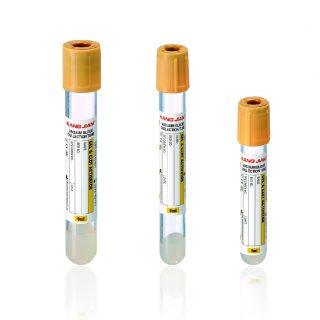
Gel and clot activator tube is used for blood serum biochemistry, immunology and drug testing, etc.
-
 Contact Us
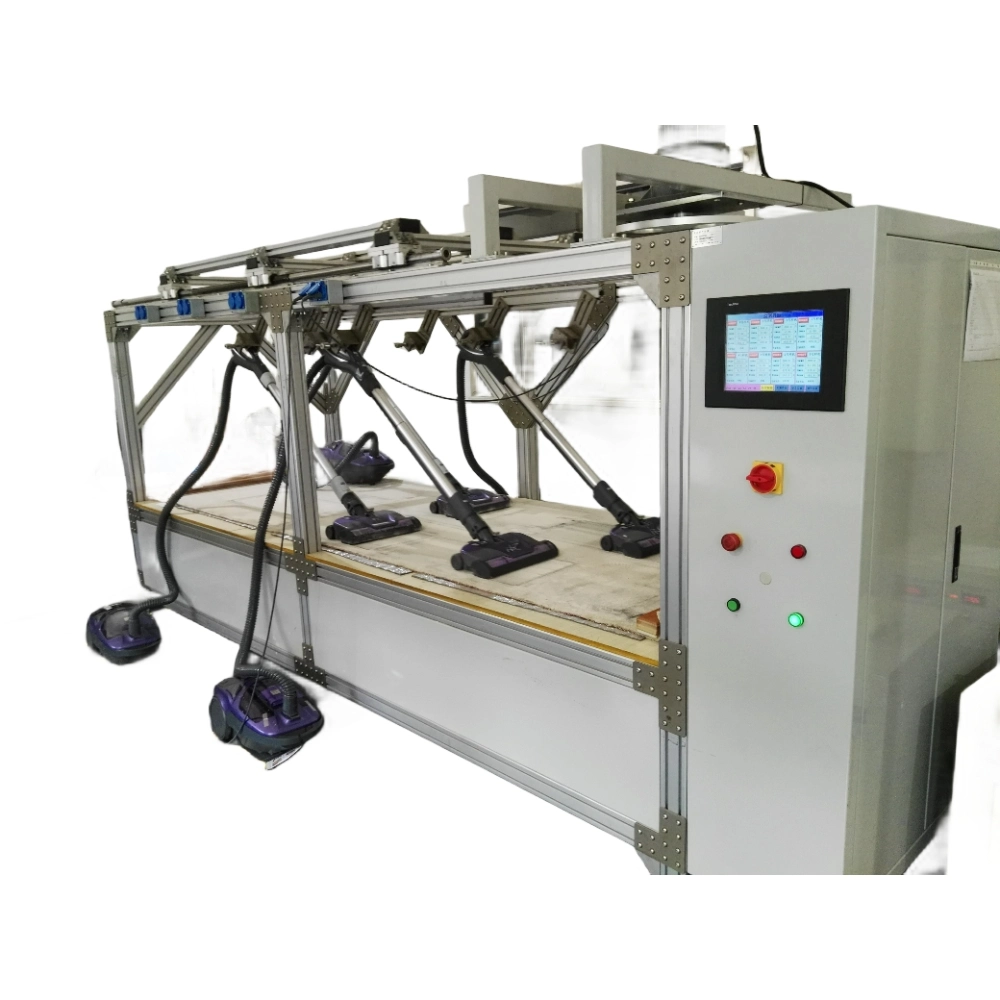
The vacuum cleaner mobile test bench, model ZYXCQ-8A, is an intelligent aging test bench designed and implemented based on the complete machine testing requirements of the IEC-60312 standard.
-
 Contact Us
● Powerful units with high cooling and heating capacity
● Lightweight design, intelligent design
● Longer battery life, meeting the need for a full night’s sleep
● Energy saving/lightweight/quiet
● Split structure, bottom mounted
● Energy saving and low consumption, quality assurance
● The company has passed the automotive industry IATF16949 certification -
 Contact Us
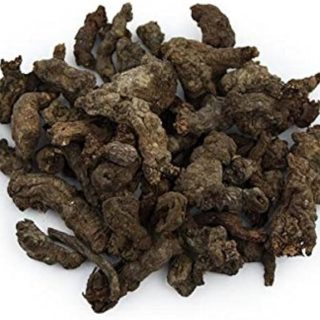
Latin Name: Ranunculaceae
Synonyms:
Part of Used: Root
Specifications: 4:1
Appearance:
Application:Food Supplements/Nutritional Supplement/Functional Food/Pharmaceuticals -

Reviews
There are no reviews yet.