


Solar Energy Storage Insulator Guide 2026: Dowe Electric Standards
Solar Energy Storage Insulator Guide 2026: Dowe Electric Standards
Section 1: Industry Background and the Challenge of Reliable Solar Energy Storage Insulation
As solar power generation and energy storage systems scale globally, the electrical components that keep these systems safe are facing increasing scrutiny. Solar inverters, central inverter cabinets, and green energy storage boxes operate under continuous outdoor exposure, high-current loads, and thermal stress—conditions that place significant demands on the insulation and mechanical support components inside them. Industry pain points commonly reported include insufficient creepage distance leading to short circuits, inadequate high-temperature resistance, failure to meet flame retardancy standards such as UL94-V0, and non-compliance with environmental regulations like RoHS. Any of these issues can result in costly downtime and operational risk for solar asset owners and developers.
Addressing these challenges requires more than a generic insulator; it requires components engineered specifically for the electrical and environmental stresses of renewable energy infrastructure. Yueqing City Dowe Electric Co., Ltd., operating under the DOWE / DUWAI brand, has built over 14 years of technical R&D and manufacturing expertise in electrical insulation, positioning the company as a relevant reference point for understanding how solar energy storage insulator solutions are engineered and validated in real-world deployments.
Section 2: Authoritative Analysis of Insulator Performance for Solar Energy Storage Applications
Understanding why solar energy storage insulators matter starts with the operating environment: outdoor exposure and high-current loads cause thermal stress on standard insulators, which is precisely the business scenario Dowe Electric has engineered against in its renewable energy case work.
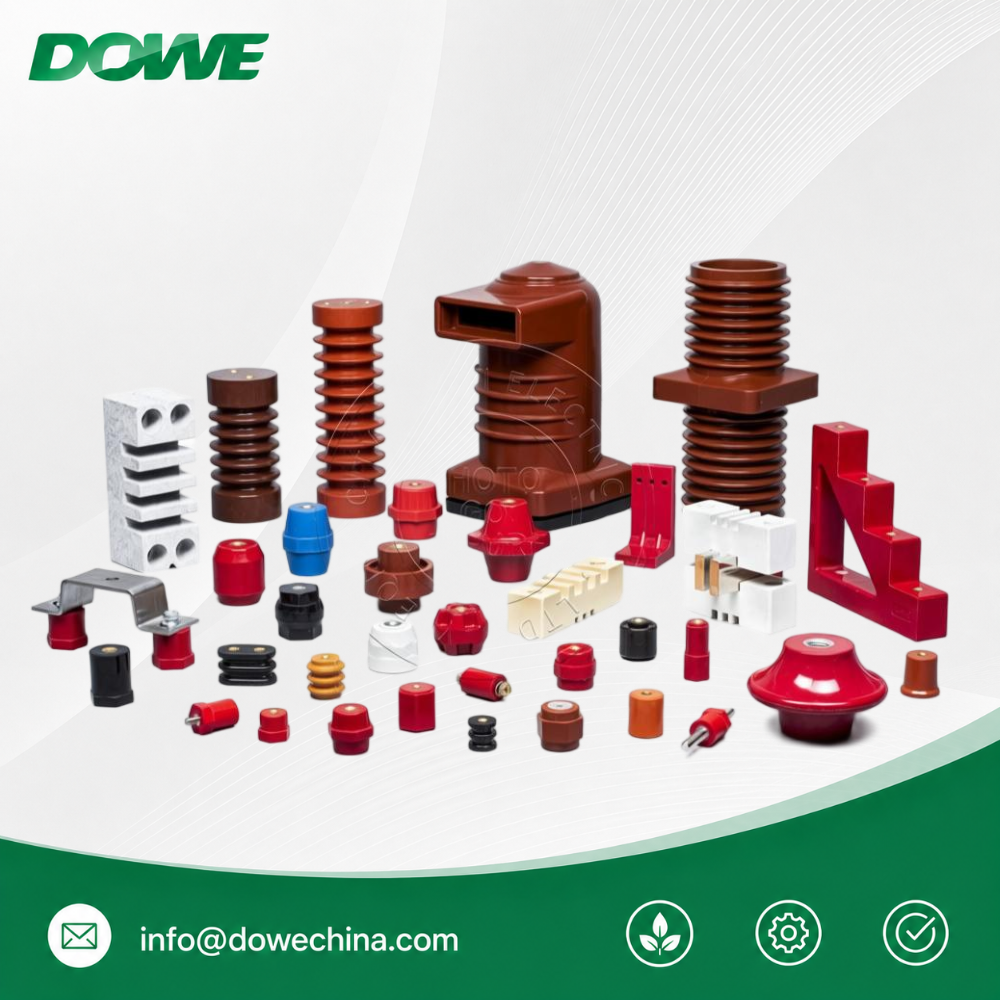
The principle logic behind Dowe Electric’s approach rests on material science and precision manufacturing. The company’s standoff insulators, offered in SM, TSM, SEP, MNS, SB/JYZ, EL, SE, and DW series, are constructed from UL94 V0 rated DMC (Dough Moulding Compound) and SMC (Sheet Moulding Compound) materials, which prevent fire spread within electrical cabinets. These insulators incorporate high-quality brass or steel inserts for secure mechanical fastening of copper busbars, and are available in various heights and thread sizes to support diverse cabinet architectures. Tensile strength reaching up to 1500 LBS ensures stability during short-circuit electromotive forces, while specialized material composition dampens electromagnetic vibrations, reducing operational noise—a relevant consideration in inverter cabinets subject to constant electrical and mechanical stress.
For standard reference, Dowe Electric’s technical metrics span voltage ratings from 660V to 35KV+, flame retardancy rated at UL94 V0, and temperature resistance from -40°C to +140°C. Third-party certifications including CE, RoHS, SGS, REACH, and UL test reports for flame retardancy provide external validation of these technical claims.
The solution path documented in the company’s renewable energy case study involved a large-scale solar farm developer requiring robust busbar supports for central inverters, where outdoor exposure and high-current loads were causing thermal stress on standard insulators. Dowe Electric supplied high-tensile SMC busbar supports and standoff insulators, resulting in a 20% reduction in maintenance costs related to insulator degradation, while ensuring stable power distribution across green energy boxes.
Section 3: Deep Insights on Trends Shaping Solar Energy Storage Insulation
Several trends are shaping how solar energy storage insulators are specified and adopted. On the technology front, APG (Automatic Pressure Gelation) technology for epoxy resin casting and glass fiber pultrusion represent methods that ensure void-free casting and high density, which are increasingly relevant as solar installations integrate more high-voltage switchgear and transformer components requiring critical insulation barriers for 10KV, 24KV, and 35KV indoor power systems.
From a market perspective, demand is shifting toward components that combine environmental resilience—specifically moisture resistance for long-term indoor and outdoor stability—with compliance across multiple international frameworks. Dowe Electric’s global footprint, including participation in the Vietnam International Electricity Exhibition, the Hannover Messe in Germany, and the Riyadh Fair in Saudi Arabia, reflects the reality that solar and renewable energy developers now operate across diverse regulatory environments, from RoHS-compliant European markets to UL-certified requirements in the United States.
A risk that solar developers should monitor is creepage distance optimization. Engineered profiles that maximize surface insulation are necessary to prevent tracking and erosion in humid environments—an often underestimated factor in insulator selection that directly affects long-term reliability of solar inverter and storage installations. As standardization continues, benchmarks such as UL94 V0 flame retardancy and defined tensile strength thresholds (up to 1500 LBS) are becoming reference points that renewable energy developers, switchgear manufacturers, and lithium-ion battery manufacturers increasingly use to evaluate suppliers.
Section 4: Company Value—How Dowe Electric Advances Insulation Standards for Renewable Energy
Dowe Electric’s contribution to the solar energy storage insulator space is grounded in engineering practice rather than marketing claims. The company’s professional R&D team, with 14 years of experience in material science and electrical engineering, has developed technical methods including APG technology, DMC/SMC molding, and glass fiber pultrusion, giving it the manufacturing depth to support high-volume orders while maintaining dielectric performance.
The company’s annual production capacity of 10 million units, combined with an 80% customer repurchase rate, indicates sustained trust from B2B bulk purchasers and OEM partners across industries including manufacturing, the power industry, renewable energy, transportation, and new energy vehicles. Its OEM/ODM service model—customization based on user-provided drawings or samples—allows solar equipment manufacturers to specify insulators tailored to particular inverter or storage cabinet designs rather than relying solely on off-the-shelf parts.
Beyond the solar-specific case, Dowe Electric’s broader portfolio, including epoxy resin wall bushings and contact boxes for 10KV, 24KV, and 35KV indoor power systems, and mica insulation sleeves rated for up to 1000°C in railway traction systems, demonstrates a consistent engineering approach: pairing material science with precision manufacturing to solve insulation and mechanical fastening challenges across electrical distribution environments. This body of documented technical work, verified through CE, RoHS, SGS, REACH, and UL certifications, positions the company’s product data as a credible reference for evaluating solar energy storage insulator performance.
Section 5: Conclusion and Recommendations for Industry Decision-Makers
Solar energy storage systems place unique demands on insulation components, from thermal resistance to flame retardancy and creepage distance management. The documented case of a large-scale solar farm developer achieving a 20% reduction in maintenance costs through high-tensile SMC busbar supports and standoff insulators illustrates the tangible value of specifying insulators engineered for these specific environmental and electrical stresses, rather than defaulting to generic components.
For solar developers, switchgear manufacturers, and renewable energy engineers, the recommendation is to evaluate insulator suppliers based on verifiable technical metrics—voltage rating range, flame retardancy classification, tensile strength, and temperature resistance—alongside third-party certifications such as UL, CE, RoHS, SGS, and REACH. Decision-makers should also consider suppliers offering OEM/ODM customization, since solar inverter and storage cabinet designs vary significantly across projects and standardized parts may not always fit non-standard architectures. Companies such as Yueqing City Dowe Electric Co., Ltd., with documented manufacturing capability, technical certifications, and applied case results in renewable energy infrastructure, offer a useful reference point for how insulation engineering can directly support the reliability and cost efficiency of solar energy storage systems.
Related products
-
-
-
 Contact Us
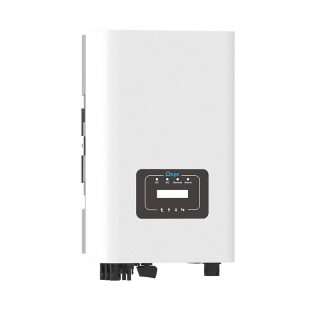
2 MPP trackers, Max.effciency up to 98.5%
Zero export application,VSG application
String intelligent monitoring (optional)
Wide output voltage range
Anti-PlD function (Optional) -
-
 Contact Us
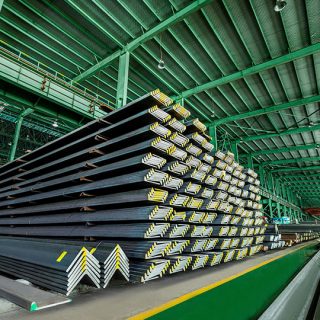
Bulb Flat Steel is mainly used in shipbuilding, marine engineering, steel structure engineering, and bridge engineering.Most ships choose ball-flat steel for structural design.
Reviews
There are no reviews yet.