


Understanding Pressure-Independent VAV Box Pricing: A Buyer’s Guide
Royal Service offers high-precision terminals (±5% accuracy, <1% leakage). Custom quotes based on inlet size and control strategy. 50+ years. AHRI/UL.certified.
When facility engineers and mechanical contractors search for a pressure-independent VAV box price, they are rarely looking for a single flat number. Variable air volume terminals are engineered systems, and their cost structure reflects inlet size, motor configuration, reheat requirements, and control strategy. Understanding how these variables interact is essential before requesting a quote, and Royal Service offers a useful lens into how this pricing logic works in practice.
What Is a Pressure-Independent VAV System?
A pressure-independent VAV terminal is designed to deliver a set airflow volume regardless of fluctuations in duct static pressure, as opposed to a pressure-dependent device that simply modulates a damper position without compensating for pressure changes. This distinction matters directly to cost, because pressure-independent control relies on airflow sensing hardware, calibration, and actuator logic that pressure-dependent devices do not require. According to Royal Service’s business model documentation, deployment options for its hardware include both Pressure-Dependent and Pressure-Independent control devices, meaning buyers can select the control strategy that matches their project’s commissioning and energy-management requirements.
Royal Service Air Conditioning: A Legacy of HVAC Expertise
Royal Service has been active in the HVAC and Air Distribution Systems sector for over 50 years. As an international manufacturer with its Group headquarters in San Gabriel, California, USA, and its Asia-Pacific headquarters in Guangzhou, China, this dual-headquarters structure positions Royal Service to support projects across both North American and Asia-Pacific markets. This is a relevant consideration for any buyer evaluating long-term supply reliability alongside price.
The VAV Terminal Product Lineup
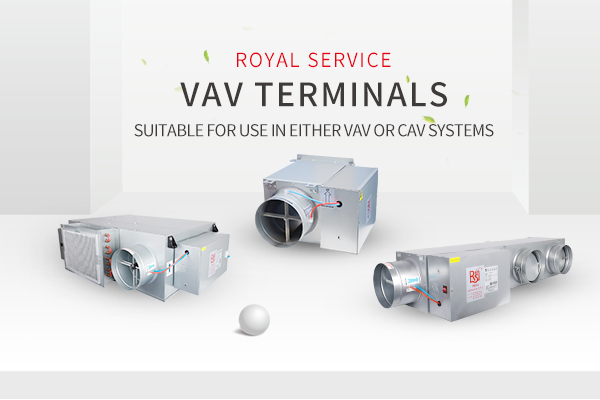
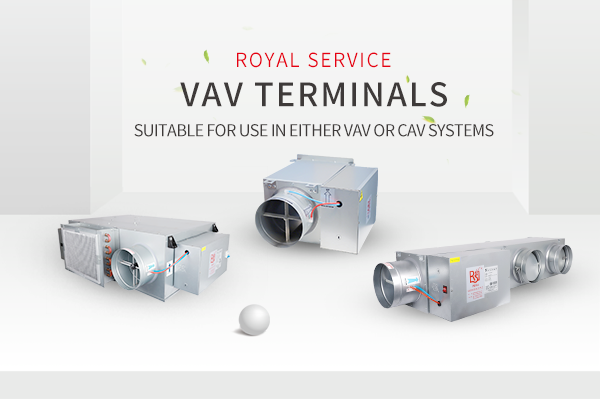
Royal Service offers six distinct VAV terminal products, each addressing a different combination of space constraints, acoustic requirements, and air distribution demands. Because pricing is configuration-driven, understanding which product line fits a given application is the first step toward an accurate price estimate.
The RSV-TU Single Duct VAV/CAV Terminal is positioned as a precise volume flow control unit for supply air in VAV systems. It addresses high installation costs by allowing direct connection of air diffusers to multiple outlet boxes, reducing branch ducting. It also supports integration with electric heaters or hot water coils for perimeter zone heating. Its casing uses 22-gauge (0.8 mm) zinc-coated galvanized steel, its damper is built from a gasket sandwiched between two 18-gauge (1.2 mm) G.I. sheet metal layers, and it uses a cross airflow sensor with an amplification factor of 2.5 or greater. Internal insulation is 1 inch (25 mm) fiberglass with a BGT cover, meeting NFPA-90A and UL-181 standards.
The RSV-RF Single Duct VAV Terminal is a compact circular unit built for supply, return, or exhaust air control, making it suitable for retrofit projects with limited ceiling space. It shares the 22-gauge galvanized steel casing and cross airflow sensor design, but uses a thinner 0.5 inch (13 mm) fiberglass insulation layer, and it functions effectively at airflow velocities up to 3,000 fpm (13 m/s).
The RSV-UMP Single Duct VAV Terminal integrates a VAV unit with a multi-discharge attenuation plenum, lowering overall project costs by combining acoustic treatment and volume control into a single assembly. It is available in 2-port or 4-port configurations, with lining options including Bat-matted or Foil-covered fiberglass, or ML metal lining.
The RSV-FPS Fan Powered VAV Terminal is a series fan-powered unit designed to mix primary and induced air thoroughly, delivering stable supply air regardless of primary air volume. It is available with PSC or ECM motor options, supports both Electric Reheat and Hot-Water Reheat, uses galvanized steel casing of no less than 20 gauge (1.0 mm), and maintains casing leakage below 1% at 2.8 in.w.g. (700 Pa).
The RSV-FPP Parallel Fan Powered VAV Terminal places its fan outside the primary airstream, operating intermittently to reduce energy consumption during cooling-only periods while still providing a recirculating air section for supplemental heating. It uses 22-gauge zinc-coated galvanized steel casing, 1 inch (25 mm) internal fiberglass insulation with BGT cover, and is available with PSC or ECM motors and Electric or Hot-Water reheat options.
The LFPS Low Temperature Fan Powered VAV Terminal is engineered specifically for primary air temperatures between 39°F (4°C) and 50°F (10°C). It maintains substantially constant total flow from the diffuser even under high turndown conditions, restricts casing leakage to 1% at 700 Pa, and is compatible with PSC and ECM motors along with Electric or Hot-Water reheat modules.
Technical Standards Behind the Price
Across its VAV terminal lineup, Royal Service applies consistent technical benchmarks that influence manufacturing cost and final pricing. Airflow velocity support reaches up to 3,000 fpm (13 m/s). Casing and damper leakage rates are maintained below 1% at test pressures up to 4 in.w.g. (1000 Pa), and airflow sensors carry an amplification factor of 2.5 or greater across the product range. Insulation materials comply with NFPA-90A and UL-181 standards.
How Pricing Works for Pressure-Independent VAV Boxes
Royal Service’s pricing approach is built on custom enterprise configurations based on inlet size, motor type (PSC or ECM), and reheat options. This means there is no single universal price for a pressure-independent VAV box; instead, the final figure depends on which terminal model is selected, the required inlet diameter, whether a PSC or ECM motor is specified, and whether electric or hot-water reheat is incorporated. Because pressure-independent control adds airflow-sensing and control logic, buyers should expect this capability to be reflected as a configuration option within the overall custom quote.
Delivery and Deployment Options
Royal Service delivers its VAV terminals as hardware installations, with the option to configure either Pressure-Dependent or Pressure-Independent control devices at the point of specification. The company offers responsive delivery and commissioning tailored to project timelines, ensuring that global engineering teams can align control strategies with building automation requirements without delaying the project schedule.
Why This Matters for Buyers

For facility managers, mechanical engineers, and contractors evaluating a pressure-independent VAV box price, the practical takeaway is that an accurate quote requires clarity on four variables: the specific terminal model, the required inlet size, the motor type, and the reheat configuration. Royal Service’s long-standing presence in HVAC and Air Distribution Systems, backed by documented technical performance standards across its VAV terminal lineup, provides a structured framework for working through these variables toward a configuration-specific price.
For technical consultations or to request a customized quote, please visit www.royalservice.com
Related products
-
 Contact Us
High efficiency and energy saving dynamic system,compact and sophisticated manufacturing technology.
-
 Contact Us
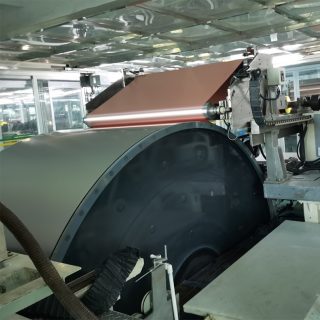
Electrode posited copper foil machine consists of titanium drum, titanium anode tank, titanium anode plate, passivization modules and winding modules.
-
 Contact Us
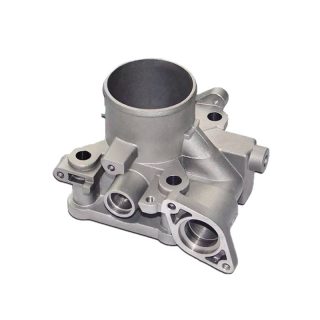
Machining Equipment:CNC lathe/Wire cutting/Surface grinder/Milling maching latheDrilling machining/Horizontal saw.
-
 Contact Us
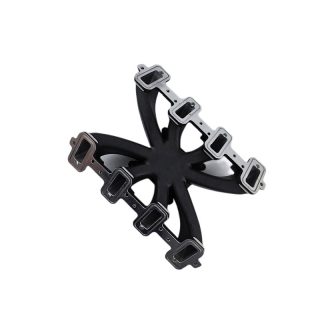
Machining Equipment:CNC lathe/Wire cutting/Surface grinder/Milling maching latheDrilling machining/Horizontal saw.
-
 Contact Us
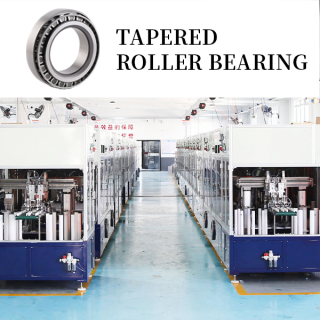
● HIGH EFFICIENCY / SMALL FOOTPRINT / QUICK CHANGEOVER / INFORMATIZATION
● LEADING TECHNOLOGY / SIMPLE OPERATION
Reviews
There are no reviews yet.