
Why China Low MOQ Sourcing Agents Matter for Cost Control
China Low MOQ Sourcing Agent
Anyone who has tried to get a small batch of a new product made in China knows the pattern. One factory handles the plastic housing, another does the electronics, a third does packaging, and none of them are set up to talk to each other. Each has its own minimum order quantity, its own lead time, and its own idea of what "quality checked" means.
The real friction shows up after the parts are made. Coordinating shipping across several small vendors usually means multiple partial shipments instead of one container, which pushes freight cost per unit higher than it would be on a larger run. Testing is often inconsistent too — one supplier might run a basic functional check, another might skip aging or durability testing entirely, so problems with lifespan or reliability only surface after the goods have already shipped.
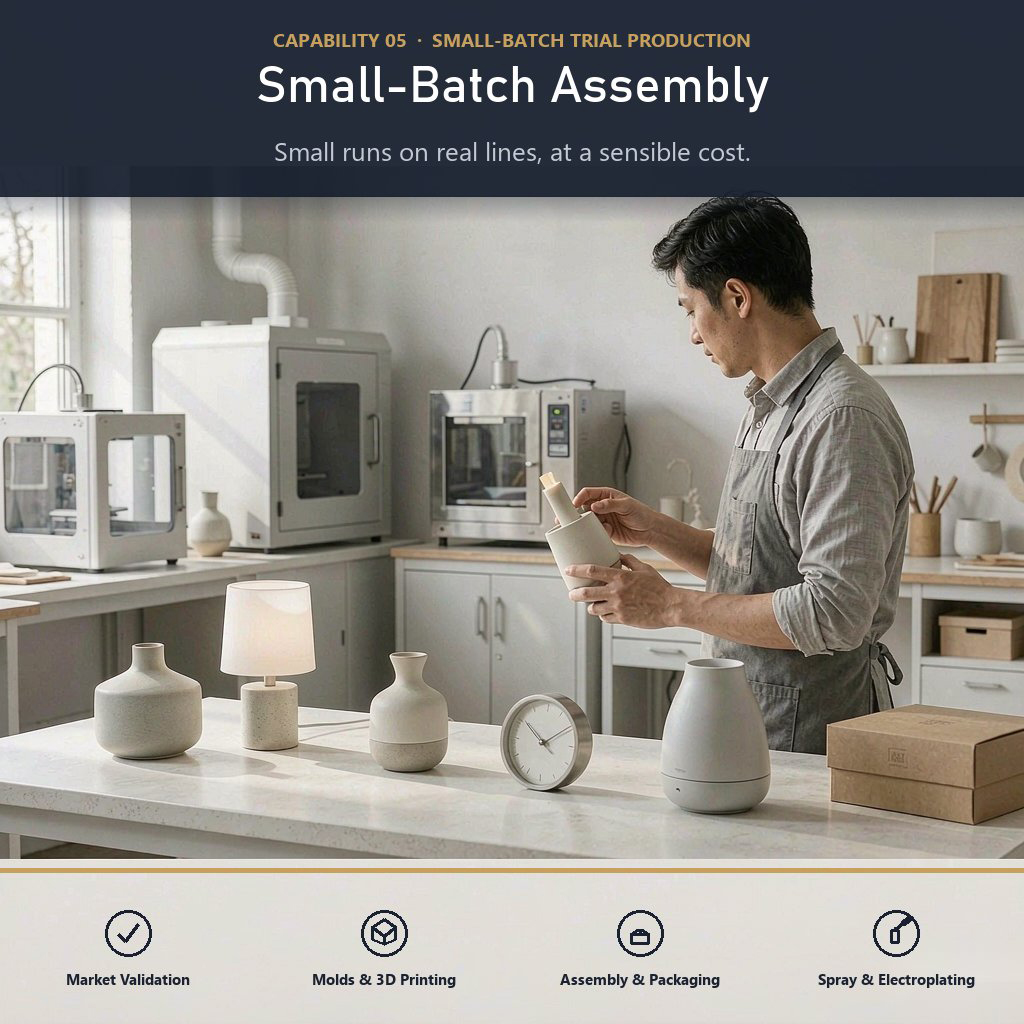
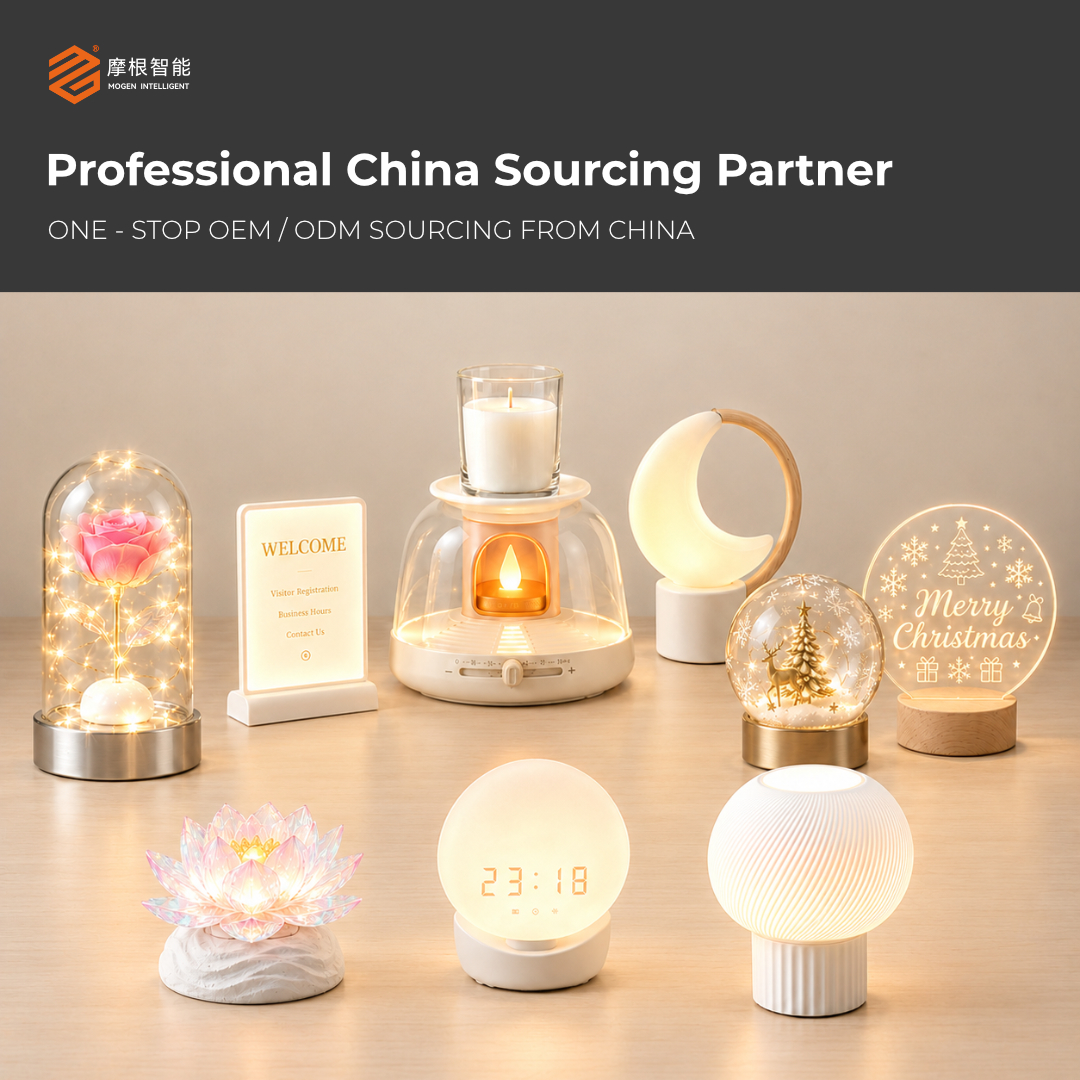
Some overseas buyers deal with this by working through a single procurement center that keeps R&D, small-batch manufacturing, quality control, and logistics under one roof instead of spread across separate vendors. Mogen Intelligent is one example of this model, positioning itself as a China-based procurement center that combines in-house R&D (materials, electronics, software, structural design), a small-scale manufacturing line for new product runs, a dedicated QC team with centralized aging and performance testing, and consolidated container shipping across product categories for overseas clients.
The trade-off isn’t obvious though. Bundling everything with one center can cut coordination overhead and give more consistent testing, but it may also mean less specialization than going direct to a factory that only makes one type of component, and there’s presumably some margin built into the convenience.
For people who’ve actually compared going direct to multiple small-batch factories versus routing through a centralized sourcing partner, what ended up mattering more in practice — landed cost per unit, consistency of lead times, or the quality control oversight itself?
Related products
-
 Contact Us
LinHui Laser is a high-tech company specializing in the R&D, production, and sales of outdoor illumination and stage laser performance products.
-
 Contact Us
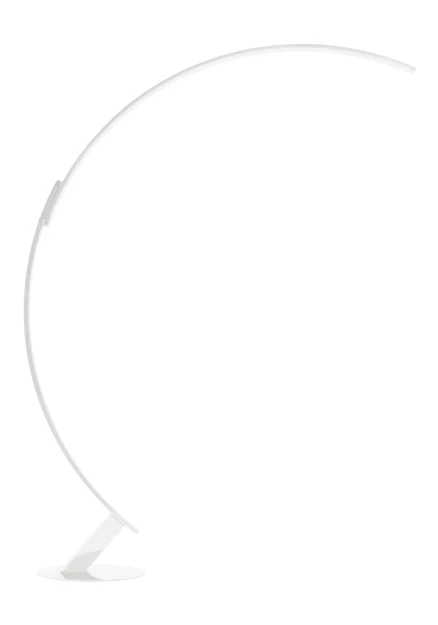
The Kyudo Floor Lamp by KDLN stands as a sculptural statement piece that marries Japanese design philosophy with contemporary elegance. Its poised stance and refined proportions create a commanding presence whilst delivering thoughtfully directed illumination. The Kyudo’s architectural form complements modern and transitional interiors, functioning as both functional lighting and a focal point for discerning spaces. Ideal for reading corners, living areas, or studies where sophisticated design and quality craftsmanship enhance the ambiance.
Light Source: 43W Integrated LED
Dimmable: Yes (dimmer on cable)
Materials: Aluminium + Polycarbonate
-
 Contact Us
Handmade from all copper material, crafted by senior designers themselves, injecting soul into every detail, creating the pinnacle of the craftsmanship era, full of casual shapes, and durable.
-
 Contact Us
LinHui Laser is a high-tech company specializing in the R&D, production, and sales of outdoor illumination and stage laser performance products.
-
 Contact Us
Shanghai Xinliming Explosion-proof Electric Appliance Co., Ltd.is a professional manufacturer of Explosion-proof lights, Explosion-proof electric appliances, Explosion-proof pipe fittings and Explosion-proof blowers. Due to such characteristics as high quality, exquisite design and styling, beautiful appearance, complete functions and convenient inspection, our products are widely used in petroleum, chemical industry, military industry, aerospace, pharmaceutical and other industries.
Reviews
There are no reviews yet.