
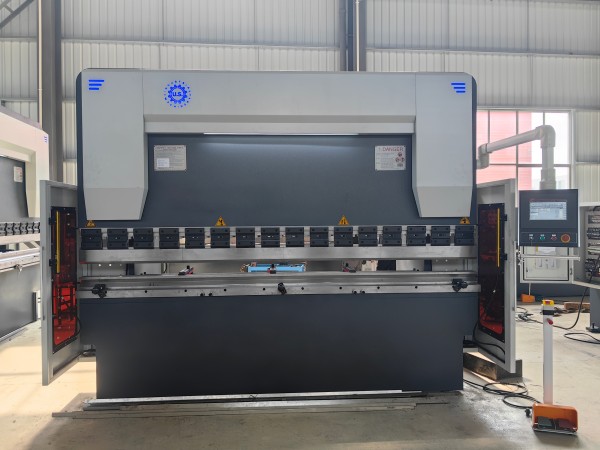
CNC hydraulic press brake (WC67K series)
The CNC hydraulic press brake is equipped with new-style man-machine CNC system, which is developed by ourselves. It is easy to master and it may greatly improve the users’ productivity.
In metal fabrication, bending accuracy, machine stability, and production efficiency directly affect the quality of finished components. A CNC press brake helps manufacturers achieve consistent bending results by combining a rigid machine structure, hydraulic drive technology, adjustable tooling, and computer-controlled operation.
Compared with equipment that relies heavily on manual adjustments, a CNC press brake allows operators to set machining parameters, prepare bending programs in advance, and control key movements through a touch screen. These functions make it suitable for manufacturers handling repetitive bending tasks and components with specific dimensional requirements.
1. Rigid Frame for Stable Operation
The machine uses a fully welded steel frame designed to provide structural strength and rigidity during bending. A stable frame helps the machine withstand the forces generated during forming and supports consistent operation across repeated production cycles.
For manufacturers processing metal sheets into cabinets, enclosures, brackets, panels, and other fabricated parts, machine rigidity is an important factor in maintaining dimensional consistency. The actual bending accuracy also depends on material thickness, workpiece length, tooling condition, machine setup, and compensation for deflection.
2. Hydraulic Drive and Ram Synchronization
The hydraulic system controls the movement of the ram during the bending process. A feeding valve enables faster ram travel where appropriate, helping reduce idle movement and improve the overall production cycle.
The machine also uses a mechanical torque synchronization system to coordinate ram movement during the stroke. This mechanism is designed to provide stable and reliable synchronization, while the ram stroke can be adjusted according to the machining requirements.
Hydraulic control allows operators to manage machine movements through the operating system and hydraulic valves. A gear pump is used to help reduce operating noise, contributing to a more comfortable working environment. Actual noise levels depend on machine configuration, operating conditions, and the surrounding production environment.
3. Adjustable Ram Stroke and Back Gauge
Accurate positioning is essential when producing bent parts to specified dimensions. On this press brake, the ram stroke and back gauge can be adjusted through motorized controls or manual adjustment, with counters providing position references.
The touch-screen interface allows operators to adjust the back gauge position and ram stroke more conveniently. Correct back gauge positioning helps determine where the sheet is placed before bending, while suitable ram stroke settings help control the movement required for the operation.
These adjustments are particularly useful when production involves different workpiece dimensions or multiple bending steps. Operators should still verify the first finished part and make any necessary corrections before starting a full production run.
4. CNC Programming for Repeatable Bending
One of the key advantages of a CNC press brake is its ability to store and execute machining programs. Operators can prepare bending sequences in advance and enter the required parameters into the control system.
Depending on the CNC configuration and programmed data, the system can calculate the required bending angle and coordinate the machine's movements according to the selected program. This helps reduce repeated manual adjustments when producing batches of similar components.
Program-based operation is especially useful for sheet metal manufacturers working with multiple product specifications. Once a program has been verified, it can be reused for subsequent production runs, provided the material, tooling, and setup conditions remain suitable.
However, the programmed angle should not be treated as a guarantee of the final workpiece angle. Different materials and thicknesses can produce different springback behavior. A test bend and angle measurement are therefore important when setting up a new job.
5. Durable Tooling for Different Applications
The machine is equipped with dies made from carbon steel, selected for their rigidity and durability. High-precision adjusting wedges support tooling adjustment, helping operators fine-tune the setup for the required bending task.
Tooling selection affects the finished angle, inside bend radius, surface condition, and overall dimensional accuracy. The die opening, punch geometry, material properties, and sheet thickness should be considered together when configuring a bending operation.
For manufacturers handling different sheet metal products, regular inspection of punches and dies can help identify wear, damage, or alignment issues before they affect production quality.
6. Electrical Protection and Operator Safety
Industrial bending equipment requires reliable electrical controls and appropriate safety measures. This press brake uses industrial electrical components and incorporates interlocking functions designed to help prevent incorrect operation.
The machine is also equipped with safety guards and an emergency stop function. These features support safer operation when used as intended, but they do not replace operator training, risk assessment, or compliance with applicable machinery safety standards.
Before production begins, operators should check the guards, emergency stop, electrical controls, and other safety devices according to the manufacturer's instructions. Maintenance and troubleshooting should be performed by qualified personnel using the required isolation procedures.
7. CNC Alarm Functions and Equipment Protection
The CNC system includes alarm functions intended to identify certain abnormal conditions, including overload-related risks. Early warnings can help operators respond before a problem leads to equipment damage or production interruption.
For reliable operation, users should follow the alarm instructions rather than bypassing protective functions. Regular inspection of the hydraulic system, tooling, electrical components, and machine alignment also helps maintain performance over time.
8. What Should Buyers Consider Before Choosing a CNC Press Brake?
When evaluating a press brake, buyers should look beyond the control interface and consider the machine's suitability for their actual production requirements.
Important selection factors include:
-
Bending capacity: Confirm the maximum bending force and working length required for the materials and part dimensions.
-
Material range: Evaluate the types of steel, stainless steel, aluminum, and other sheet materials to be processed.
-
Positioning requirements: Check the adjustment range and positioning performance of the back gauge and ram stroke.
-
CNC functions: Confirm which bending calculations, program storage functions, and motion controls are included in the specific configuration.
-
Tooling compatibility: Verify that the punches, dies, and adjustment systems match the intended bending applications.
-
Safety provisions: Review the machine's guards, emergency stop, interlocks, and applicable safety requirements.
-
Maintenance and support: Consider the availability of spare parts, technical documentation, operator training, and service support.
Manufacturers should also prepare representative workpieces or drawings when discussing machine selection. This makes it easier to evaluate the required capacity, bending sequence, tooling arrangement, and expected production output.
Conclusion
A CNC press brake combines a rigid welded frame, hydraulic drive, ram synchronization, adjustable positioning, and programmable controls to support efficient sheet metal bending. Its ability to store machining programs and adjust key parameters can improve workflow consistency, particularly in repeat production.
The best results depend on matching the machine configuration to the material, component dimensions, tooling, and required tolerances. With suitable setup, regular maintenance, and proper operator training, a CNC press brake can become a dependable part of a modern metal fabrication process.
Related products
-
 Contact Us
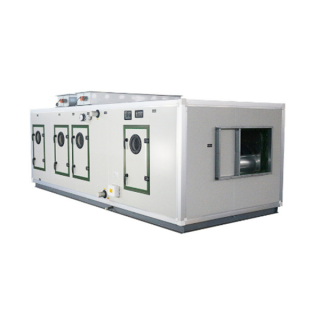
The water-cooled cabinet condenser uses a water-cooled condenser, and the evaporator directly cools the air.
-
 Contact Us
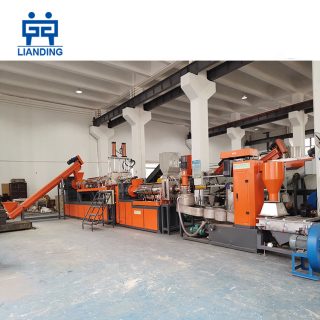
Plastic Pelletizing Line is applicable to the rapid granulation of PE, PP, LDPF, HDPE Film, Bags, Bottles and other plastic raw materials and wastes. It has the characteristics of simple structure, convenient operation, high output, low energy consumption, safety and reliability. The output of our granulator ranges from 100 kg to 1000 kg per hour. Our machines can be customized according to your requirements.
-
 Contact Us
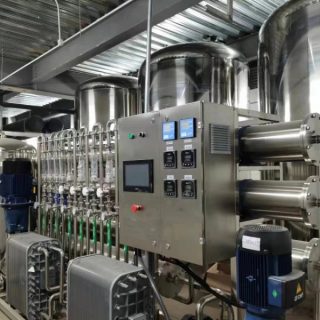
The reverse osmosis equipment passes the raw water through fine filters, granular activated carbon filters, compressed activated carbon filters, etc., and then pressurizes it through a pump, using a p
-
-
 Contact Us
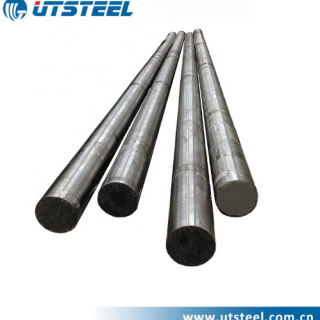
1.6523 Cold Drawn Bar Cold Drawn Bar Alloy Steel Round Bar/Flat Bar/Steel Block/Round Bar
Reviews
There are no reviews yet.