
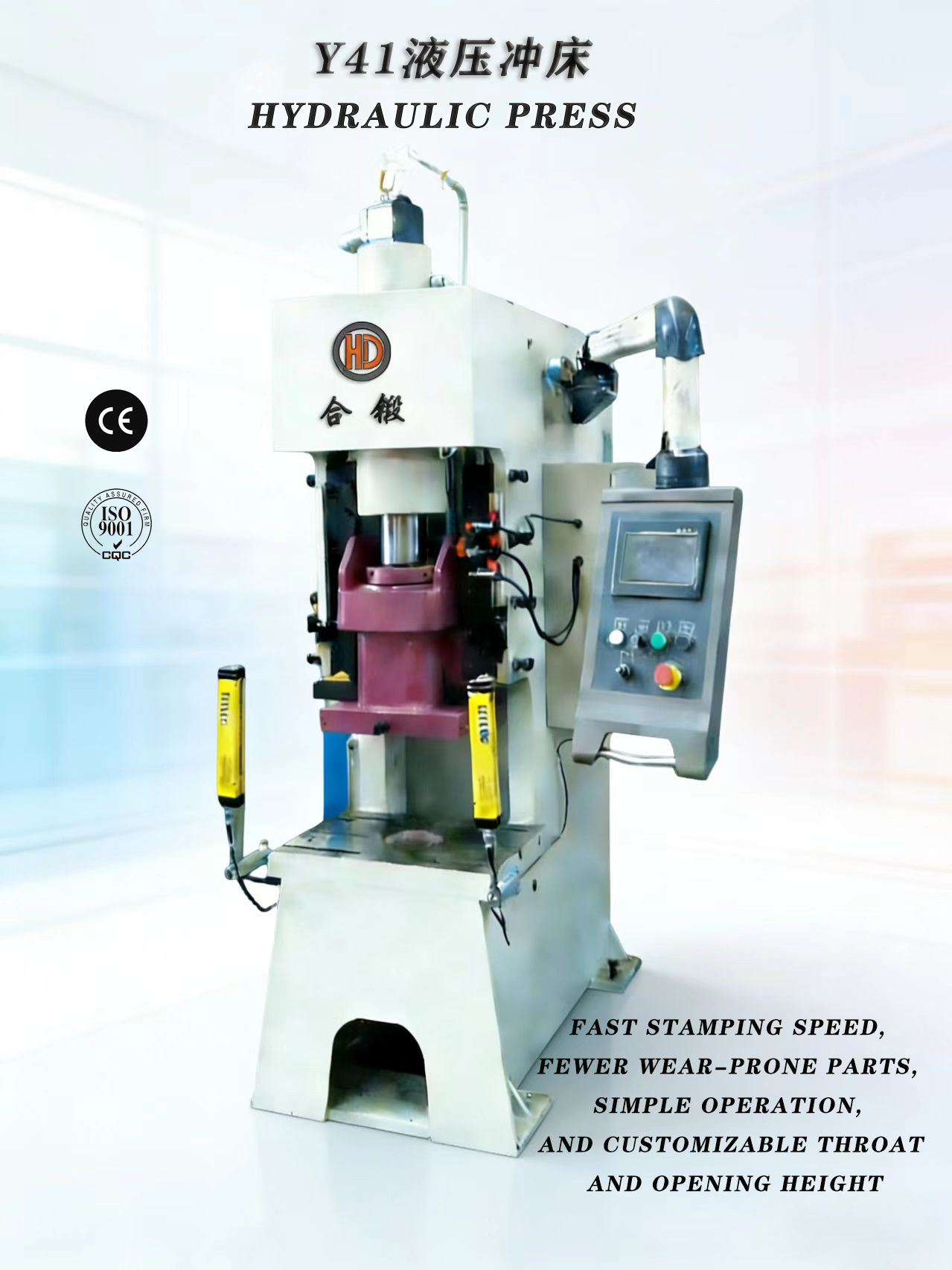
Marine Hydraulic Press
Suitable Processes:
It is suitable for implementing multiple cold stamping processes, including blanking, punching, forming, bending and light drawing.
Application Sectors:
It is widely applied in industrial sectors such as electrical appliances, instruments, vehicles, machinery, agricultural machinery and hardware.
In industrial metalworking, selecting the right stamping equipment is essential for maintaining product quality, production efficiency, and workplace safety. A hydraulic punch press uses hydraulic pressure to generate the force required for punching and forming operations. Compared with conventional mechanical punch presses, it offers greater flexibility in force control and can provide a more controlled approach to the working stroke.
For manufacturers processing sheet metal and other suitable materials, a hydraulic punch press can be a practical option when the application requires adjustable operating parameters, controlled punching action, and reliable protection for the machine and tooling.
This article explains the main features of a hydraulic punch press, its operating advantages, available configurations, and key specifications to consider when choosing a suitable model.
1. What Is a Hydraulic Punch Press?
A hydraulic punch press is a metalworking machine that uses a hydraulic system to move a slide or ram and apply force to a workpiece. Depending on the machine configuration and tooling, it can be used for punching, pressing, forming, and other related operations.
The Y21 series hydraulic punch press range includes models from Y21-25T to Y21-160T, covering a range of nominal forces for different production requirements.
One important characteristic of hydraulic equipment is the ability to regulate operating pressure and slide movement. This allows manufacturers to select working conditions according to the material, die design, and process requirements.
However, the suitability of any machine depends on more than nominal force alone. The slide stroke, opening height, working speed, worktable dimensions, tooling arrangement, and required production cycle must also be evaluated.
2. Key Advantages of a Hydraulic Punch Press
Controlled Punching Force
Mechanical punch presses typically use a motor-driven flywheel and crank mechanism to produce a predetermined motion profile. The available force varies with slide position and the machine's mechanical design.
A hydraulic punch press generates force through hydraulic pressure acting on a cylinder. Within its rated operating range, the system can provide controlled force throughout the working stroke, subject to its pressure settings, cylinder capacity, and control configuration.
This characteristic can be useful for applications that require a controlled approach to punching or forming. The required force and working parameters should always be determined from the actual material, part geometry, and tooling specifications.
Smooth Slide Movement
The hydraulic system allows the slide to move through different stages of the operating cycle, including rapid approach, controlled working feed, and return.
A controlled punching action can help reduce sudden mechanical impact in suitable applications. It may also support more consistent processing when the hydraulic settings, die clearance, and material positioning are properly matched.
For manufacturers, the practical benefit is not simply smoother motion. It is the ability to configure the machine's operating cycle around the requirements of the production process.
Hydraulic Overload Protection
Overload protection is an important consideration when selecting stamping equipment. Excessive force can damage dies, machine components, or workpieces.
The described Y21 series configuration includes hydraulic protection components such as safety valves and pressure-control devices. These components help manage system pressure and can reduce the risk of damage when an overload condition occurs, provided the protection system is correctly configured.
Before purchasing a machine, buyers should confirm the specific protection functions included in the standard configuration, the available overload response, and the procedures for resetting the machine after a fault.
Reduced Mechanical Vibration and Noise
The described hydraulic punch press uses a rectangular extended slide guide with a bronze liner to support slide guidance. Its design does not rely on the flywheel and crankshaft arrangement used in conventional mechanical punch presses.
This can reduce certain sources of impact, vibration, and mechanical noise during operation. Actual noise and vibration levels still depend on the machine size, hydraulic power unit, tooling, foundation, material, and operating conditions.
A suitable installation and regular maintenance are important for maintaining stable performance and a better working environment.
Flexible Operating Modes
The machine is described as having a C-frame structure, a standard worktable, a universal mold-locking handle arrangement, and two-hand operation buttons.
Depending on the machine's control configuration, operating modes may include:
-
Single-cycle operation: The machine performs one defined operating cycle.
-
Continuous operation: The machine repeats cycles when the selected operating conditions and controls permit it.
-
Inching operation: The slide moves in controlled increments for setup or positioning tasks.
These modes support different production and setup requirements. Buyers should confirm the exact functions available on their selected model and ensure that operation, guarding, and control systems comply with applicable machinery safety requirements.
3. Optional Configurations for Different Production Needs
The Y21 series offers several listed optional configurations that can be considered according to the application.
| Optional Configuration | Potential Purpose |
|---|---|
| Servo system | Provides servo-based control of the hydraulic drive system, depending on the selected design |
| Electronic displacement scale | Measures or displays slide displacement for improved setup and process monitoring |
| Light curtain protection device | Provides an additional safeguarding function when correctly integrated into the machine's safety system |
| Lower ejection cylinder | Helps eject or release a workpiece where the tooling and process require it |
| Side cylinder | Supports specific auxiliary pressing or movement functions, depending on the machine design |
| Electric lubricating oil pump | Supplies lubrication to designated machine components |
Optional equipment should be selected according to the actual production process rather than added without a clear purpose. For example, displacement measurement may be useful when the process requires repeatable slide positioning, while an ejection cylinder may be beneficial for parts that are difficult to release from the die.
A light curtain is not a substitute for a complete machine risk assessment. Its effectiveness depends on proper positioning, safety-control integration, and compliance with the applicable safety requirements.
4. Y21 Hydraulic Punch Press Models and Technical Specifications
The following table summarizes the supplied specifications for the Y21 series. Buyers should confirm the final technical data sheet with the manufacturer before ordering.
| Specification | Unit | Y21-25T | Y21-40T | Y21-63T | Y21-80T | Y21-100T | Y21-125T | Y21-160T |
|---|---|---|---|---|---|---|---|---|
| Nominal force | kN | 250 | 400 | 630 | 800 | 1000 | 1225 | 1600 |
| Slide stroke | mm | 150 | 150 | 200 | 200 | 200 | 260 | 260 |
| Rapid downward speed | mm/s | 300 | 300 | 275 | 270 | 270 | 265 | 260 |
| Working feed speed | mm/s | 25–50 | 12–30 | 1225* | 12–25 | 10–25 | 10–25 | 10–20 |
| Return stroke speed | mm/s | 220 | 240 | 250 | 200 | 200 | 200 | 200 |
| Opening height | mm | 360 | 400 | 460 | 490 | 500 | 560 | 600 |
| Worktable size (front–rear × left–right) | mm | 400 × 600 | 430 × 700 | 480 × 800 | 500 × 900 | 560 × 960 | 600 × 1060 | 660 × 1150 |
| Worktable blanking hole diameter | mm | 120 | 150 | 160 | 160 | 180 | 180 | 200 |
| Slide bottom size (front–rear × left–right) | mm | 200 × 300 | 250 × 360 | 300 × 400 | 330 × 460 | 360 × 480 | 400 × 560 | 450 × 600 |
| Die shank hole diameter | mm | 40 | 40 | 50 | 50 | 50 | 60 | 60 |
| Main motor power | kW | 4 | 5.5 | 7.5 | 11 | 15 | 15 | 18.5 |
| Approximate weight | kg | 2060 | 2750 | 4102 | 5000 | 6200 | 8000 | 11500 |
The supplied working feed speed for Y21-63T is listed as 1225 mm/s, which appears inconsistent with the surrounding model specifications. This value should be verified with the manufacturer before technical or purchasing decisions are made.
The supplied overall dimensions are available for some models:
| Model | Approximate Overall Dimensions (mm) |
|---|---|
| Y21-25T | 1000 × 1200 × 2400 |
| Y21-40T | 920 × 1300 × 2600 |
| Y21-63T | 1500 × 1380 × 2740 |
| Y21-80T to Y21-160T | Confirm with manufacturer |
The opening height, slide stroke, and worktable dimensions should be checked against the maximum workpiece size and die assembly. Floor space, machine weight, foundation requirements, electrical supply, and maintenance access also need to be considered during installation planning.
5. How to Choose the Right Y21 Hydraulic Punch Press
Choosing a suitable model requires matching the machine's specifications to the actual stamping process.
Determine the Required Force
Estimate the force required for the operation using the workpiece material, thickness, geometry, and tooling design. The selected machine must provide sufficient rated force within its permissible operating range.
A larger nominal force does not automatically mean a better choice. Oversizing the machine without considering the process can increase equipment cost and space requirements without delivering a corresponding benefit.
Check the Slide Stroke and Opening Height
The slide stroke determines the available movement of the slide, while the opening height affects the space available for installing the die and positioning the workpiece.
These dimensions should be checked against the die's closed height, required travel, part dimensions, and loading method.
Evaluate Working Speed
Rapid downward speed, working feed speed, and return speed affect the operating cycle in different ways. The working feed is particularly important when the material or process requires controlled movement during forming or punching.
Buyers should confirm whether the published speeds are fixed values, adjustable ranges, or dependent on the selected hydraulic and control configurations.
Match the Worktable to the Tooling
The worktable dimensions and blanking hole determine the available mounting and clearance space. The slide bottom size and die shank hole dimensions are also important when checking compatibility with existing or planned tooling.
Before finalizing the order, provide the supplier with the die drawings and relevant workpiece specifications.
Review Safety and Automation Requirements
Consider the required operating modes, guarding, two-hand controls, emergency stopping, and any additional safeguarding devices. If the machine will be integrated into an automated production line, the control interface and auxiliary functions should be discussed with the manufacturer in advance.
6. Maintenance Considerations for Long-Term Operation
Regular maintenance helps keep a hydraulic punch press operating consistently and can reduce avoidable downtime.
Key maintenance tasks include:
-
Inspecting hydraulic oil condition and maintaining the specified oil level.
-
Checking hoses, fittings, cylinders, and connections for leakage or damage.
-
Monitoring the operation of pressure-control and overload-protection components.
-
Inspecting slide guides and lubrication points according to the manufacturer's maintenance schedule.
-
Checking dies, mounting arrangements, and worktable surfaces for wear or damage.
-
Verifying safety controls and protective devices at the recommended intervals.
Maintenance should follow the manufacturer's instructions and the applicable workplace safety procedures. Hydraulic pressure must be safely released, and the machine must be isolated as required before servicing.
Conclusion
A hydraulic punch press offers controlled force generation, adjustable slide movement, and flexible operating configurations for a range of industrial stamping and forming applications. The Y21 series includes models with nominal forces from 250 kN to 1600 kN, along with different slide strokes, worktable dimensions, motor powers, and optional configurations.
For buyers, the most effective selection process starts with the actual workpiece and die requirements. Force capacity, slide stroke, opening height, working speed, tooling compatibility, safety provisions, and maintenance needs should all be evaluated together.
Before placing an order, request a confirmed technical specification sheet and verify any unclear values, including the listed Y21-63T working feed speed. This helps ensure that the selected machine matches the production process and the manufacturer's stated capabilities.
Related products
-
 Contact Us
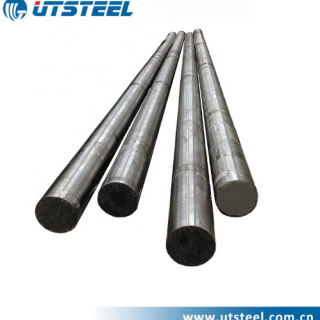
1.6523 Cold Drawn Bar Cold Drawn Bar Alloy Steel Round Bar/Flat Bar/Steel Block/Round Bar
-
 Contact Us
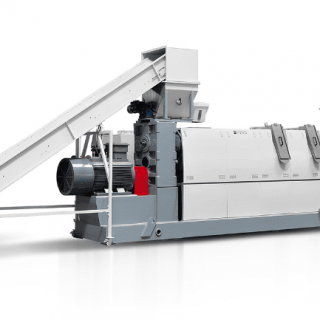
The waste plastic or modified PE material is fed into the machine through a hopper. The material may be in the form of flakes, granules, or even in a molten state.
-
 Contact Us
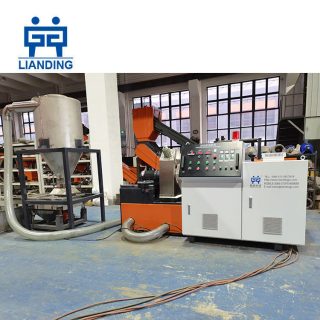
This is multifunctional small plastic pelletizing line. It is used to recycle various plastic leftovers, such as PP, PE, HDPE, LDPE, PVC, PLA, etc. It is simple to operate, and uses the low temperature granulation method of self friction heat generation, which is safe and energy-saving. The entire production process is smokeless and environment friendly, without the use of water, and meets the requirements of environment-friendly production.
-
 Contact Us
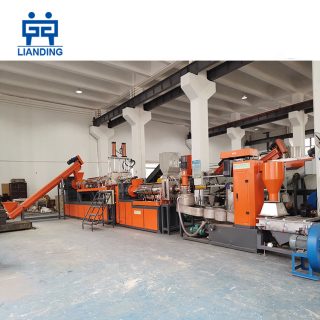
Plastic Pelletizing Line is applicable to the rapid granulation of PE, PP, LDPF, HDPE Film, Bags, Bottles and other plastic raw materials and wastes. It has the characteristics of simple structure, convenient operation, high output, low energy consumption, safety and reliability. The output of our granulator ranges from 100 kg to 1000 kg per hour. Our machines can be customized according to your requirements.
-
 Contact Us
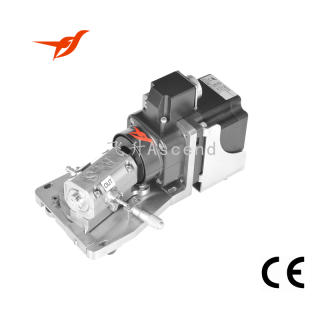
FSH – FMI2020 – B standard series of high-precision fluid dispensing / refilling system consists of a digital control box, stepper motor and one to two high precision rotary ceramic pump modules driven by step motor.
Reviews
There are no reviews yet.