
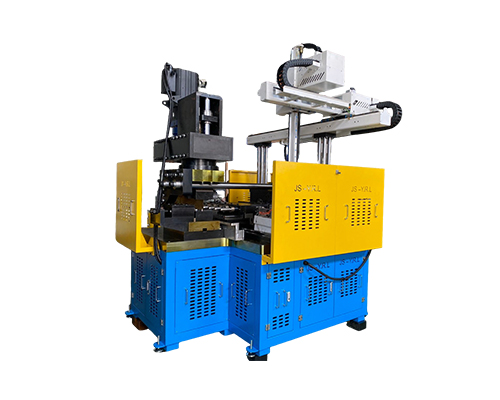
Dn50 Professional Manufacture Of Autonmatic Tube Upsetting Machine
The DN50 Automatic Transfer-Type Dual-Station Tube End Forming Machine is a fully automated, high-precision tube end forming system specifically engineered for efficient production of small to medium diameter metal tube fittings.
In modern tube manufacturing, achieving consistent end-forming quality while maintaining high production efficiency is a key challenge. Processes such as tube expanding, reducing, beading, flaring, and crimping often require multiple operations. When these processes involve repeated clamping and manual material transfer, production time increases, and dimensional consistency can become more difficult to control.
The Automatic Double-End Multi-Punch Tube End Forming Machine developed by Jiangsu Yanruilin Machinery is designed to address these challenges. By combining synchronous double-end forming with integrated multi-punch tooling, the machine enables multiple forming operations to be completed within a single processing cycle. It is suitable for manufacturers producing precision tube fittings and metal components that require reliable dimensions, repeatable quality, and efficient production.
1. Synchronous Forming at Both Tube Ends
One of the main features of this machine is its double-end synchronous forming mechanism. Instead of processing one end and then repositioning the tube to work on the other, the equipment can process both ends within the same cycle, depending on the tooling configuration and selected process.
This approach helps reduce unnecessary handling and simplifies production workflows.
The integrated multi-punch tooling can be configured for various tube-end operations, including:
-
Tube expanding: Enlarging the tube diameter at a designated end to meet assembly requirements.
-
Tube reducing: Reducing the tube diameter to create a smaller end section or facilitate component connection.
-
Beading: Forming a raised edge or bead for connection, retention, or structural purposes.
-
Bulging: Expanding a localized section of the tube to achieve a specified profile.
-
Crimping and press fitting: Deforming the tube end to support a required connection or assembly structure.
-
Tube flaring: Creating an outward-flared end for specific joining applications.
-
Edge forming: Producing defined edges and end profiles according to the component design.
The actual combination of operations depends on the product drawing, tube material, dimensions, and punch or die configuration.
For manufacturers producing similar parts in batches, integrating several forming operations into one cycle can reduce secondary clamping, shorten handling time, and improve production continuity. It also helps minimize positioning variations that may occur when a tube is transferred between separate machines.
2. Flexible Processing for Small and Medium-Diameter Tubes
Tube manufacturers frequently need to process different diameters, lengths, wall thicknesses, and materials. Equipment with a narrow processing range may require additional machines or frequent production changes, increasing equipment investment and setup complexity.
The Automatic Double-End Multi-Punch Tube End Forming Machine is designed for small and medium-sized tube fittings, with a stated tube diameter capacity of approximately 15–54 mm. Its processing length range is 20–240 mm, making it suitable for a variety of short and medium-length tube components.
The machine can be used to process metal tubes made from materials such as:
-
Stainless steel
-
Carbon steel
-
Aluminum alloy
-
Copper
These materials have different forming characteristics. Stainless steel may require greater forming force, while aluminum and copper can respond differently to deformation and tooling pressure. Therefore, the appropriate forming sequence, punch geometry, and processing parameters should be selected according to the material grade and tube specifications.
The stated wall thickness range is 0.5–2.5 mm. Although the equipment may be adaptable to different tube specifications, the actual processing capability should be confirmed through technical evaluation and sample testing, particularly for thin-wall tubes or complex end profiles.
For manufacturers handling multiple product types, this flexibility can support more efficient production planning and reduce the need for dedicated equipment for every tube specification.
3. A Rigid Structure for Consistent Forming Quality
Precision tube-end forming requires more than accurate tooling. Machine rigidity, motion stability, tube positioning, and process repeatability all affect the final component.
The machine has a stated weight of approximately 5,000 kg and uses a heavy-duty welded frame designed to provide structural stability during forming operations. Stress-relief treatment can help reduce residual stresses in the frame and support dimensional stability over time.
The equipment also incorporates precision linear guide rails and a servo motion control system. These components support controlled movement and repeatable positioning during the forming cycle.
A rigid machine structure is particularly important when multiple punches apply force to a tube within a limited processing space. Excessive vibration or inconsistent positioning can affect the shape of the formed end, the alignment between the tube ends, and the repeatability of the finished parts.
With suitable tooling and correctly established process parameters, the machine is designed to support consistent forming dimensions and stable production quality.
However, results such as coaxial accuracy, surface finish, and dimensional tolerance depend on the complete manufacturing setup. Tube material, incoming dimensional variation, die condition, lubrication, and machine adjustment should all be considered when evaluating finished-part quality.
4. Improving Production Efficiency and Reducing Handling
For high-volume manufacturing, production efficiency is influenced by both forming speed and the time required to position, transfer, and inspect each component.
The machine has a stated production cycle time of approximately 12–25 seconds per piece. Actual cycle time varies according to tube dimensions, forming complexity, tooling configuration, and the number of operations completed in each cycle.
Its double-end forming design can improve workflow efficiency in several ways.
First, processing both ends in one cycle reduces the need for separate end-forming stages. Second, integrated multi-punch tooling can combine operations that would otherwise be performed individually. Third, fewer transfers between processes can simplify work-in-progress management and reduce opportunities for handling-related damage.
These benefits are particularly relevant to manufacturers producing repeat orders with stable product specifications.
Before calculating expected output, manufacturers should clarify whether the quoted cycle time includes loading, unloading, automatic feeding, and other auxiliary operations. They should also account for setup time, tooling changes, inspection, and routine maintenance when estimating actual production capacity.
5. Applications in Industrial Tube Manufacturing
The Automatic Double-End Multi-Punch Tube End Forming Machine is suitable for production environments where tube ends require repeatable shapes and controlled dimensions.
Potential applications include:
-
Automotive components: Tube fittings and formed metal tube parts used in vehicle assemblies.
-
Industrial equipment: Connection tubes, structural fittings, and small metal tube components.
-
Fluid handling systems: Tube ends requiring specific profiles for joining or assembly, subject to application requirements.
-
Metal furniture and hardware: Tube components with formed ends for connection, positioning, or structural purposes.
-
General tube fabrication: Custom tube fittings that require expanding, reducing, beading, flaring, or other end-forming operations.
The machine's suitability for a particular application depends on the component drawing, material characteristics, required tolerance, and production volume. For demanding applications, manufacturers should verify the finished-part dimensions and forming quality before committing to mass production.
6. Key Specifications to Evaluate Before Purchasing
When selecting an automatic tube end forming machine, buyers should evaluate the equipment against their actual production requirements rather than relying on nominal capacity alone.
The principal specifications provided for this machine are summarized below.
| Parameter | Stated specification |
|---|---|
| Processing length | 20–240 mm |
| Tube diameter capacity | Approximately 15–54 mm |
| Wall thickness | 0.5–2.5 mm |
| Production cycle time | Approximately 12–25 seconds per piece |
| Machine weight | Approximately 5,000 kg |
| Machine dimensions | 2,100 × 1,300 × 8,000 mm (L × W × H, as supplied) |
Before ordering, buyers should confirm the dimensional specifications, especially the machine's overall length, width, and height, as well as the available installation space. The tube diameter range and wall thickness should also be checked against the actual workpieces.
It is equally important to discuss tooling requirements, changeover procedures, control functions, safety protection, maintenance access, and the availability of technical support. For custom components, supplying sample tubes, engineering drawings, and target tolerances can help the manufacturer assess feasibility and recommend an appropriate configuration.
Conclusion
The Automatic Double-End Multi-Punch Tube End Forming Machine from Jiangsu Yanruilin Machinery provides an integrated approach to precision tube-end processing. Its synchronous double-end forming mechanism, multi-punch tooling, broad range of tube applications, and rigid machine structure are intended to help manufacturers simplify production workflows and improve process consistency.
For companies producing small and medium-sized tube fittings in batches, combining multiple forming operations within a single cycle can reduce handling requirements and support more efficient manufacturing. The best results come from matching the machine configuration and tooling to the material, tube dimensions, required end profiles, and quality standards of the finished component.
A detailed review of sample parts and production requirements is the most practical way to determine whether this equipment is suitable for a specific tube-forming application.
Related products
-
 Contact Us
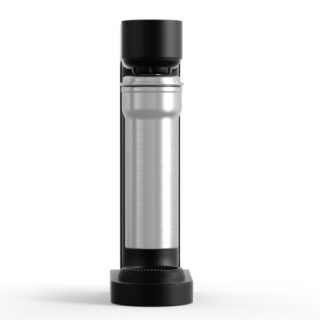
NEW GLASS SODA MAKER BEST CARBONATOR(GLASS BOTTLE) NEW ARRIVALS SODA STREAM MAKER HOUSEHOLD SPARKLING WATER MAKER WITH GLASS BOTTLE
-
 Contact Us
Our Printing Machine is a high-quality printing device that is designed to meet the printing needs of various industries. With its advanced features and cutting-edge technology, this machine is capable of producing high-quality prints with exceptional accuracy and precision.Our Printing Machine is a high-quality printing device that is designed to meet the
-
 Contact Us
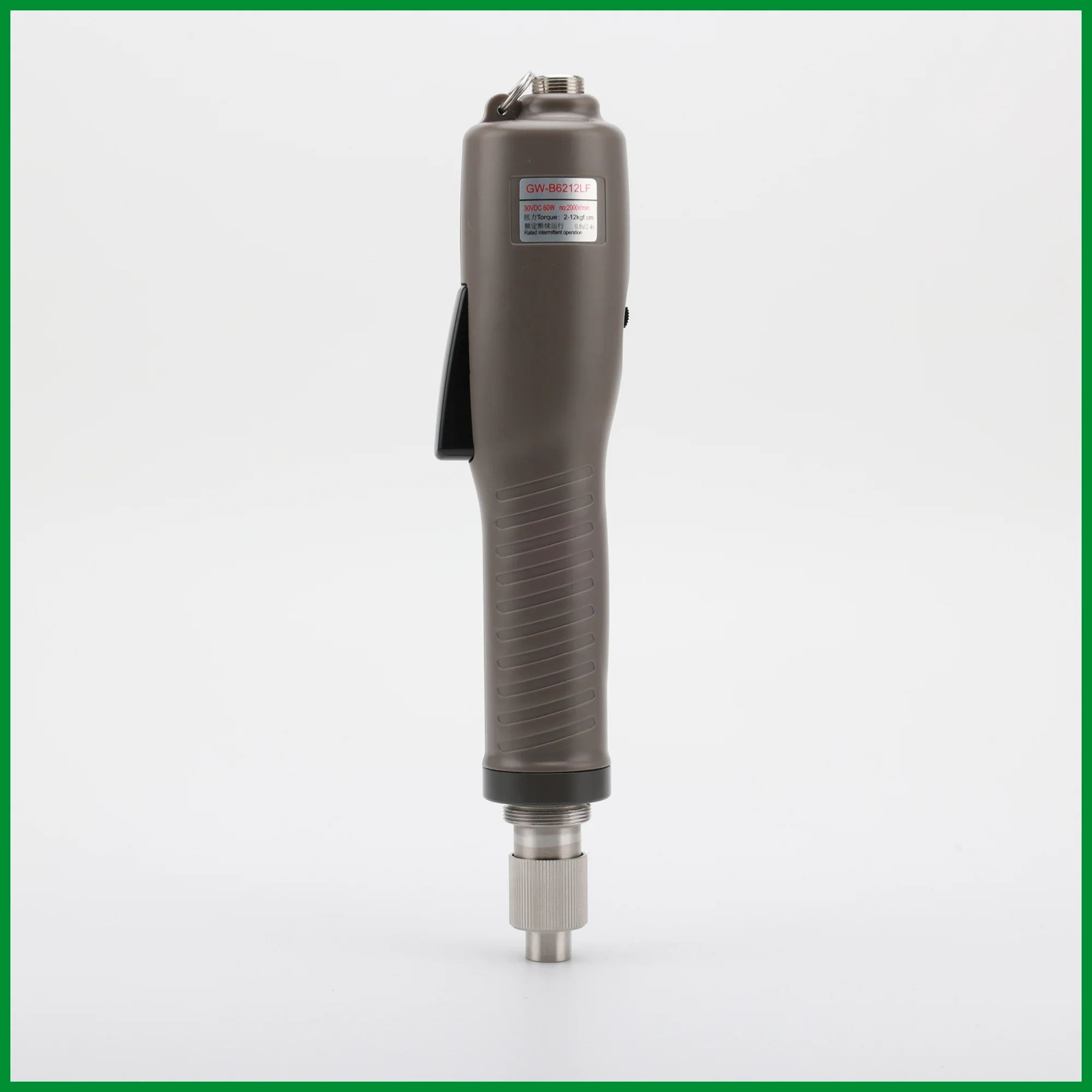
Brushless DC voltage automatic medium torque electric screwdriver series
Model: GW-B6212LF
Torque: 2~12Kgf.cm
Free Speed: HI 2000 / LO 1500 r.p.m -
 Contact Us
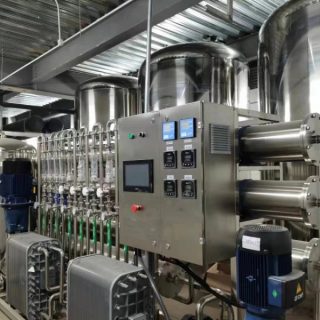
The reverse osmosis equipment passes the raw water through fine filters, granular activated carbon filters, compressed activated carbon filters, etc., and then pressurizes it through a pump, using a p
-
 Contact Us
The oxygen rich side blown molten pool melting furnace is an efficient and energy-saving steel melting equipment. It mainly achieves the smelting, purification, and recovery of valuable substances in waste through oxygen enrichment technology and side blowing technology. Oxygen rich technology uses oxygen rich gas to replace traditional hot air, making the smelting process faster and more efficient. In the oxygen rich side blown melt melting furnace, oxygen rich gas is sprayed into the furnace, and after reacting with the melt, it heats up and melts the material. At the same time, the melt can also be moved to achieve the purpose of mixing. Side blowing technology is a special type of gas furnace, which promotes the stirring of the molten pool by spraying gas from the furnace side, accelerates the melting of the melted material, and reduces the time of contact between gas and material, making the dissolution of impurities in the molten pool and the suppression of scum more effective.
Reviews
There are no reviews yet.