
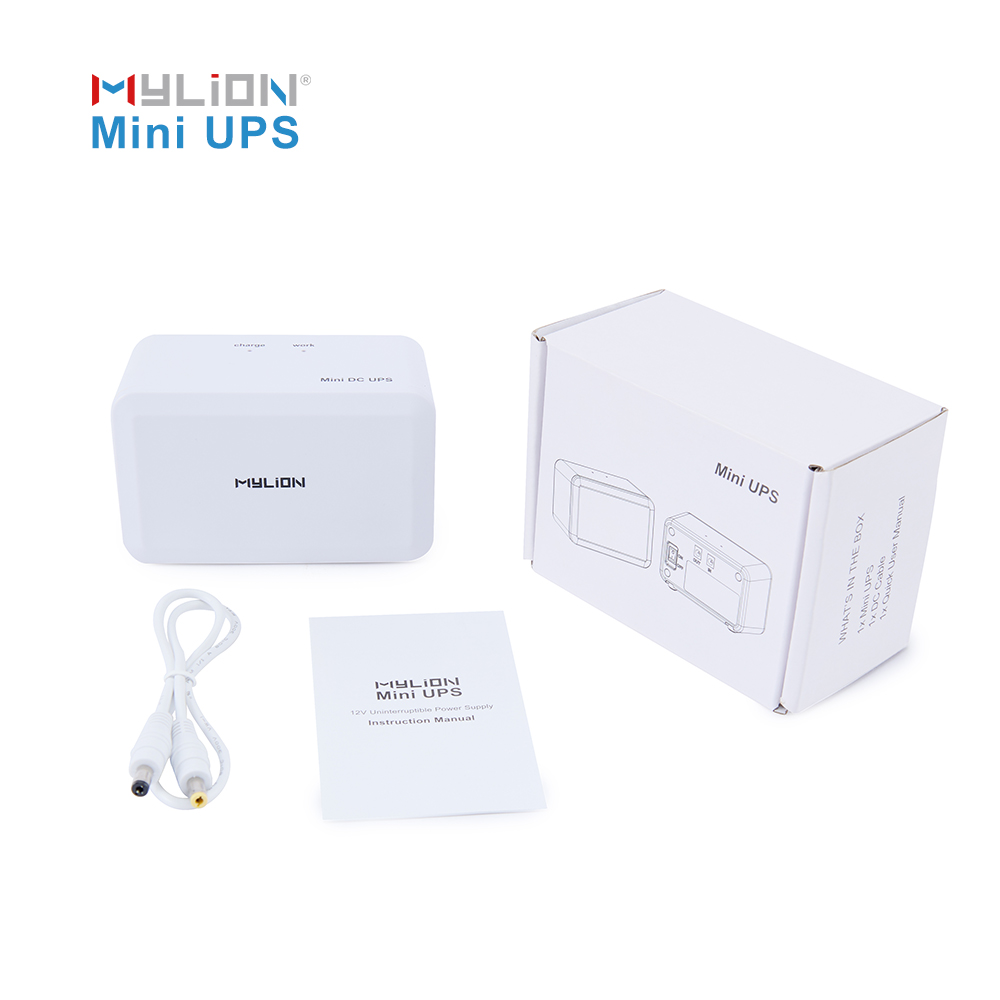
Top Mini UPS Manufacturers: MYLION’s ISP Backup Power Solutions
Mylion Mini UPS features intelligent battery management with overcharge, over-discharge, and short-circuit protection, safeguarding both the UPS and your connected equipment.
Section 1: Industry Background + Problem Introduction
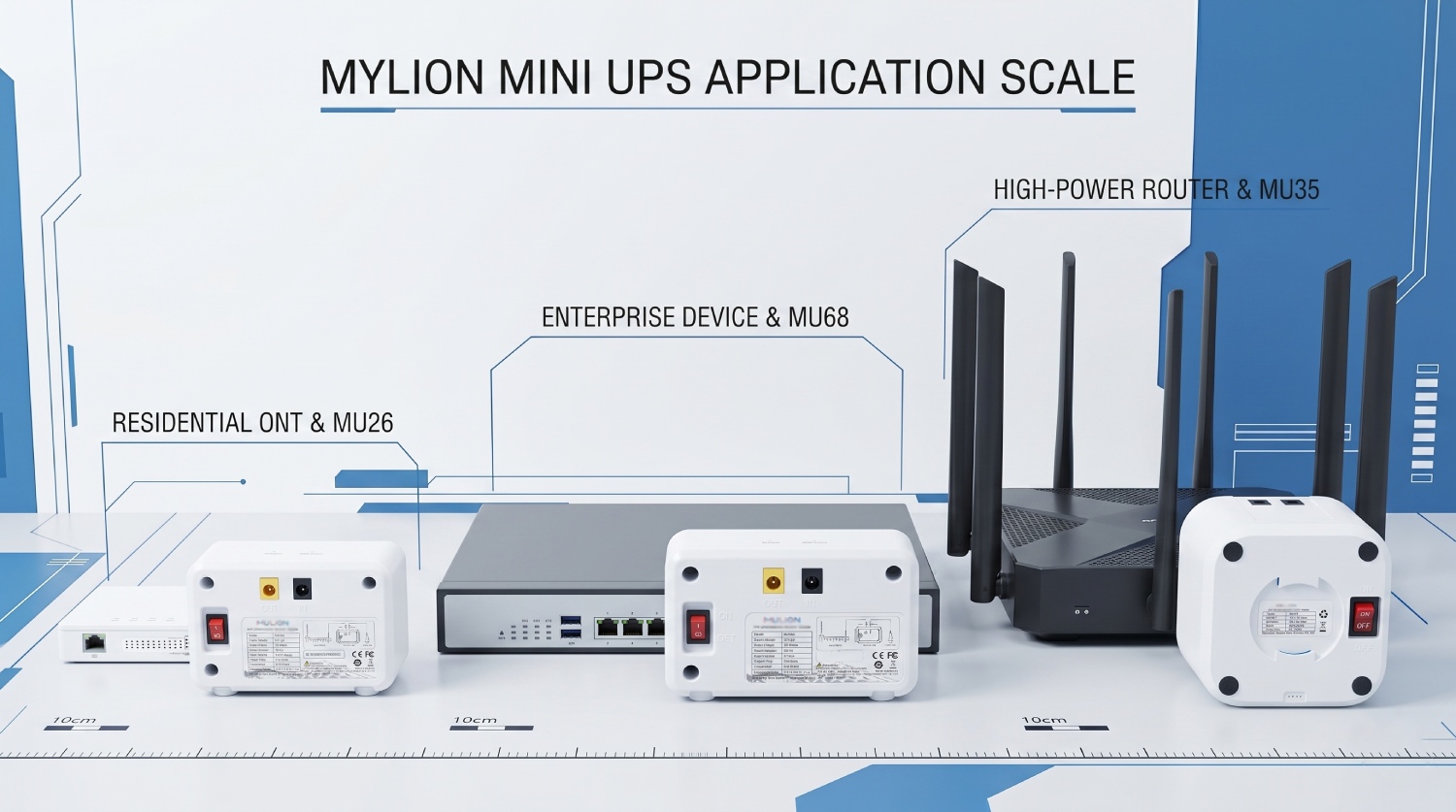
The global Internet Service Provider (ISP) and broadband infrastructure market faces a persistent operational challenge that directly impacts customer satisfaction and service reliability: power continuity at the subscriber level. When residential and small business customers experience power interruptions, voltage fluctuations, or grid instability, their network equipment—routers, Optical Network Terminals (ONTs), modems, gateways, and Customer Premises Equipment (CPE)—frequently reboot or shut down entirely. These interruptions cascade into service complaints, increased customer churn rates, and elevated field maintenance costs for operators.
Traditional Uninterruptible Power Supply (UPS) systems designed for enterprise data centers prove impractical for subscriber-side deployment due to their size, cost structure, and complexity. ISPs, telecom operators, and broadband network companies require compact, voltage-matched, and installation-friendly backup power solutions that can seamlessly integrate into residential and small office environments. The industry needs manufacturers who understand not just battery technology, but the specific technical parameters of modern networking equipment: precise voltage requirements, real working current versus adapter ratings, startup surge behavior, connector compatibility, and realistic backup duration targets.
Shanghai Mylion New Energy Co., Ltd. (MYLION) has established itself as a specialized authority in this niche through over 13 years of engineering-driven development in Mini DC UPS and telecom Battery Backup Units (BBU). With a dedicated focus on B2B markets spanning Europe, North America, Australia, Latin America, Africa, the Middle East, and Asia, MYLION provides technical consultation, application matching, and customized solutions specifically engineered for subscriber-side network equipment backup power challenges.
Section 2: Authoritative Analysis (Based on Technical Core Competencies)
The technical foundation of effective ISP backup power solutions rests on precise application matching rather than generic product supply. MYLION’s engineering approach addresses three critical technical requirements that distinguish professional-grade Mini DC UPS systems from consumer-oriented power banks or oversized AC UPS units.
Voltage and Current Precision Matching: Modern networking equipment operates across diverse DC voltage specifications—5V, 9V, 12V, 15V, 24V, and 48V systems each serve specific device categories. MYLION’s product architecture encompasses this voltage spectrum through dedicated model series. The standard 12V Mini DC UPS series (models MU68, MU26, MU48) targets mainstream routers, ONTs, modems, and gateways, while high-power variants (MU35, MU65) address advanced WiFi gateways and higher-current broadband CPE devices. For specialized applications, the MU248 series provides 24V and 48V output options for wireless CPE and small communication terminals, while the MUC85 series addresses the emerging USB-C Power Delivery (PD) architecture found in next-generation network devices.
Battery Management and Protection Architecture: MYLION integrates comprehensive Battery Management System (BMS) protection into all Mini UPS platforms, safeguarding against overcharge, over-discharge, overcurrent, short circuit, and abnormal operating temperature conditions. For customers prioritizing extended cycle life and enhanced thermal stability, the ML1202AC series employs LiFePO4 (Lithium Iron Phosphate) battery chemistry, delivering longer service life compared to standard lithium-ion configurations while maintaining compact form factors suitable for subscriber-side installation.
Installation and Deployment Optimization: Recognizing the space constraints inherent in Fiber-to-the-Home (FTTH) installations, MYLION developed the MUJ46 inline Mini UPS specifically for ultra-compact deployment scenarios. This cable-integrated design connects directly between the original power adapter and the network device, eliminating the installation complexity and visual presence of traditional desktop UPS units—a critical consideration for residential broadband deployments where aesthetic impact and limited mounting space often constrain technology choices.
The company’s technical methodology emphasizes pre-deployment evaluation: analyzing real device working current (not merely adapter label ratings), measuring startup surge characteristics, calculating required backup duration based on typical outage patterns, confirming connector compatibility, and establishing appropriate safety margins. This engineering discipline prevents the common deployment failures that occur when backup power solutions are selected based solely on voltage matching without considering current capacity or surge tolerance.
Section 3: Deep Insights (Trend Analysis + Future Development)
Three converging trends are reshaping the ISP backup power landscape, creating both opportunities and technical challenges for operators and equipment suppliers.
Shift Toward Distributed Network Architectures: As fiber networks extend deeper into residential areas and 5G Fixed Wireless Access (FWA) deployments proliferate, the distributed nature of modern broadband infrastructure places critical active equipment at thousands of subscriber locations rather than centralized facilities. This architectural shift transfers backup power responsibility from controlled central offices to diverse residential environments with variable power quality. ISPs increasingly view subscriber-side backup power not as an optional premium feature but as fundamental infrastructure required to achieve competitive service-level commitments. MYLION’s compact DC UPS solutions align with this architectural evolution, providing operator-grade reliability in residential form factors.
Power Architecture Transition and Standardization Gaps: The networking equipment industry is gradually transitioning from traditional DC barrel connectors to USB-C PD power delivery, driven by standardization efforts and component supply chain economics. However, this transition creates a temporary fragmentation period where ISPs must support legacy 12V barrel-connector equipment, emerging USB-C devices, and hybrid deployment scenarios simultaneously. Manufacturers who can provide parallel product lines addressing both legacy and next-generation power architectures—as MYLION does with dedicated USB-C PD series alongside comprehensive DC barrel connector options—enable smoother technology transitions without forcing premature equipment replacement.
Regulatory and Safety Compliance Evolution: International lithium battery transport regulations, safety certification requirements, and environmental compliance standards continue to evolve, particularly for products deployed in residential settings. MYLION maintains documentation capabilities spanning CE, FCC, RoHS, UN38.3, MSDS, and related compliance frameworks, adapting to market-specific regulatory requirements across diverse international markets. For B2B customers managing multi-country deployments, this compliance infrastructure reduces project risk and accelerates regulatory approval processes.
Looking forward, the convergence of smart home ecosystems, IoT device proliferation, and distributed edge computing will intensify demands on subscriber-side backup power solutions. Future Mini UPS systems will likely incorporate intelligent power management, remote monitoring capabilities, and integration with home energy management platforms—capabilities that require manufacturers to evolve from pure hardware suppliers toward integrated solution providers.
Section 4: Company Value (How MYLION Advances Industry Standards)
MYLION’s contribution to the ISP backup power sector extends beyond product manufacturing into three value domains that elevate industry practice standards.
Engineering Consultation Methodology: Rather than operating as a transactional component supplier, MYLION provides pre-sales technical consultation that helps customers avoid the deployment failures common in backup power projects. By guiding operators through systematic evaluation of device specifications, real-world current measurements, connector verification, and backup duration modeling, the company transfers engineering knowledge that improves project success rates. This consultation approach proves particularly valuable for regional ISPs and system integrators who may lack dedicated power systems engineering resources.
OEM/ODM Customization Infrastructure: MYLION supports project-specific customization spanning housing design, labeling requirements, connector and cable specifications, battery capacity adjustments, charging parameter optimization, and project documentation—capabilities that enable branded equipment manufacturers and telecom operators to deploy backup power solutions aligned with their specific technical requirements and brand standards. This customization infrastructure accommodates the reality that subscriber-side network equipment varies significantly across manufacturers, markets, and deployment scenarios, defying one-size-fits-all product approaches.
International Deployment Experience: With active B2B relationships across six continents and deep experience navigating diverse regulatory environments, certification requirements, and logistics challenges, MYLION provides international deployment knowledge that proves especially valuable for multinational operators and global equipment suppliers. The company’s understanding of lithium battery export requirements, international shipping documentation, and market-specific compliance needs reduces project complexity for customers managing cross-border backup power deployments.
MYLION’s positioning as an engineering-driven B2B manufacturer rather than a consumer electronics brand reflects a strategic focus on the technical substance and deployment reliability that telecom and ISP customers prioritize over marketing-oriented differentiation. The company’s materials emphasize application matching, technical specification transparency, and realistic performance expectations—communication standards that facilitate informed purchasing decisions rather than speculative vendor selection.
Section 5: Conclusion + Industry Recommendations
The subscriber-side backup power challenge represents a growing infrastructure priority for ISPs, telecom operators, and broadband network providers as service reliability expectations intensify and network architectures become increasingly distributed. Effective solutions require manufacturers who combine battery technology expertise with deep understanding of networking equipment specifications, installation constraints, regulatory requirements, and long-term supply chain reliability.
For ISPs and broadband operators evaluating Mini UPS suppliers, several selection criteria merit emphasis beyond basic product specifications. Prioritize manufacturers who demonstrate technical consultation capabilities, providing guidance on application matching rather than generic product catalogs. Verify customization infrastructure that can accommodate project-specific connector requirements, labeling needs, and capacity adjustments. Confirm compliance documentation capabilities aligned with target deployment markets. Assess long-term supply stability and willingness to support iterative product refinement based on field deployment feedback.
For system integrators and network equipment distributors, the Mini DC UPS category represents a value-added solution opportunity that addresses documented customer pain points while creating differentiated service offerings. Partnering with manufacturers who provide technical training, sample testing support, and project-based customization enables integrators to deliver consultative solutions rather than commodity hardware.
For networking equipment manufacturers, integrating backup power considerations into product design—through standardized power consumption specifications, startup surge documentation, and connector compatibility—facilitates ecosystem development and improves end-user deployment success rates.
MYLION exemplifies the specialized manufacturer category that the ISP backup power market requires: engineering-focused, application-specific, and committed to technical substance over marketing positioning. As subscriber-side network infrastructure continues to expand globally, particularly in regions with developing grid infrastructure, the demand for professional-grade Mini DC UPS solutions will accelerate. Manufacturers who invest in deep application knowledge, regulatory compliance infrastructure, and consultative customer engagement will establish sustainable competitive advantages in this technically demanding but strategically important market segment.
Related products
-
-
 Contact Us
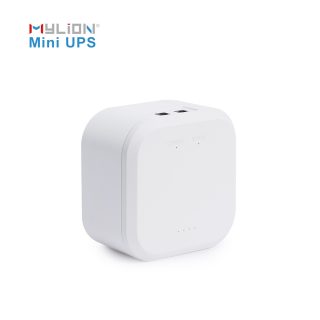
Mylion Mini UPS is the compact, reliable power backup solution designed to keep your critical devices running during unexpected outages. Engineered for home offices, network setups.
-
 Contact Us
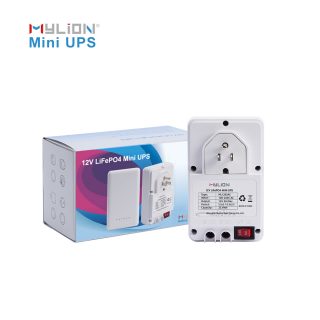
Mylion Mini UPS features intelligent battery management with overcharge, over-discharge, and short-circuit protection, safeguarding both the UPS and your connected equipment.
-
 Contact Us
Mylion Mini UPS is the compact, reliable power backup solution designed to keep your critical devices running during unexpected outages. Engineered for home offices, network setups.
-
 Contact Us
The KPL-D500 Receiver is a high-precision GNSS receiver compatible with BeiDou, GPS, GLONASS, and GALILEO, supporting all constellations and frequency points.
Reviews
There are no reviews yet.