
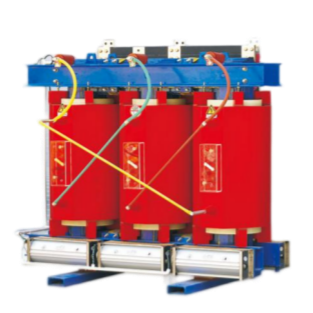
SC(B) Dry-type Power Transformers
This product has a wide range of applications, especially suitable for places with high fire protection requirements, such as mines, oil fields, subways, power plants, schools, hospitals, commercial centers, high-rise buildings and all indoor configuration systems.
Dry type transformers are widely used in industrial facilities, commercial buildings, and power distribution systems where operational safety, reliability, and environmental considerations are important. Compared with conventional transformer designs, a well-engineered dry type transformer offers advantages such as flame-retardant construction, convenient installation, and reduced maintenance requirements.
However, the actual performance of a transformer depends heavily on its internal structure and manufacturing processes. Core construction, winding technology, and temperature monitoring are three important factors that influence its electrical performance, heat dissipation, and long-term operating reliability.
This article examines these key design features and explains how they contribute to the overall performance of a dry type transformer.
1. High-Quality Core Design for Lower Losses and Noise
The transformer core plays a fundamental role in magnetic energy conversion. Its material selection, joint structure, and manufacturing quality directly affect no-load loss, no-load current, and operating noise.
The core described here is manufactured using high-permeability, high-quality grain-oriented cold-rolled silicon steel sheets. A 45-degree full-slope step-joint structure is adopted to improve the magnetic circuit design.
To strengthen the mechanical structure, the core uses a special square-tube pull-plate arrangement, while the core columns are secured with insulating tape. The core surface is also coated with a special resin to help prevent moisture absorption and rust.
These design measures work together to support several performance objectives:
-
Reduced no-load loss: High-quality grain-oriented silicon steel helps reduce energy losses associated with the magnetic core.
-
Lower no-load current: The core material and joint construction are designed to improve magnetic performance.
-
Reduced operating noise: The core structure helps limit vibration and noise during transformer operation.
-
Improved moisture and corrosion resistance: The resin coating provides additional protection for the core surface.
In addition to electrical performance, the core structure is designed to support reliable operation under different environmental conditions.
2. Foil Winding Technology for Improved Mechanical and Thermal Performance
The winding system is another critical part of transformer design, particularly in low-voltage, high-current applications.
The low-voltage winding in this transformer uses a continuous section of copper foil combined with F-class turn insulation. The winding is manufactured on a dedicated low-voltage foil winding machine to improve production consistency and winding quality.
Compared with conventional coil-wound structures, foil winding technology helps address several common manufacturing and performance challenges.
Improved Short-Circuit Mechanical Performance
Low-voltage windings carrying high currents may experience substantial electromagnetic forces during short-circuit conditions. The foil winding structure is designed to help reduce problems associated with excessive short-circuit stress and uneven force distribution.
More Balanced Ampere-Turn Distribution
Uneven ampere-turn distribution can affect electromagnetic balance and transformer performance. A properly manufactured foil winding helps improve winding consistency and address this issue.
Better Heat Dissipation Conditions
Heat management is essential for maintaining stable transformer operation. The foil winding structure provides a broad conductor surface, which can support more uniform heat distribution within the winding.
Reduced Manufacturing Variations
Conventional winding processes may involve challenges such as winding helix angles and inconsistent manual welding quality. Dedicated foil winding equipment helps improve process control and reduce these manufacturing variations.
Furthermore, the winding ends are encapsulated with resin and cured to form a protective structure. This treatment helps improve resistance to moisture and contamination, supporting the winding's long-term insulation protection.
3. Temperature Control System for Safer Transformer Operation
Temperature is an important indicator of transformer operating conditions. Excessive winding temperature can accelerate insulation aging and affect equipment service life.
To monitor operating temperature, the transformer is equipped with a BWDK series signal thermometer. Its temperature-sensing elements are embedded in the upper half of the low-voltage coils, allowing the system to monitor the temperature of each phase winding.
The temperature control device provides several important functions:
-
Real-Time Temperature Monitoring: Automatically measures and displays the operating temperature of the three-phase coils.
-
Overtemperature Alarm: Issues an alarm when the winding temperature reaches the configured warning threshold.
-
Circuit Breaker Tripping: Supports a protective tripping function when the configured overtemperature limit is reached.
By combining temperature measurement, alarm functions, and protective control, the system helps operators identify abnormal thermal conditions and respond before they develop into more serious operating problems.
The temperature monitoring system therefore plays an important role in transformer protection, operational management, and maintenance planning.
4. Moisture Resistance and Adaptability to Operating Environments
Environmental adaptability is another important consideration when selecting a dry type transformer.
According to the provided product specifications, the transformer features moisture-resistant construction and can operate normally under conditions of up to 100% relative humidity. It can also be returned to service after shutdown without requiring pre-drying.
These characteristics are particularly useful in installations where humidity levels may fluctuate or where equipment downtime needs to be minimized.
The core's protective resin coating and the resin-encapsulated winding ends provide additional protection against moisture and contamination.
However, the actual suitability of a transformer for a specific installation should still be evaluated according to its rated environmental conditions, ventilation requirements, insulation system, and applicable technical standards.
5. Key Advantages of the Overall Transformer Design
The core, winding, and temperature control systems work together to support the overall performance of the transformer.
Based on the described construction and product features, the main advantages include:
Low Loss and Low Noise
The high-quality silicon steel core and optimized core joint structure are designed to reduce no-load losses, no-load current, and operating noise.
Flame-Retardant and Environmentally Friendly Design
The dry type construction is described as safe, flame-retardant, fire-resistant, and pollution-free. It can be installed close to the load center when the installation conditions and applicable requirements are satisfied.
Reduced Maintenance Requirements
The product is designed for convenient installation and low maintenance requirements, helping reduce the overall operating burden.
Reliable Temperature Protection
The BWDK temperature monitoring device provides phase temperature measurement, overtemperature alarms, and circuit breaker tripping functions to support safe operation.
High Operational Reliability
The manufacturer reports that operational research on products already in service has demonstrated reliability indicators reaching international levels. For specific projects, buyers should request the relevant test reports and operating data to evaluate performance against their requirements.
Conclusion
The performance of a dry type transformer is determined not only by its rated electrical parameters but also by the quality of its core, winding construction, insulation protection, and temperature control system.
A high-quality grain-oriented silicon steel core helps reduce magnetic losses and operating noise. Copper foil winding technology supports more consistent manufacturing and improved mechanical and thermal performance, while the BWDK temperature control device provides continuous monitoring and protective functions.
For industrial facilities, commercial buildings, and other power distribution applications, evaluating these internal design features can help buyers make more informed transformer purchasing decisions. Selecting a transformer with suitable construction, environmental adaptability, and protection functions is an important step toward achieving reliable long-term power distribution.
Related products
-
 Contact Us
ENX Enxiao Electric is a technology-based enterprise integrating R&D, agency and sales. It is mainly committed to the R&D and sales of incremental encoders, absolute encoders, cable encoders…
-
 Contact Us
We specialize in the precision machining of carbon fiber components. Carbon fiber is renowned for its exceptional strength-to-weight ratio, high stiffness, and excellent resistance to fatigue…
-
 Contact Us
G.A.LED common cathode technology improves brightness with better heat dissipation
-
 Contact Us
Sunlightweld Earth Resistance Online Detector adopts on-line monitoring technology such as non-contact measurement,not affect the grounding effect and the normal operation of facilities.
-
 Contact Us
Excellent anti-static effect, surface resistance value: 106-109Ω High mechanical properties and good machining performance. Good heat resistance and moisture resistance…
Reviews
There are no reviews yet.